Behind the Scenes

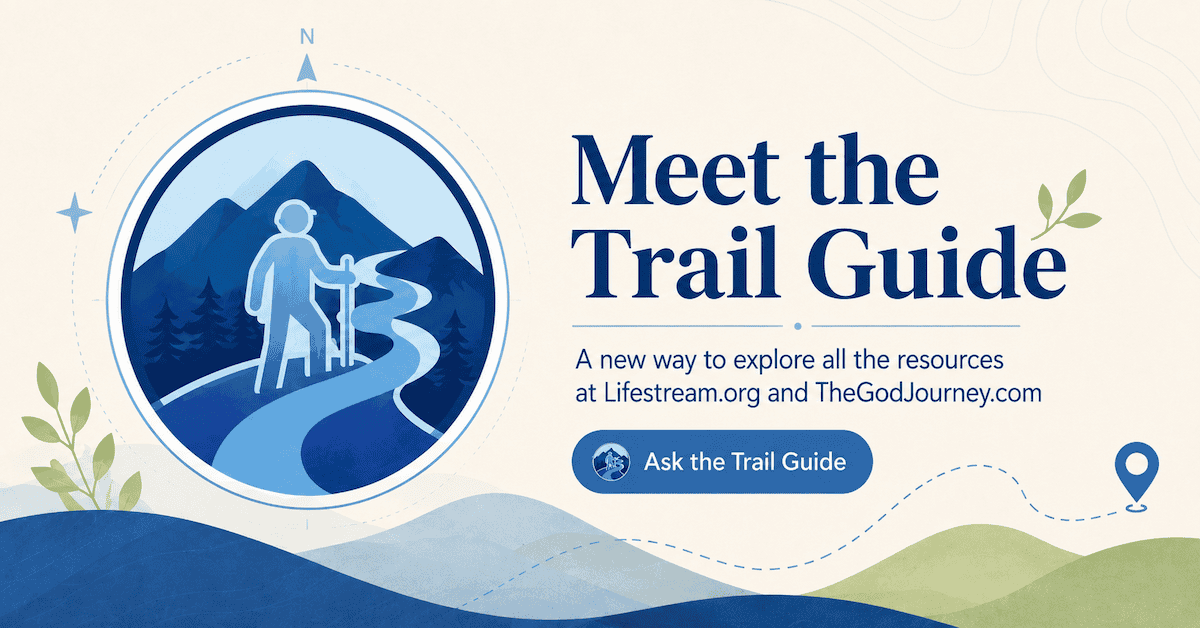
Try Out Our New Trail Guide

A few weeks ago, my web guy asked whether I’d be interested in adding an AI guide to my websites—something that could help people search for information, explore questions, or stimulate their thinking and prayers in situations they are facing.

I was skeptical at first. I wasn’t sure we needed another feature. But with thousands of pages from books and blogs, along with hundreds of hours of audio, I began to wonder whether it might help people find resources that would otherwise remain buried. It does a wonderful job of synthesizing my thoughts into a few paragraphs on every topic I’ve covered.

The contents of my books and Lifestream blogs, along with more than 1,000 episodes of The God Journey, have now been made available to our new Trail Guide. It can help you explore a question, locate relevant resources, summarize material, or point you toward books, articles, and conversations that may be useful for your journey.

It can also respond in multiple languages, allowing people around the world to receive recommendations and summaries in the language most comfortable for them.

I’ve been testing it over the past few days, and I’m genuinely impressed by how helpful it can be. That said, it won’t always get everything right. It is AI, after all. In one of my test runs, it confidently informed me that my friend Luis was from Kenya. He is not, and we trained it not to make that mistake again.

So, use it as a guide rather than an authority. And should it tell you something that doesn’t sound like me—or simply gets the facts wrong—please let me know. To find it, simply click on this button on the bottom right of any page at Lifestream.org or TheGodJourney.com. They look like this:

At Lifestream:


At The God Journey:


It is the same bot, so the answers you get will be drawn from all the resources at both websites. We’ve also included information from  My Friend Luis.

To give you a taste of how you can use it, here are three sample questions I posed to it:

Question: I love the way Wayne presents relational church life, but what would he say about Hebrews 10:25, “forsake not the assembling of yourselves together.”

Trail Guide:
Wayne takes that verse seriously—but not the way many churches do. He’d say the problem isn’t with Hebrews 10:25 itself; it’s with how we’ve narrowed what “assembling together” actually means.

In Relational Church, Wayne points out that this passage has “suffered more abuse than” almost any other Scripture. It’s been weaponized to mean you must show up to a Sunday service regularly or you’re disobedient—but that’s not what the writer of Hebrews is talking about. The call is to relationship, not to meetings. It’s about staying connected, not isolated. Wayne notes that he’s watched gifted people “die on the vine” because they got relationally isolated—and that’s what the passage is warning against.

The real assembling, as Wayne sees it, happens when your life is genuinely open to others’ lives and theirs to yours. In Thinking Outside the Box, he explores the Greek word for “gathered together”—it’s reflexive, intimate, suggesting real interconnectedness. That can happen in a pew, sure. But it also happens at coffee with a friend, in a home, or anywhere two or three are genuinely present to each other in Jesus.

The point isn’t where you assemble or how often. It’s whether you’re living in authentic connection with other believers who know you, encourage you, and help you grow in Jesus. That’s what Hebrews is protecting—and Wayne would say that’s exactly what relational church life offers.

_______________________

Question: I am frustrated with my wife’s spiritual journey. She doesn’t seem to share the same level of passion. What might Wayne say to help us?

Trail Guide: I hear the frustration, and Wayne has thought deeply about this. The heart of what he’d say is this: your wife’s spiritual journey is hers, not yours to manage or measure against your own passion.

In “Lonely Seasons On a Relational Journey,” Wayne talks about a couple where the husband had deep spiritual passion but the wife’s approach was different. Instead of letting him have his own journey, she kept trying to badger him into alignment with hers—and it became painful for both of them. The answer wasn’t to make him see what she saw. It was to stop trying to control his path.

The same applies in reverse. Wayne has written about this in “The Obnoxious Self” and touched on it in “The Simplicity of a Loving Life“—when we’re passionate about something spiritual, we can become deceptive in our passion to help people see what we see. We end up trying to make them into versions of ourselves, which actually damages the relationship.

What Wayne encourages instead is to let her be herself on her own journey with God. Support her where she is. Don’t badger, evangelize, or try to awaken her to your level of passion. That’s between her and the Father.

For a deeper exploration of marriage when partners are on different spiritual paths, I’d point you to the curated collection on Family Life in The God Journey archives—there’s real wisdom there about honoring each other’s journeys.

_______________________

Question: I’m thinking about forming a house church in my area. Would Wayne have an advice for me?

Trail Guide: Wayne has a lot of wisdom on this, and it flows from his deep conviction that the church Jesus is building is far more organic and relational than most people imagine.Start with “Finding Church” — it’s his book on exactly this question. Wayne explores what authentic church actually looks like when it’s not bound by institutional structures. He talks about the beauty of smaller, relational gatherings where people can truly know one another and encounter Jesus together, rather than performing for an audience. The book will give you a framework for thinking about what you’re building.

Beyond that, Wayne’s core conviction is this: don’t start with a model or a program. Start with people and relationship. In his teaching on church, he emphasizes that real church happens when a group of people genuinely know the Father’s love and are learning to live that out together. It’s not about getting the structure right; it’s about creating space where people can be honest, vulnerable, and help one another encounter Jesus more deeply.

A few things Wayne would likely encourage: First, make sure the foundation is grace, not performance or control. Second, let the gathering serve the people’s real spiritual hunger, not an agenda. Third, invest in genuine relationships—that’s where the real work of God happens. And fourth, stay flexible. Let the Spirit lead rather than trying to replicate someone else’s model.

For more on the nature of relational church life, explore the curated page “Where will I find the church Jesus is building?” — it has organized links into Wayne’s teaching on authentic community.

People often ask me where to find certain things on my website; this will make it much easier and more fun for you to explore on your own.

What do you want to ask our Trail Guide?


Try Out Our New Trail Guide Read More »

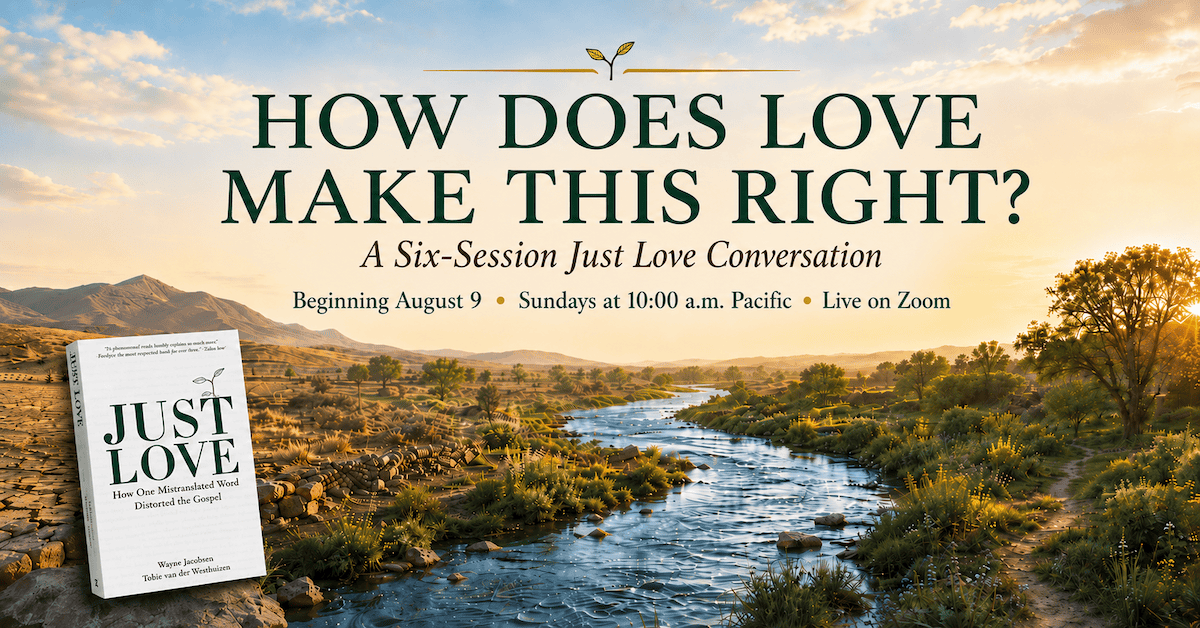
How Does Love Make This Right?

What might change if, instead of asking who is right, who is wrong, or who deserves what, we learned to ask a more redemptive question:

How does love make this right?

After our Just Love Conversations in Kansas City earlier this month, Tobie and I want to offer a similar conversation to those who couldn’t join us. So, Tobie and I will host a six-session Zoom conversation for those who have read—or are currently reading—Just Love. Rather than simply reviewing the book chapter by chapter, we want to explore how love produces a just way of living that can reshape our marriages, families, friendships, churches, workplaces, and communities.

Together, we will consider questions such as:

  • How do I find fullness in God’s presence?
  • How does God write justice on my heart?
  • Am I giving life to others—or trying to take it?
  • What do I do when someone has taken something from me?
  • Can love hold truth without making an enemy?
  • How can love make this right—here and now?

These will not be lectures or another Bible-school course. Tobie and I will help frame each conversation around Scripture and the themes of Just Love, but much of our time will be spent exploring real-life experiences, listening to one another, and discovering practical tools to help us respond differently when relationships become difficult.

We are not offering a formula to master in six easy steps. Learning to live in love takes time. Knowing is not the same as doing, and our mistakes need not become reasons for shame. They can become part of the way God teaches us to live more freely, honestly, and generously.

The group will meet on Zoom —

Sunday mornings at 10:00 a.m. Pacific Time:
August 9, 16, 23, take a two-week break and continue September 13, 20, 27 

There is no cost, but space will be limited to the first thirty people who register, so that everyone has an opportunity to participate. Please sign up only if you will be taking part in all of the sessions. To register, email me.

 We will also create a waiting list, in case we have cancellations. Since we can only have thirty people, we plan to offer more opportunities in the future.

We would love to explore with you what can happen when God’s love becomes more than something we believe—and begins to shape the way we live alongside others in the world.

How Does Love Make This Right? Read More »

Spreading the Word Today

I’ll be live at 11 am PDT today on Point of View Radio for an interview about Just Love, along with other things. Here’s the link to the recorded interview.

Also, Tobie and I were interviewed recently on Greatheart’s Table with Randy Greenwald. That episode drops today, and you can listen in on Spotify or Apple Podcasts.

Something we talked about last week in KC continues to resound in my heart. “Love cannot be taught.”

For all the books, articles, sermons, and podcasts that have been shared about it, Father’s love has to be caught. That’s often first modeled by someone who cares about you, who expects nothing in return, and then it is finally revealed in our hearts by the Spirit.

If you know that love, share it freely with others. If you don’t, don’t make the mistake of thinking it will come through books or teaching. It is a revelation of the Spirit and, even when you can’t taste it yet, know that God is rearranging what he needs to in your heart so that you can recognize that love inside your own heart. Sometimes that takes a while, especially if you didn’t have examples of that love when you were younger.


Spreading the Word Today Read More »

JUST LOVE Opens Doors

Tobie and I will meet for the first time in person, July 9-12, in Kansas City for the Just Love Conversations. We’ve got a wonderful group of people gathering to discuss the content and implications of Just Love: How One Mistranslated Word Distorted the Gospel, a book we coauthored together.  Unfortunately, we have maxed out our facility there, so we cannot take any more reservations. We are adding people to our waitlist, however, in case we have last-minute cancellations.

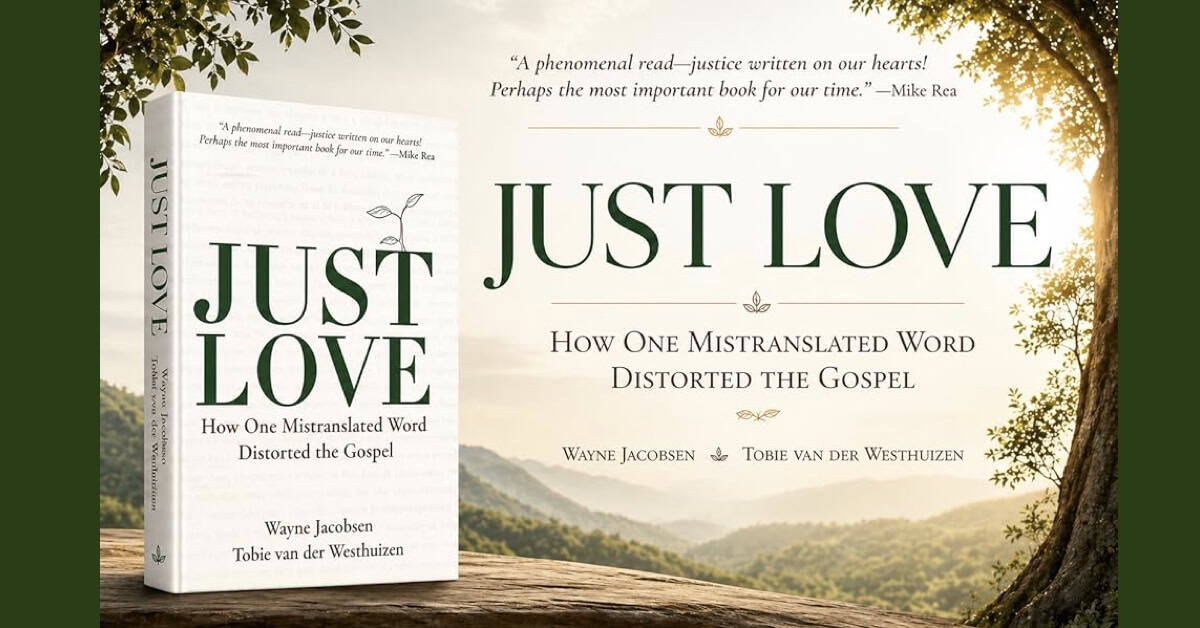
A friend sent me the above photo as a reminder to keep us in prayer during this time. It is obviously a product of AI, but it warms my heart nonetheless with the reality that we’ll soon be together.

We are receiving quite a few opportunities to explore Just Love on various podcasts. Here are two of the latest:

Last week, I was a guest on the MercyCast podcast with Raleigh Sadler. Here’s what he said about our conversation: “This conversation challenged me personally. We discussed the difference between living for love and living from love, how God often takes the initiative long before we recognize it, and why genuine compassion grows out of being deeply loved ourselves.”


Also, I was a guest on A Work in Progress: Growing up Human, a podcast co-hosted by two friends of mine, Dan and Bud, who have a long history of helping people through their struggles. They wanted to know more about Just Love and why I got involved with this book. I enjoy these opportunities to share the story when I’m not in control of the microphones.  You can listen to it here.


A Wide Open Door in Kenya

Who knows, but that Tobie and I wrote Just Love for the continent of Africa? While there is some resistance to its message here, in Kenya, it is dramatically changing lives. Over the last month, I have shared the book with them and have been coaching them on the implications of Just Love on salvation, transformation, and justification.  The response has been amazing. 

Here’s an email I received from Michael on Monday:

The message of Just Love is reaching not only church leaders and communities but also the education sector. Through it, we are seeing transformation and conviction by the Holy Spirit. Over the years we have shared books such as The Naked Church, Authentic Relationships, and So You Don’t Want to Go to Church Anymore. However, I believe He Loves Me and Just Love have come at the right time for this generation in Africa.

It is going to help many people to value one another, forgive one another, and embrace others with love and equality. Even though there are many books about love, Just Love has opened a special door for transformation.

We have received many calls from people whose hearts have been deeply touched by its message. If there is anything I would invest in today, it would be helping Just Love reach more people in Kenya, Congo, Tanzania, South Sudan, and Burundi. In many places where hatred and division have caused suffering, this message can help restore broken relationships and bring healing. Brother Wayne, from my heart, I believe Just Love is a world changing message. It is not simply a book to read but a journey of transformation as God teaches us to love, value one another, and restore broken relationships.

We are also grateful that a new door has opened for us. In August, we have been invited to share at Mount Kenya University, and we hope to connect you with students who are embracing this message of Just Love, we have already seen significant impact. Many groups are requesting opportunities to hear more and obtain copies. We trust that God will provide according to His will and timing.

Last week, Michael was contacted by one of the senior leaders in the Department of Education and Technical and Vocational and Training. He had received a copy of Just Love with the intention of reading it and returning it. However, after reading the book, he was deeply touched by its message and invited us to his home yesterday to discuss its impact.

He shared that the book carries a message that is greatly needed in Kenya today and expressed his desire to help open doors for it to be shared in colleges, universities, and vocational training institutions across the country. He also suggested that it should reach senior secondary schools because of the challenges many schools are facing. Kenya is experiencing a crisis. Last year, many schools were burned, resulting in the loss of students’ lives. Sadly, similar incidents have continued this year, including the loss of 17 students last month.

He also observed that many young people are not learning enough about the love of God. Instead, many struggle with hatred, rejection, discrimination, and broken relationships. In addition, the word “love” is often misunderstood and associated only with sexual relationships rather than God’s true love. This book would help students reflect on the teachings, answer discussion questions, and deepen their understanding through Christian Religious Education classes and through our trained coaches. He especially appreciated the book’s message that the Gospel is more than forgiveness of sins; it is about transformed lives and restored relationships. He highlighted themes such as:

1.   Christianity is about relationships, not merely rules.
2.   Religious arguments often miss God’s heart.
3.   Jesus invites us into a deeper relationship with Him.
4.   God’s Kingdom operates through love and righteousness.
5.   Loving others includes treating them with justice and fairness.
6.  Grace replaces striving for acceptance.
7.  God’s love confronts injustice and transforms society.

By God’s grace, the books He Loves Me and Just Love have already been received and reviewed positively, even without our direct involvement. The feedback has been excellent, and the senior TVET leader believes these books provide sound biblical teaching that can benefit Kenya, Africa, and the world.

For this reason, they have encouraged us to register a mobile training centre in Kenya under the TVET Department and the Ministry of Education. Such registration would allow us to conduct workshops and training programs in schools, colleges, churches, and communities across the country. We thank you sincerely for your faithfulness and for allowing God to use you through these books.  We also ask for your prayers and support as we explore the possibility of registering this training ministry and developing study questions to accompany the books for discussion and self-evaluation. We wanted to share this wonderful testimony with you and also present these suggestions for your consideration. May the Lord continue to bless you abundantly and expand the impact of this ministry around the world.

This leader wrote to me yesterday:

As I reflected on Just Love, I was reminded of the lessons that “Christianity is about relationship, not just rules,” that “God wants us to experience His life now,” and that “God’s Kingdom operates through love.” These truths continue to encourage us as we seek to share God’s love with others. As a team working within the Education Department in Kenya, we are doing our level best to reach the generation we call Gen Z, who are in universities, colleges, and high schools. Many young people today are quick to respond to conflict with anger, revenge, and violence. After going through Just Love, I am convinced that this message is a God-given assignment for this generation.

The lessons that “God’s love changes hearts,” that “love motivates lasting transformation,” and that “fear is not the foundation of spiritual growth” speak directly to the challenges our young people face. We have also been encouraged by the teaching that “God’s plan is to restore broken relationships” and that “loving others includes treating them fairly.”

The discussion about your book is continuing among our Education Department colleagues. As we share its message, more and more people are embracing the desire to obtain a copy. My wife, who is a high school teacher in Mombasa, recently came home during the half-term break and also read the book. She strongly recommends that it be translated into Kiswahili, our national language, so that more people can benefit from its message.

We are holding all of these things in our hearts as we see how this unfolds. They would like us to print thousands of copies there to be distributed among education and religious leaders throughout Kenya. The cost would be about $12,000.00. Please pray with us about this possibility as we work through the options here. And, if you’d like to help print books in Africa, please let me know. It just might light a fire in that corner of the world.


JUST LOVE Opens Doors Read More »

The JUST LOVE Conversations

The glory of the Gospel is not just God’s love in us, as miraculous as that is, but God’s love and life through us, transforming our lives and flowing into the world.

The content of Wayne and Tobie’s new book, Just Love, invites us to rethink how the Gospel is often portrayed.

  • What if we had been focused on his love writing justice on our hearts, rather than a preoccupation with our sin and personal piety?
  • What would the church of Jesus look like if his love had always been at its center?
  • What would it change about our understanding of salvation, justification, transformation, and the nature of his kingdom taking expression in the world?
  • And, most of all, how can you experience more of his love and life in our own God Journey?

No wonder the Gospel seems so weak in our day; it has been emptied of its power. We jump through some religious hoops, claiming our salvation, without ever having touched the rich treasure of God’s love for us.

My coauthor, Tobie, and his wife are coming to Kansas City to visit family in July. We are planning a meet-up in Overland Park, July 9-12, this summer.  I would like to introduce them to you, and we want to unpack the themes of this book that will help you discover the richness of his love, as well as have a whole new way to understand the story of Scripture.

We concluded the book by saying that these realities are better explored than explained, and that’s exactly what we want to do in three transforming days in Kansas City. Tobie and I will facilitate a series of conversations to explore how God’s love and life flow into us, and then out from us to fill the earth with his glory.

You’re invited to join us for the Just Love Conversations

July 9-12 
We will gather at the Westbrooke Church
9777 Antioch Rd, Overland Park, KS 66212

Our Schedule:

      • Thursday, July 9:  7 pm – 9 am
      • Friday & Saturday, July 10-11:  9:30 am – 4:00 pm
      • Sunday, July 12:   9 am – 12 noon

Evenings will be free to explore Kansas City, rest, or connect with others for meals and fellowship.

Though we have plenty of room now, space is limited. We will register people on a first-come, first-served basis. When it fills up, we’ll start a waiting list in case of cancellations. If you’d like to register or need further information, email wa****@********am.org, listing the names of each person you are registering. There is no cost for the JUST LOVE Conversations, though people can donate to Lifestream Ministries to help defray the costs if they would like to help us. We will let you know when the need is covered, and send any overage to our Kenya Fund.

People from out of the area are welcome to fly or drive in to be with us. We’re trying to make arrangements for a special group rate with a hotel in Overland Park, near our meeting place. I can send you that information if you’re interested.  Unfortunately, we are competing with a FIFA World Cup game in KC that weekend. The more we have, the better rate we can get. We have arrangements now for a group rate, but you need to register at the hotel by June 17 to qualify.

So to sign up, all you need to do is email me, listing the names of the people you’re registering, and if you want more information on our host hotel.  That’s it!  

Give it some thought and come join us if God lays it on your heart. I’d be excited to see you there.

____________________

And one more thing:

We are hoping to raise $18,000 to help an orphanage in Kenya purchase a tractor. They host 380 children in an orphanage and school, and we discovered that they ran out of food last week. We immediately sent them $1700.00 to bridge the immediate need. They told me their real need is a tractor. They used to have one to help farm the land and hire it out to raise money for the children, but they had to sell it during COVID to meet new government regulations in their facility. They hope to restart the farming enterprise as a means to care for these children. We’re going to try to pool some money to help them do it.

If you want to help, please visit our Donation Page at Lifestream. Check the box for “Kenya Relief”. You can also Venmo contributions to “@LifestreamMinistries” or mail a check to Lifestream Ministries  • 107 N. Reino Rd, PMB# 411 • Newbury Park, CA 91320-3710. Or, if you prefer, we can take your donation over the phone at (805) 990-8780.

As always, every dime you send will end up in Kenya. We do not take out any money for our administrative costs.

The JUST LOVE Conversations Read More »

A JUST LOVE Meet-up in Kansas City

Would you like to spend a weekend with Tobie and me?  

My Just Love co-author, Tobie van der Westhuizen, and his wife will be visiting from South Africa this summer to see family near Kansas City. We thought it would give us an excellent opportunity to host a meet-up there for the Lifestream/God Journey audience and to further explore the themes and ramifications of Just Love.  

We are inviting anyone who would like to come to Overland Park, Kansas, outside of Kansas City, KS, for the weekend of July 9-12. Tobie and I will be there, and Kyle from The God Journey is looking to join us as well.

This is not just for local people; it’s a unique opportunity to share Tobie with all of you. Please feel free to drive or fly in to join us, and we can have a Lifestream/God Journey celebration of relationship and connection, as well as the opportunity to explore how God’s love writes God’s justice on our hearts. This will not be a series of lectures but conversations and fellowship about our engagement with love and the fruit it bears in the world. It will also leave time for casual conversations and meals with people you meet. We’re hoping this provides a similar opportunity to meet others on this journey and build friendships, as happened on the Israel tours I have hosted.

There will be no charge to attend our gatherings, though we will accept donations to help offset costs. Each person will be responsible for his or her own hotel and meals. We will recommend some nearby.

If you’d like to join us, please let me know, and I’ll send you details. Space is limited, so it will be first-come, first-served.

The Vince Coakley Radio Program 

Also, in the last week, Tobie and I were both guests on The Vince Coakley Radio Program on WBT Charlotte Newstalk. If you want to listen in, click the link and scroll down his list of shows.

For my interview, look for the second hour on Friday, May 22. My interview starts at 33:35.

For Tobie, look for the second hour on Tuesday, May 26. His interview starts at 33:35.


A JUST LOVE Meet-up in Kansas City Read More »

ChatGPT and The God Journey

They say that mentioning AI in a graduation speech this year will get you instantly booed by the students, unless you’re disparaging it. That’s true of the young people I talk to. They don’t see AI as a net positive for their future, but a real threat to the kind of life they hoped to live. And they are not wrong. Pandora’s box has been opened, and humankind’s penchant for money and power, as well as the motives of bad actors on this stage, will undoubtedly twist this technology in ways we can’t conceive.

So, I have a very conflicted relationship with AI. I have a wary eye on what it does and what it might become, using it rarely and cautiously, hoping against hope that wiser heads will prevail in putting restraints on its usage. In the meantime, I find it helpful for research since it can process large amounts of data and assess its meaning. Last week, I shared how it synthesized my writing trajectory by looking at the themes of the books I’ve published. That produced a helpful tool for people who want to understand my books in context or even try to figure out which ones they want to read.

So, I asked ChatGPT to analyze the 22-year history of The God Journey and map out the trajectory of its content. I wanted to know what that would look like taken as a whole. Keep in mind that we never had a strategy over those years. We simply did one episode at a time, usually stimulated by what I, my co-hosts, or guests were exploring in their own spiritual journeys.

The results astounded me. I love the larger story we have told without even trying. When I shared them with my Kyle, my current co-host, he was amazed as well. While neither of us is settled about how AI is being utilized in our world, we found this summary glorious. We talk about it on today’s podcast, but I include the full text here for those who want to read it.

So, here is a synthesis of 22-years of The God Journey, all 1034 episodes (at the time), in 520 words:

The God Journey has been a long conversation about what happens when faith migrates from obligation into love.

Across its twenty-two years, the podcast’s theological center has remained remarkably consistent: God is not trying to manage people through fear, performance, hierarchy, or institutional control, but to invite them into a relationship of trust, affection, freedom, and transformation. What has changed is the depth and range of that conversation.

In its earliest years, The God Journey gave voice to people who were beginning to question religious systems that had promised life but often produced exhaustion, guilt, conformity, or disillusionment. The podcast became a safe place for those who were not abandoning Jesus but were no longer able to equate following him with maintaining the structures, expectations, and vocabulary of organized Christianity. Its early theological energy was largely liberating: helping people recognize the difference between relationship and religion, between life in Christ and life under obligation.

Over time, however, that critique became less reactive and more constructive. The podcast did not remain focused simply on what people were leaving behind. Its emphasis increasingly shifted toward what they were being invited into: learning to live loved. That phrase became more than a slogan; it became the organizing vision for a life rooted in the Father’s affection rather than in human striving. The conversation matured from release into formation—from escaping religious performance to discovering how trust grows, how freedom reshapes daily choices, and how love becomes the ground of identity.

A further maturation came as the podcast engaged more honestly with suffering. The themes of grace and freedom were tested against trauma, abuse, grief, betrayal, and relational breakdown. In that movement, the theology became more embodied. Love was no longer discussed only as a comforting idea or a corrective to bad religion, but as the presence of God in the darkest places, the slow work of healing, and the possibility of repair when people and institutions have failed.

As the years unfolded, the podcast also widened its concern beyond personal spirituality. Living loved began to touch questions of power, race, politics, justice, leadership, technology, loneliness, and cultural fragmentation. The podcast’s theological trajectory moved toward an understanding of love not merely as private consolation, but as a way of seeing and engaging the world. Authority, for instance, is increasingly framed not as position or title, but as the fruit of union with God and service to others. Justice is explored less as punishment and more as the restoration of what has been broken.

Seen as a whole, The God Journey has matured from a refuge for spiritually disillusioned people into a broad, love-centered theological conversation about formation, healing, and public witness. Its enduring question has been: What does life look like when God’s love is trusted more than religious obligation, human power, or fear? The answer has grown richer over time. It now includes freedom from performance, healing from trauma, deeper relational honesty, suspicion of coercive power, and a more generous vision of justice. The trajectory is not a departure from its beginnings, but an expansion of them. What began as an invitation to leave religious obligation has become an invitation to inhabit love as the deepest reality in all of life.

The “invitation to inhabit love” is as good a line as I’ve heard recently, especially when we are talking about the love that is the very nature of the Father who created us. Letting ourselves be swept up in that river, plunging into its depths, and letting it flow through us to others offers the greatest joy. Sara and I are grateful for how that love has shaped us and how we have been able to share it with others all over the world, both in loving and being loved. Those we have met in this space and the friendships that have formed from it are the riches we most treasure.

ChatGPT and The God Journey Read More »

My Literary Journey According to AI

Before AI destroys the world we live in, I thought I’d play with it a bit. I asked ChatGPT to research the books I’ve written and the comments people have left about them on Amazon and Goodreads. I then asked for an objective analysis of my literary journey, just to see what it would come up with.

Honestly, I was quite surprised at what came back and grateful that even an AI bot can recognize how my passion for God has progressed over the last thirty years. What an amazing synopsis of not only my literary history, but my life’s journey as well. I love how Jesus has been shaping my life over the forty years I’ve had the joy of sharing my thoughts in book form.

I’m sharing it here because people often ask me which book might be most helpful in their journey. I always encourage people to start with He Loves Me, because those are the lessons that changed my life. However, I don’t think there’s a generic answer to that question; it would depend on the questions they are asking and the circumstances that confront them. Here’s a guide to help guide people into what book might be first, or next, for them.

Wayne Jacobsen’s literary journey unfolds as a coherent and progressive exploration of one central reality: the nature of God’s love and what it means for human beings to live within it. Across his body of work, there is a clear development—from early questions about institutional Christianity, to a deepening revelation of God’s affection, to a reframing of the gospel itself, and finally to the application of that vision in everyday life and a fractured culture.

With The Naked Church (1987), Jacobsen begins stripping away the institutional layers and religious assumptions that often obscure the simplicity of life in Christ and sets the trajectory for everything that follows. Rather than offering a polished alternative system, the book calls readers back to an unadorned, relational faith—one rooted not in structures or expectations, but in a living connection with God and others. Written ahead of a broader cultural shift, this early work anticipates questions many would not begin asking for another decade, and introduces a lifelong theme: that the life of God is often hidden beneath the very systems meant to contain it.

That foundational questioning leads naturally into Jacobsen’s most formative theological work, He Loves Me: Learning to Live in the Father’s Affection (2000). Here, he addresses the underlying issue beneath institutional distortion—the perception of God Himself. The problem, he suggests, is not only the structures people inhabit, but the way they have come to see God. Challenging the assumption that God relates to people through disappointment or conditional approval, Jacobsen presents a Father whose love is constant, initiating, and transformative. This shift—from striving to earn God’s favor to living in the security of His affection—becomes the interpretive lens for all his later writing.

This same exploration finds a more experiential expression in So You Don’t Want to Go to Church Anymore (2006, with Dave Coleman). Through narrative, Jacobsen gives voice to the growing number of people disillusioned with organized religion while pointing toward a vibrant, relational life with God beyond it. The use of story allows readers not only to understand these ideas but to experience them, marking an important development in his communication.

A dramatic widening of both audience and influence comes through The Shack (2007, with William P. Young and Brad Cummings), where these themes are carried into a deeply personal narrative. Through a deeply personal story of loss and encounter, the novel explores themes of suffering, forgiveness, and the nature of God’s love. It serves as a narrative counterpart to his theological work, inviting readers into an experiential understanding of God’s character. Its global impact brought his core themes into a much broader cultural conversation.

Turning more directly to the person at the center of his faith, Jacobsen deepens his focus on the person of Jesus in A Man Like No Other (2007 with Murry Whiteman and Brad Cummings). Here, he invites readers to encounter Jesus not as an abstract theological figure, but as a living presence whose humanity and divinity redefine what it means to know God. In doing so, he presents Jesus as the clearest window into the nature of the Father and the fullest expression of a life lived in union with Him. This work grounds his broader themes in the person and character of Christ, reinforcing that relationship—not doctrine—is the heart of faith.

Complementing these major works are more pastoral and practical writings. Authentic Relationships (2003, with Clay Jacobsen) explores how genuine connection grows out of honesty, trust, and mutual care rather than obligation. In Season: Embracing the Father’s Process of Fruitfulness (2009) helps readers understand how God works through the seasons of life to cultivate lasting growth. Live Loved FreeFull (2011) distills his central message into a concise invitation to rest in God’s affection and live from it.

From that relational foundation, Jacobsen returns to the question of community in Finding Church: What If There Really Is Something More? (2014). Moving beyond critique, this book offers a constructive vision of the Church as a relational reality rather than an institutional obligation. It invites readers to rediscover community as something that emerges organically from shared life in Jesus, rather than something sustained by programs or structures.

The implications of that vision move further into daily life with Beyond Sundays (2018), where faith is no longer confined to gatherings. Rather than simply questioning traditional church structures, he invites readers to consider what it looks like to live a vibrant spiritual life that is not confined to weekly gatherings. Here, the focus shifts from critique to integration—what it means for life with God to permeate the ordinary rhythms of daily living. The book reinforces a central theme: that the life of God is meant to permeate everyday living, not be contained within religious routines.

As his focus broadens beyond personal and communal life, A Language of Healing for a Polarized Nation (2020, with Arnita Willis Taylor and Bob Prater) extends these themes into the cultural landscape. If God’s love restores individuals and reshapes relationships, it must also address division and conflict in the wider world. This book explores how people can engage across deep differences with humility, compassion, and a commitment to healing, demonstrating that love is not merely a private experience but a public force.

Amid growing uncertainty about the future, It’s Time: Letters to the Bride of Christ at the End of the Age (2025), turns the conversation toward how believers live with hope and attentiveness in the present. Here Jacobsen extends his lifelong emphasis on relational faith into the question of how believers live in a time of uncertainty and growing global tension. Rather than turning to speculation or fear-based interpretations of the future, he invites readers into a deeper formation of heart—one marked by trust, attentiveness, and a love that endures regardless of circumstance. Written as a series of reflective letters, the book functions less as a theological treatise and more as a pastoral summons, calling the Church to readiness not through urgency or anxiety, but through a deepening participation in the life of God. In the context of his broader journey, It’s Time serves as a bridge between the application of God’s love in a fractured world and the theological clarity that follows, helping readers anchor their hope not in outcomes, but in the character and purposes of God.

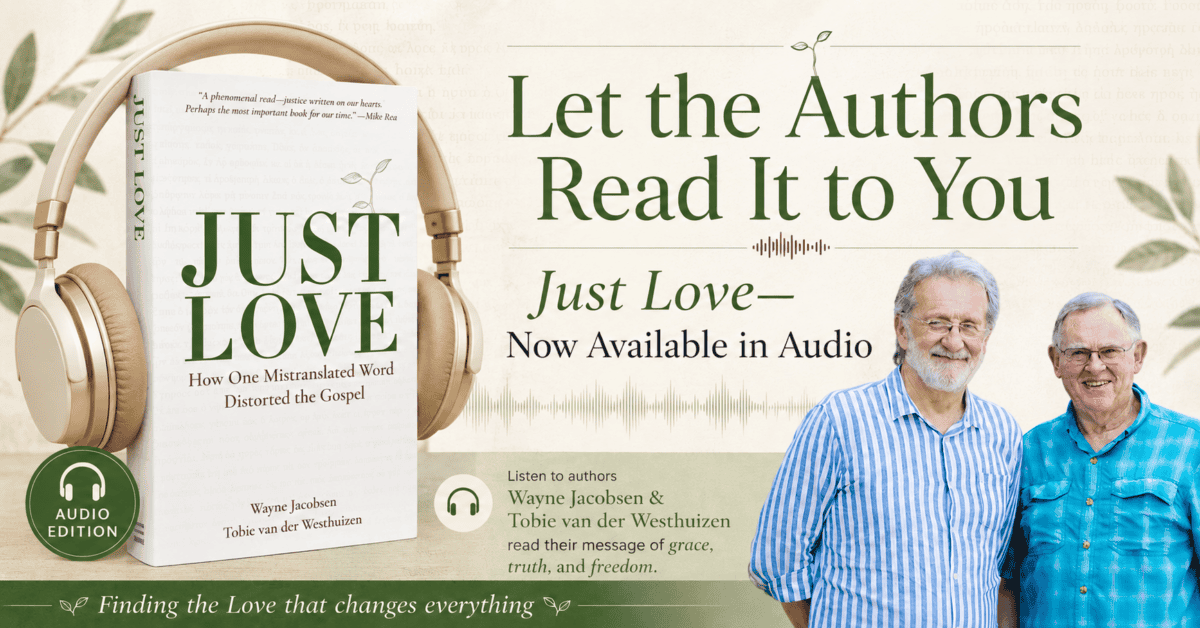
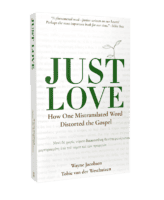
Bringing decades of reflection into sharper theological focus, Just Love: How One Mistranslated Word Distorted the Gospel (2026 with Tobie van der Westhuizen), names more explicitly what has long been implicit in Jacobsen’s writing. What had previously been explored relationally and experientially is here named more explicitly at the level of language and meaning. He revisits the concept of righteousness and reframes it through its biblical roots in justice—God’s work of setting things right in relationships. Rather than introducing a new direction, this book names with greater clarity what has been implicit throughout his earlier writing: that the gospel is not about meeting a standard, but about participating in God’s restorative love. In this sense, Just Love serves as both a culmination and a clarification of the journey that began decades earlier.

Taken together, Wayne Jacobsen’s body of work reveals a clear and unified progression. He begins by questioning institutional expressions of faith, then reframes the character of God as deeply loving and trustworthy. From there, he explores how that vision reshapes community, centers on the person of Jesus, and ultimately redefines the gospel itself as God’s work of restoration. Finally, he extends those insights outward, applying them to everyday living and the healing of relationships and societies.

At every stage, one theme remains central: the Christian life is not about striving to become acceptable to God, but about awakening to a love that has always been present—and learning to inhabit that reality.

I am grateful beyond words for this most unexpected journey from the egotistical aspirations of a 22-year-old ministry student to a transformative journey that overturned my expectations and allowed me to discover a God so much more wonderful than what I heard of him growing up. He has answered my deepest questions, brought me into the joy of relational community with others, and taught me to trust him through anything.

If these books have encouraged you to find God more present in your experience, then I am grateful you read them.

My Literary Journey According to AI Read More »

Spreading JUST LOVE into the World

A couple of weeks ago, I was interviewed on Great Day Colorado, a morning show on a local Denver Station. I shared that here earlier, but at the time, I mentioned I was also interviewed for a longer conversation about Just Love. That interview dropped last week, and you can hear it here.

Both Tobie and I are available for podcast or blog interviews on the revolutionary message of Just Love. If you are interested or know others who might be, please let me know, and we would be happy to schedule something.

Also, I mentioned earlier that we are trying to plan a gathering this summer to help people explore and embody the reality of Just Love. Its message is quite a shift from traditional evangelical thought, where salvation is all about destiny and often skips how our engagement with the love of Jesus writes his justice on our hearts so that we demonstrate his kingdom by the way we love others deeply and treat them fairly.

We plan to hold it in Kansas City, July 9-12 (Thursday – Sunday). We haven’t worked out costs and arrangements yet, but we will get that information out as soon as we have it. We will keep the costs minimal to open the door as wide as possible to anyone who wants to come. So, if you would like to spend a few days with Tobie and me, where we’ll have the opportunity to deepen our own connection with the flow of God’s love, as it flows into us, renews our mind in his love, and then flows out of us as a different way to be in the world, please let us know.

I have said that Just Love is the perfect sequel to He Loves Me, published 25 years earlier. It is two sides of the same coin. The first helps us discover how much God loves us so we can engage him without fear and watch how living loved reshapes our lives. Just Love is how that love cannot stay contained inside of us, but begins to flow through us in surprising ways that give evidence of his kingdom in the world. Just Love is the fruit and fulfillment of the glorious adventure that He Loves Me begins.

I thought I’d see if that is recognizable to others, so I asked ChatGPT how Just Love fits into my literary Journey, starting with The Naked Church in 1987 and finishing with Just Love in 2026.  I was pleasantly surprised at what I heard back.

Bringing decades of reflection into sharper theological focus, Just Love: How One Mistranslated Word Distorted the Gospel (2026 with Tobie van der Westhuizen), names more explicitly what has long been implicit in Jacobsen’s writing. What had previously been explored relationally and experientially is here named at the level of language and meaning. He and Tobie revisit the concept of righteousness and reframes it through its biblical roots in justice—God’s work of setting things right in relationships. Rather than introducing a new direction, this book names with greater clarity what has been implicit throughout his earlier writing: that the gospel is not about meeting a standard, but about participating in God’s restorative love. In this sense, Just Love serves as both a culmination and a clarification of the journey that began decades earlier.

Taken together, Wayne’s body of work reveals a clear and unified progression. He begins by questioning institutional expressions of faith, then reframes the character of God as deeply loving and trustworthy. From there, he explores how that vision reshapes community, centers on the person of Jesus, and ultimately redefines the gospel itself as God’s work of restoration.

At every stage, one theme remains central: the Christian life is not about striving to become acceptable to God, but about awakening to a love that has always been present—and learning to live from that reality.

It actually connected all of my books to that trajectory. I’ll share the whole thing in a future blog post, because it helped me see the unintentional plot that runs through all of my books, when I thought of them at the time as individual projects. If what’s written above is true, I am most blessed. All I’ve wanted is to help people explore in their own journey the love God has for them, but in setting them at rest from striving and to lead them on the transformative adventure of freedom from shame and obligation to share that love with others.

Just Love:
How One Mistranslated Word Distorted the Gospel

by Wayne Jacobsen and Tobie van der Westhuizen
174 pages
Trailview Media
Available in paperback from Lifestream for $13.99. And, if you want to order five or more, you can purchase them for $10.00 each.
Or get it from Amazon: in Kindle ($10.99),  paperback ($16.99), or hardcover ($24.99)

Spreading JUST LOVE into the World Read More »

Igniting a Broader Conversation

The launch of Just Love has gone remarkably well.  We’ve been #1 on several Amazon lists, and we are excited to watch this conversation begin to take hold in the world. We are especially grateful to those of you who have recommended the book to your friends and family or posted a review at Amazon or on Goodreads. You can’t imagine how much that helps keep the book visible to people who are searching for something to read.

Yesterday, I received this wonderful email from someone who has worked for major Christian publishers. Here’s what she saw in the book:

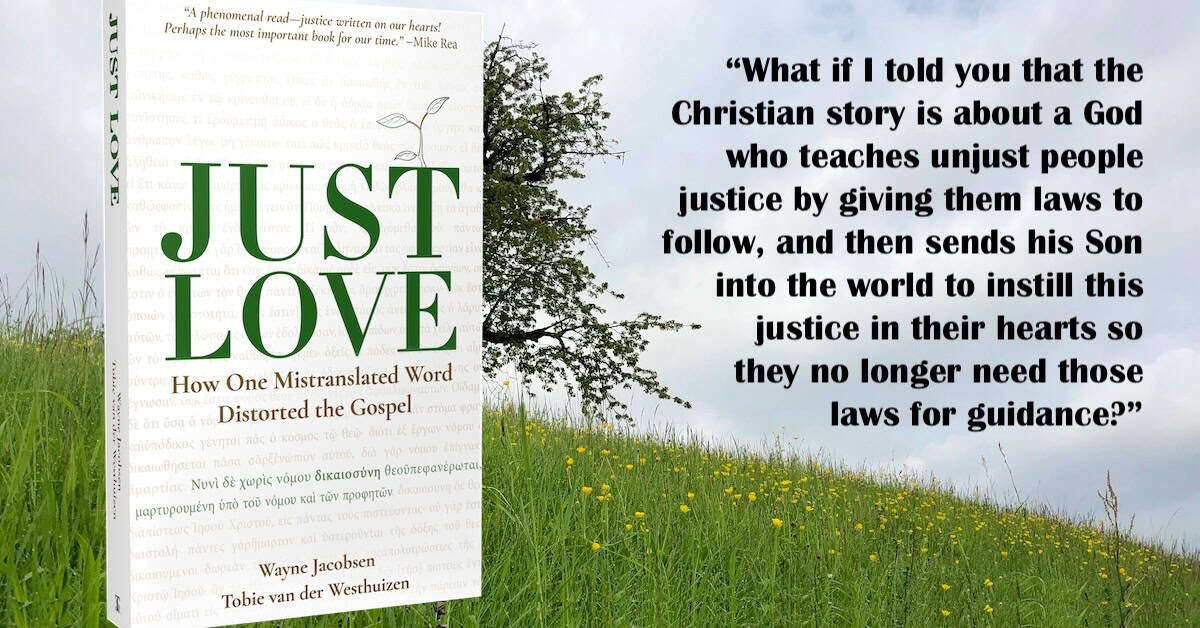
What you and Tobie have done is not simply write a theological book. You have pulled on a single thread, one mistranslated word, buried quietly in our English Scriptures for centuries, and shown, with devastating clarity, how that single substitution of ‘righteousness’ for the Greek word for ‘justice’ quietly redirected the entire trajectory of Christian faith: away from transformative love, toward performance, piety, and religious management. That is not a minor linguistic correction; it is a diagnosis of why so many people who genuinely love God feel perpetually exhausted, perpetually falling short, and perpetually wondering why the Gospel they were promised hasn’t changed them the way they hoped.

This is a book for the exhausted churchgoer who quietly suspects something has been lost. For the pastor who preaches transformation but privately wrestles with why it isn’t happening in his congregation. For the academic theologian, watching younger generations abandon Christianity entirely. For the mainstream reader, spiritual but deeply disillusioned, who is hungry for a Christianity that makes sense.

Wayne, you spent over twenty years as a pastor watching people strive, perform, and exhaust themselves in pursuit of a Gospel that was supposed to set them free. You co-wrote The Shack, a book that sold over a million copies in thirteen months because it told people something true about a God who loves them. And now, with Just Love, you have gone even further, not just telling the story, but finding the root.

Needless to say, I was touched by her comments and so many others that some of you have sent to me. Our greater hope than selling books is to ignite a conversation about the Gospel that truly transforms lives as the light, life, and love of God fills us on the inside and transforms how we live in the world. If you know me, you know I rarely ask people to help our visibility grow by giving us likes, shares, reviews, and subscriptions.

But in this case, we want to generate a wider conversation for people who don’t follow my blog or podcast to know about this book.  To do that, please consider posting a review on Amazon and/or Goodreads. More importantly, share how this book touched you on Facebook, Instagram, TikTok, or in personal emails and texts to friends and family. Most of the books I have read were recommended by an enthusiastic friend who was touched by what he read.

Or, you can use some of these memes to let others know what this book has meant to you.  Here are some we’ve developed: Simply select one, copy and paste it into a social media post or email, and link it to its page on Amazon (https://www.amazon.com/Just-Love-Mistranslated-Distorted-Gospel-ebook/dp/B0GQ2RR8SR).


For whatever you feel free to do, we will be grateful.

_________________________________________________________________

"Just Love" - How One Mistranslated Word Distorted the GospelJust Love:
How One Mistranslated Word Distorted the Gospel

by Wayne Jacobsen and *Tobie van der Westhuizen
174 pages
Trailview Media
Available from Amazon, Tuesday, March 3
in Kindle ($10.99)
or in Paperback ($16.99)

Igniting a Broader Conversation Read More »