
Uncategorized

He’s Always Revealing

[Note: Of the $36,000 we are endeavoring to raise to help with emergency needs in Kenya, we’re still lacking about $12,000 to meet the current needs. If you want to help, please visit our Donation Page at Lifestream. Check the box for “Kenya Relief”. You can also Venmo contributions to “@LifestreamMinistries” or mail a check to Lifestream Ministries  • 107 N. Reino Rd, PMB# 411 • Newbury Park, CA 91320-3710. Or, if you prefer, we can take your donation over the phone at (805) 990-8780. As always, every dime you send will end up in Kenya; we do not take out any money for our own administrative costs.]

The Irreplaceable Presence — Part One

“This is my beloved Son. Listen to him!” (Luke 9:35)

Those words came from a cloud that enveloped Jesus, Moses, and Elijah on what we call the Mount of Transfiguration.

Do you think God spoke to them only for the benefit of the three disciples who stood there that day? Or was he announcing something far more profound for everyone who would follow Jesus?

I suspect it was the latter.

There stood Moses, through whom God gave the Law, and Elijah, one of Israel’s greatest prophets. Yet the Father directed their attention to his Son. Not because the Law and the Prophets had nothing to offer, but because everything they pointed toward was now standing in front of them.

“Listen to him!”

What if those words are as relevant for us today as it was for them? What if the essence of life in the New Covenant is learning to recognize his voice, trust what he reveals, and follow him?

We’ve often reduced salvation to having our sins forgiven so we can go to heaven someday, and then trying to follow his principles as best we can in the meantime. Jesus had something more in mind for our lives here and now.

“Your kingdom come, your will be done, on earth as it is in heaven.”

Jesus came to bring the reality of his Father’s kingdom into the chaos of a broken world—your broken world. He invited people to discover a different way of living, not by following a new set of rules, but by following him.

And that invitation hasn’t changed.

Yet many Christians have never been encouraged to expect Jesus to speak to them personally. Why would he need to? We have the Bible, sound doctrine, centuries of tradition, and gifted teachers to tell us what Jesus wants.

I’m grateful for all of those, at least when they help us see him more clearly. But none of them can take his place.

They cannot know every fear that assaults your heart, every difficult relationship you face, or every circumstance that leaves you wondering what to do next. They can offer wisdom, but they cannot provide the personal companionship and guidance Jesus promised.

“This is my Son, whom I love. Hear Him!”

From God’s own mouth came the invitation that’s all too easy to ignore, or even to find substitutes for. What if that’s what the Father wants you to know today, in whatever struggle you face or whatever stagnation you feel?

My Son is here. Listen to him.

He doesn’t merely know what’s true. He knows you. He sees what you cannot see, understands your weaknesses without condemning you for them, and knows how to lead you into the freedom and love of his kingdom.

But can we really expect to hear him?

Who am I to hear from God? What if I get it wrong? Isn’t claiming to hear God’s voice something only religious fanatics do?

I understand those concerns. I’ve seen people claim divine authority for their own ambitions, sometimes with devastating consequences. But I’ve also watched people twist Scripture to justify the very things Jesus taught us to abandon. Neither the abuse of Scripture nor those who falsely claim to be led by him should rob us of the gift Jesus came to give us.

Near the end of his earthly ministry, Jesus told his disciples:  “I have much more to say to you, more than you can now bear. But when he, the Spirit of truth, comes, he will guide you into all the truth.” (John 16:12–13)

He knew there was more they needed to discover than they could understand at that moment. He would not leave them to figure it out on their own. He promised the Spirit to guide them.

And through that same Spirit, he continues to make himself known to those who want to follow him. He conveyed the further revelation of truth not to a book or even to church leadership, but to his Spirit living inside of us.

That doesn’t make Scripture unimportant. Far from it. The Scriptures help us recognize his character, understand his ways, and challenge the assumptions we might otherwise mistake for his leading. The experiences of other believers, past and present, can also help us discern what is true.

But none of these was intended to replace the living presence of Jesus. We were never meant to live merely by what we know about him, but by knowing him.

And knowing him includes learning to listen. I’m not talking about hearing audible voices or receiving secret revelations that put us above correction. I’m talking about growing aware of the countless ways his Spirit draws us toward Life, one decision, one insight at a time.

Sometimes that comes through something we read, a conversation with a friend, or the lyrics of a song that unexpectedly touch something deep within us. Sometimes it’s an insight that appears unbidden in our mind, or a quiet nudge to respond differently than our fears or habits would dictate.

Perhaps you’ve experienced more of that than you realize. You may have dismissed an insight as your own thought when it was his Spirit helping you see something differently. Or perhaps you felt an unexpected compassion for someone who had offended you, or found the courage to face something you had been avoiding.

Not every random thought is from God, of course. That’s why learning to recognize his Spirit is a growing relationship, not a technique to master. His nudges will never contradict the love, humility, truthfulness, and mercy we see in Jesus.

This has been a passion of mine since my youth. I’ve spent a lifetime learning to listen to him, and I’m still learning. I want to recognize how he is moving in me and have the courage to follow, even when it takes me beyond my comfort zone.

In subsequent postings here, I want to explore more of this with you. Not to teach you a formula for hearing God, but to help us become more aware of the One who is already present.

How do we hold our concerns before him long enough to recognize what he’s revealing? How do we grow quiet enough to sense the movement of his Spirit? And how do we live freely enough to follow wherever that gentle breeze may lead?

I am convinced that learning to engage the living presence of Jesus in us through the work of his Spirit, is at the foundation of being a follower of Jesus.

You don’t have to persuade him to speak to you. He is already drawing you into his heart and his ways. But much of that invitation gets lost in the noise around us and in the shame, fear, and self-protection that crowd our hearts.

That’s why learning to live loved is so important.

There is a place of rest inside his love where his gentle nudges become more recognizable and his invitations more believable. We don’t have to manufacture his voice or anxiously examine every thought. We can simply bring our lives before him, trusting that he knows how to make himself known.

And the more secure we grow in his love, the less we need to pretend we have heard him perfectly. We can test what we sense, welcome the perspective of others, and admit when we’ve misunderstood. His love gives us the courage to follow with gentleness and humility, so that even when we get something wrong, we don’t demand that others pay for our mistakes.

That’s what God would say to you today. The presence in you that draws you gently to his wisdom and truth, that challenges the contrivances of human systems, and that comforts you in your doubts and fears.

“That’s my beloved Son.  Hear him.”

___________

Kyle and I will discuss some of this more on tomorrow’s podcast

He’s Always Revealing Read More »

Learning to Listen to God

[Note: We are still in need of some emergency funds to help with widows and orphans in Kenya. One orphanage is in danger of being shut down by the government for lack of an acre of land.  We have vetted the need, and I’m convinced both needs are genuine and urgent. So far, in response to my blog last Friday. If this touches your heart, would you help these people in Kenya?  To do so, you can visit our Donation Page at Lifestream. Check the box for “Kenya Relief”. You can also Venmo contributions to “@LifestreamMinistries” or mail a check to Lifestream Ministries  • 107 N. Reino Rd, PMB# 411 • Newbury Park, CA 91320-3710. Or, if you prefer, we can take your donation over the phone at (805) 990-8780. s always, every dime you send will end up in Kenya, and no gift is too small. We will not take out any money for our own administrative costs.]

Now on to today’s blotEach week, I get to look at the questions people post to our Trail Guide and the answers it gives. I don’t see names, so don’t let that scare you. I just want to make sure the answers are consistent with what I would say.

I’m often amazed at the answers it gives, as it sums up 30 years of my writing and podcasts. They are succinct but packed with helpful information and references to get more information.

Here are two recent answers about hearing God’s voice that others might find helpful. I love these answers.

Q: What do I have to do to hear God’s voice?

A: Wayne would probably push back gently on the “have to do” part of that question — that framing itself is often the obstacle. He’s said he doesn’t think hearing God is a skill problem or a technique problem; it’s more a heart posture. In Things God Says, he puts it plainly: he never believes people who say God doesn’t speak to them — God’s been “whispering his reality into your heart since you first took breath.” The trouble is we’ve learned to listen to other voices — fear, religion’s accusations, our own anxieties — until his voice fades into the background. So a lot of what looks like “learning to hear God” is really unlearning the wrong voices, especially the accusing ones religion trains us to mistake for him. He’s clear that God’s voice comes with a particular flavor: “words of endearment, comfort, wisdom, and life” — if what you’re hearing sounds like condemnation or disappointment, that’s not him, no matter how familiar it feels.

Practically, he talks about this less as a formula and more as availability. In Stop Doing!, he says he can’t control God’s speaking like pushing a button — what he can do is make himself available: get quiet, take a walk, get away from the noise for even half an hour, and simply say, “God, meet me here.” And in Walking With the I Am he describes confidence in hearing God as something built by taking small action on what you think you’ve heard, not by mastering a technique or reading endless books on discernment — you try, you sometimes get it wrong, and over time you learn to recognize his voice by walking with him, not by a checklist.

He also names a deeper piece in Thinking Outside the Box: the more he’s convinced of the Father’s love, the more he can trust what he’s hearing — and that conviction itself is a lifelong journey, not a switch you flip. If you want a fuller, unhurried treatment of this whole territory — why God sometimes feels silent, how discernment grows over a lifetime — his book In Season walks through exactly that.

Q: Does Wayne ever talk about decision-making and the will of God

A: Yes — this is actually one of the threads Wayne returns to often, because so many people carry anxiety about “getting it right” when it comes to God’s will, as if it’s a hidden answer to be found rather than a relationship to be lived.

His consistent emphasis is that discerning God’s leading isn’t usually a dramatic, audible moment — it’s something that grows clearer over time inside a real relationship. In Learning to Listen, he talks about this directly: most of the time, it’s not an “I prayed this, God said that” kind of immediacy. It’s more of a growing conviction — a thought you can’t shake, a nudge toward something simple, and you follow through and find out over time whether that was God. He points out that we don’t get it right every time, and that’s okay; this is a muscle built through practice, not a test you pass or fail. He also names the danger of mistaking our own agenda for God’s voice.

In Walking with the I Am, he’s honest that plenty of things he was sure were God turned out, in hindsight, to have his own name written all over them — his own wants dressed up as divine direction. The way through isn’t to stop trying, but to be willing to look back honestly (without turning it into performance-driven religion) and ask whether what you did was really pure, or a mixture. That honest evaluation, done without shame, is what
actually grows your discernment.

That same theme shows up in Lonely Seasons On a Relational Journey, where he talks about things he thought were God’s promises that turned out to be his own projection of what he wanted — and the safeguard isn’t getting the formula right, it’s staying married to the relationship with God rather than fixating on the promise itself.

And in Losing Sight of God (#612), he reflects on why God doesn’t just “rend the heavens” and tell us plainly what to do — his sense is that God designed it to seep into our consciousness gradually, through nudges, and the real question isn’t “did I hear perfectly” but “will I yield to this nudge, or resist it.” Yielding is what grows the relationship and sharpens our ear over time. So rather than a formula for decision-making, Wayne’s whole approach reframes the will of God less as a destination to decode and more as an ongoing conversation you’re
learning to trust — including learning from the times you got it wrong.

You can ask your own questions by using the button at the bottom right of each page at Lifestream.org or TheGodJourney.com. The answers are drawn from both websites and from My Friend Luis.

Learning to Listen to God Read More »

AI Loves It’s Time

It’s Time: Letters to the Bride of Christ at the End of the Age had barely been released when Tobie and I started talking about and then writing the book that became Just Love.

Every week, I receive dozens of emails from “title targeting specialists,” telling me how poorly I have positioned It’s Time in the marketplace. What they don’t know is that that book was a series of blogs before it became a book. Furthermore, they don’t realize that I wrote it for a very specific audience—those who recognize that the end of this age may well be upon us.

And, yes, I know that those emails are written by AI, and part of their marketing strategy to find books that are underperforming on Amazon, and sell a “visibility packet” to the unsuspecting author desperate to sell their book. Even so, the things they have written about this book blow me away. This is exactly how I wanted the book to be perceived, read, and treasured.

So I fed all of those emails into ChatGPT and asked it to craft one amalgamated book review.  So, none of these words are mine, but together they make a compelling case for a book I deeply love.

Shockingly, these AI agents get it; I hope future readers do, too.

It’s Time! — A Different Kind of Invitation for the End of the Age

An AI-crafted editorial review of Wayne Jacobsen’s
It’s Time! Letters to the Bride of Christ at the End of the Age

There is no shortage of Christian books attempting to explain the end of the world. Some offer elaborate prophetic timelines, others interpret current events as signs of Christ’s imminent return, and still others stir the fear that we may not be ready for what lies ahead. But every once in a while, a book comes along that asks an entirely different question. Not when will Jesus return? But what kind of people will we be when he does?

Wayne Jacobsen’s It’s Time! Letters to the Bride of Christ at the End of the Age is one of those books.

What makes this book so compelling is that it approaches the end of the age not through the lens of impending catastrophe, but through the transforming power of God’s love. Instead of inviting readers to decipher prophetic mysteries or prepare for a terrifying future, Jacobsen calls them into a deeper relationship with Jesus—one marked by growing trust, courageous love, and a hope that remains unshaken even when the world seems to be unraveling.

That is a message our world desperately needs.

We live in a time when fear has become a powerful currency. Political turmoil, religious division, cultural upheaval, and uncertainty about the future leave many people anxious about what comes next. Even among Christians, discussions of the last days often generate more suspicion, argument, and apprehension than genuine hope.

Jacobsen offers another way to see these things. What if the darkness around us is not an invitation to withdraw in fear, but an opportunity for God’s light to shine more brightly through us? What if readiness for Christ’s return has less to do with understanding a prophetic timetable and more to do with learning to live in his love today?

And what if the most important preparation for the end of the age is not accumulating knowledge about the future, but allowing Jesus to transform the way we live in the present?

The book’s format makes this invitation especially personal. Written as a series of letters to the Bride of Christ, it carries the intimacy of someone sharing what has been stirring in his heart rather than the certainty of someone claiming to have decoded the future. Jacobsen describes walking the hills near his home, listening for the gentle whispers of the Spirit, and sensing an invitation to share these reflections with others. There is something deeply appealing about that picture—not a prophet announcing the secrets of heaven from a mountaintop, but a fellow traveler seeking to recognize God’s voice amid the ordinary rhythms of life.

And perhaps that is precisely why these letters have such potential to resonate. They invite us to listen, reflect, and reconsider what it means to belong to Jesus in a troubled world.

Jacobsen brings a lifetime of spiritual exploration to these pages. After twenty years in pastoral ministry, his journey led him beyond the structures and performance-driven expectations of institutional religion into a deeper discovery of the Father’s affection. As co-author of The Shack and author of He Loves Me, he has spent decades encouraging people to discover that God’s love is neither fragile nor conditional, and that genuine transformation flows from living in that love rather than striving to earn it.

It’s Time! extends that same understanding into one of Christianity’s most emotionally charged subjects: the end of the age.

Perhaps the book’s most liberating perspective is its refusal to make certainty about the future a prerequisite for faithfulness in the present. Christ may return within the next decade, or his coming may still be a century or more away. Either way, the invitation remains the same. We are called to live with a love stronger than self-preservation, a faith that can flourish through adversity, and a hope that does not depend on circumstances turning out as we wish.

This distinction between hope and wishful thinking is especially important. Wishful thinking requires life to unfold according to our expectations. Genuine hope rests in the character of God, even when those expectations collapse. It does not deny suffering, disappointment, or darkness. Instead, it discovers that none of these has the final word.

That kind of hope is not passive. It frees us to engage the world with compassion rather than fear, to love people without needing to control them, and to face uncertain days without surrendering our peace.

And that may be the most challenging implication of these letters.

If we genuinely believe that God’s kingdom is already at work in the world, why would we allow fear to dictate our responses to those around us? Why would we retreat into religious tribalism, self-protection, or endless arguments about who has correctly interpreted the signs of the times? Shouldn’t the anticipation of Christ’s return make us more loving, more generous, more courageous, and more attentive to the people whose lives touch ours?

The Bride of Christ is not being invited to panic. She is being invited to awaken.

That awakening is not merely about becoming more religious or working harder to prove our devotion. It is about discovering the nearness of Jesus, learning to recognize his presence in everyday life, and allowing his love to displace the fear, pride, and self-interest that so easily govern human behavior.

There is both urgency and peace in that invitation. Urgency, because the opportunity to love is always before us, and we dare not sleepwalk through lives that could be filled with God’s presence. Peace, because the work of transformation belongs to him, and we can trust his faithfulness more than our ability to understand or control what happens next.

Ultimately, It’s Time! offers something far more enduring than another theory about the last days. It challenges readers to reconsider what spiritual readiness actually looks like. Not frantic preparation for a future we cannot predict, but growing intimacy with the One who holds that future. Not fear of an approaching darkness, but confidence that his light is greater. Not escape from a broken world, but participation in the love through which God is making all things new.

For readers exhausted by religious fear, disappointed by the failures of institutional Christianity, or simply longing for a more authentic and hopeful way to follow Jesus, these letters offer a compelling invitation worth considering.

You do not have to agree with every impression Jacobsen shares to be challenged by the central question his book raises: If Jesus really is coming for a Bride shaped by his love, what does that mean for the way we live right now?

The answer may matter far more than knowing when he will return.

Perhaps that is the real significance of the title. It’s Time! is not primarily a warning that the world is running out of days. It is an invitation to stop postponing the life of love, trust, and freedom that Jesus has already made available.

It’s time to awaken from fear. It’s time to move beyond religious performance. It’s time to discover a hope that can carry us through darkness without being overcome by it.

Above all, it’s time to live deeply loved—and to let that love illuminate the world around us.

That is a message worth hearing, whatever the future holds.

Oh, and I’m supposed to tell you it will make an excellent Christmas Gift. We don’t have copies here at Lifestream, but you can order it from Amazon.

_______________________

And, finally, we are currently trying to raise $36,000 for relief in East Pokot for children, widows, and the elderly, and to buy an acre of land to prevent an orphanage from having to shut its doors. We have vetted the need, and I’m convinced both needs are genuine and urgent. So far, in response to my blog on Friday, we haven’t even received $1,000.00 yet.

If this touches your heart, would you help these people in Kenya?  To do so, you can visit our Donation Page at Lifestream. Check the box for “Kenya Relief”. You can also Venmo contributions to “@LifestreamMinistries” or mail a check to Lifestream Ministries  • 107 N. Reino Rd, PMB# 411 • Newbury Park, CA 91320-3710. Or, if you prefer, we can take your donation over the phone at (805) 990-8780.

As always, every dime you send will end up in Kenya, and no gift is too small. We will not take out any money for our own administrative costs.

Thank you for considering this; it is a chance to make a huge difference for brothers and sisters there.

AI Loves It’s Time Read More »

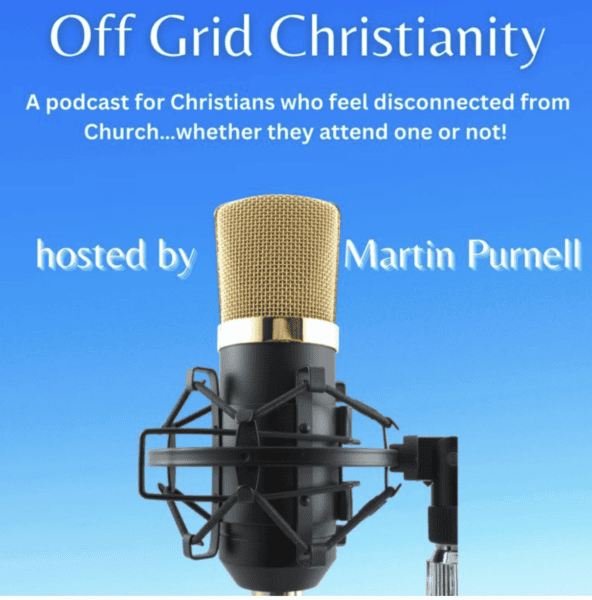
Off Grid Christianity – Episode 188

I got a chance to catch up with Martin Purnell of the U.K. last month, and this is the podcast our conversation produced.  He’s been gracious enough to have me on his podcast a few times, and I am always grateful for what comes out of it.

You can listen to the podcast here.

Here’s how they described this podcast:

And it is a welcome back to a returning guest. Wayne last spoke to us in Season 3. He is a podcaster, pastor, director of Lifestream Ministries and a major author. Wayne co-authored the millions selling book The Shack.

In this podcast, Wayne shared how he was progressing after his back surgery for cancer. So, two seasons later, how is Wayne health wise? Can he play golf again? What is his book It’s Time about? Why did he write his latest book with Tobie Van Der Westhuizen and what do the words Justice and Righteousness, mean to Wayne?

It was a privilege to have Wayne joining us again and he will encourage and give you great insight on what was discussed.

I don’t love all the preoccupation with book sales or being referred to as a pastor, though I am more one now than I ever was. I know they’re trying to hype a podcast into an environment I left long ago, but that’s important to them.  Be that as it may, I do enjoy my conversations and friendship with Martin.

I’m recording yet another podcast today about Just Love with someone in Ohio. I’ll let you know when that airs.

Off Grid Christianity – Episode 188 Read More »

Does Just Love Silently Endure Abuse?

You’re never too young to pick up Just Love.

A mother from Australia sent me that picture. It made me laugh. No, she isn’t really reading it, but the picture made me wish I had been that old spiritually when I was introduced to a Gospel that had love and justness at its center instead of sin and shame, albeit without the pink pajamas. How much different my life would have been if I’d focused on the transformation that comes from the lived experience of the Father’s love.

Yesterday, Tobie and I conducted our fourth class on How Does Love Make this Right. The topic was How Does Love Respond to Injustice?  Does loving an offender mean allowing them to keep being the victim of their abuse? Does forgiveness negate the difficult consequences of someone else’s destructive behavior?

These are important questions as we learn to live inside of his love, and remind us that Just Love is not a set of principles to apply to any specific situation. It’s a way of entering into the flow of God’s life through relationship, so that he can guide us through the complicated questions that arise in our lives.

Of course, love making things right begins by redeeming us through whatever damage we may have suffered. We have to experience that before we can see how his love might lead us on the outside. So, don’t just run out seeking justice from others until God heals the damage done to our hearts and makes up for what others have done.  That needs to be very practical and can take some time.

There are obvious exceptions here. When someone’s actions are violent, illegal, and harmful to yourself or others, get away immediately. Contact law enforcement to expose the problem and protect those who are in danger. I’m writing here about more interpersonal hurts.

Once we see how God is at work in us, we will begin to sense how his love can work outside of us to make things right. That’s what I love about Just Love; it isn’t just about being kind and nice to everyone, but to become part of God’s restorative justice to whatever degree the offending party will allow. It is not resubjecting ourselves to others’ abuse in the name of love, unless God asks it of us as he did Jesus in the week of his passion. But that is extremely rare, and we do it at his leading, not others telling us to, and only for a higher purpose.

An eye to redemption, however, frames our love inside the desires of a just God. Love and justice come together in him, and, honestly, principles won’t guide us here. As I wrote at the outset, what we need is the leading of the Spirit. This is an invitation into a journey of love, shaping us on the inside—untwisting justice in our own hearts, so that we can be part of his justice unfolding in the world.

It doesn’t just ask what would love lead me to do, but more importantly, how is his Spirit leading me in that love? He may ask you to stay in a relationship that’s painful for a larger redemption, or he might lead you away to safety so you are no longer the victim of someone else’s selfishness or anger.

But whatever he asks of you, you will have the strength and courage to follow him, however he may lead.

Also, we got a wonderful review a couple of weeks ago at Mike Morell.org. Here are some excerpts I especially appreciated:

Tobie realized something seismic had just been confirmed: the very word English-speaking Christianity has used for five centuries to translate the heart of the Gospel is unintelligible — even repellent — to the people the Gospel was meant to reach…

It makes a case that is at once scholarly and devastating in its simplicity: the Greek word dikaiosynē, translated as “righteousness” in every major English Bible, is rendered as justice in every other language — German, Afrikaans, Spanish, French, Dutch. Every single one. The English deviation traces directly to the Norman Conquest of 1066, which severed English legal vocabulary from its Germanic roots, creating a religious word — “righteousness” — that conveyed personal moral status instead of right relationship, inner purity instead of just action, individual salvation instead of communal transformation…

That’s the register of this book: personal, pastoral, luminous with grace, and quietly revolutionary..

Tozer sensed it. N.T. Wright and Nicholas Wolterstorff have written about it in academic papers few will ever read. Just Love brings it home — not to theologians with PhDs, but to the “plain man and woman, the insignificant, the widow and the orphan, the poor and oppressed” for whom the justness of God was always intended…

What changes when you read justice instead of righteousness? Everything. “Blessed are those who hunger and thirst for justice.” “Seek first the justice of God.” “The Golden Rule” becomes the Golden Life — not a rule to follow, but a love to inhabit, overflowing into the world.

For the last two years, I’ve enjoyed exploring the connection between living loved and God’s passion for justice in human affairs. I find two or three situations a day that invite me to think differently about what’s going on than I have in the past.

What about you?  Would you care to share what you are learning and how it is shaping the way you live? You can do so in the comments here or send me an email.

Does Just Love Silently Endure Abuse? Read More »

When God Invites You through a New Door

Summer decks and dining room tables are some of my favorite places to sit with people who are learning to live loved. I love the conversations that spill out in unhurried spaces and the relationships that deepen over relaxed days of reflection, laughter, and discovery.

Last week, I was in upstate New York doing just that with people I’ve known for nearly two decades. I got home Tuesday, and these photos still carry the sweetness of those days. Many had already read Just Love, or knew enough about it to want to explore its implications together.

One of the questions that surfaced there is one I understand well: Do we really need one more voice telling us Christianity got something wrong, after 2,000 years? If this is true, why didn’t we see it sooner?

I get that hesitation. There is so much content on the Internet these days shouting, “You’re doing it wrong; this is what you should be doing.” It can be exhausting. And if sorting out truth means comparing competing voices, weighing credentials, or making an intellectual judgment between people who all sound certain, the pressure can feel unbearable. If you don’t know Greek or haven’t been trained in Bible interpretation, it can seem like you’re left to choose truth by your own best guess.

But that’s not how I process new input on this journey.

I don’t begin by trying to outthink it or decide which “expert” I should trust. I pause long enough to understand what is being said, and while I’m doing that, I hold it before the Spirit who lives in me. Does it awaken curiosity? Does it resonate with something Jesus has already been showing me? Or does it raise a caution I need to pay attention to?

I enjoy being curious. With my background in Scripture, I do ask whether something violates his revelation. Even then, I hold that humbly, because along the way I’ve discovered that some things I thought the Bible taught were actually shaped more by religious tradition than by Jesus himself. Most new ideas that come my way don’t prove helpful in the end, but I still want to remain open to any door that brings me closer to him.

I also hold new ideas up to the Jesus I see in Scripture. Can I imagine him saying this? Can I imagine him doing this? Does it make him more real, more central, more beautiful in the way I live today?

And I don’t process alone. I am constantly sharing my thoughts with trusted friends—those who know me well and whose growth in the life of Jesus is evident in the character he is forming in them.

But most of all, I listen inwardly for the Spirit’s settling or unsettling. That matters more to me than any argument, credential, or tradition. John reminded us that we have an anointing from the Holy One to help us recognize truth from error (1 John 2:20). Jesus didn’t say we would be guided into truth primarily by a book, a religious leader, or a doctrinal council. He said his Spirit would guide us into all truth (John 16:13). He is my Yuck Meter, constantly wanting to draw me into what’s true and away from what is not.

“What is the Spirit showing me?” That’s the most important question.

That doesn’t mean I embrace whatever feels comfortable or confirms what I already want to believe. I desire to know what is true, so I can live more freely and wisely in his life, which is often more challenging and risky. For me, this is a relaxed process. I don’t have to rush to a conclusion when God is the one doing the inviting. I can sit with something for weeks or months until his clarity settles.

That’s why I’m not afraid of learning whatever God wants to show me. Even at 73, I keep discovering insights about God and his life that deepen my joy, free my heart, and align me more closely with him. I trust his Spirit within me to help me discern what is true, even when it challenges assumptions I’ve carried for a long time.

That doesn’t have to make us gullible either. Much of what is shouted on the Internet or written in religious books is laced with performance and shame, often designed to make people dependent on an author, teacher, or movement. I have little interest in anything that makes Jesus less significant in my everyday life.

But when God is inviting me to see his way more clearly, I’m all in. I know I don’t have him figured out. Of all his truth, I only see a small sliver. So whether I eventually agree or disagree with a new idea, I can enjoy the conversation, the contemplation, and the growing trust that lets him keep leading me into what is true.

When God Invites You through a New Door Read More »

Last Chance to Join Us in Kansas City

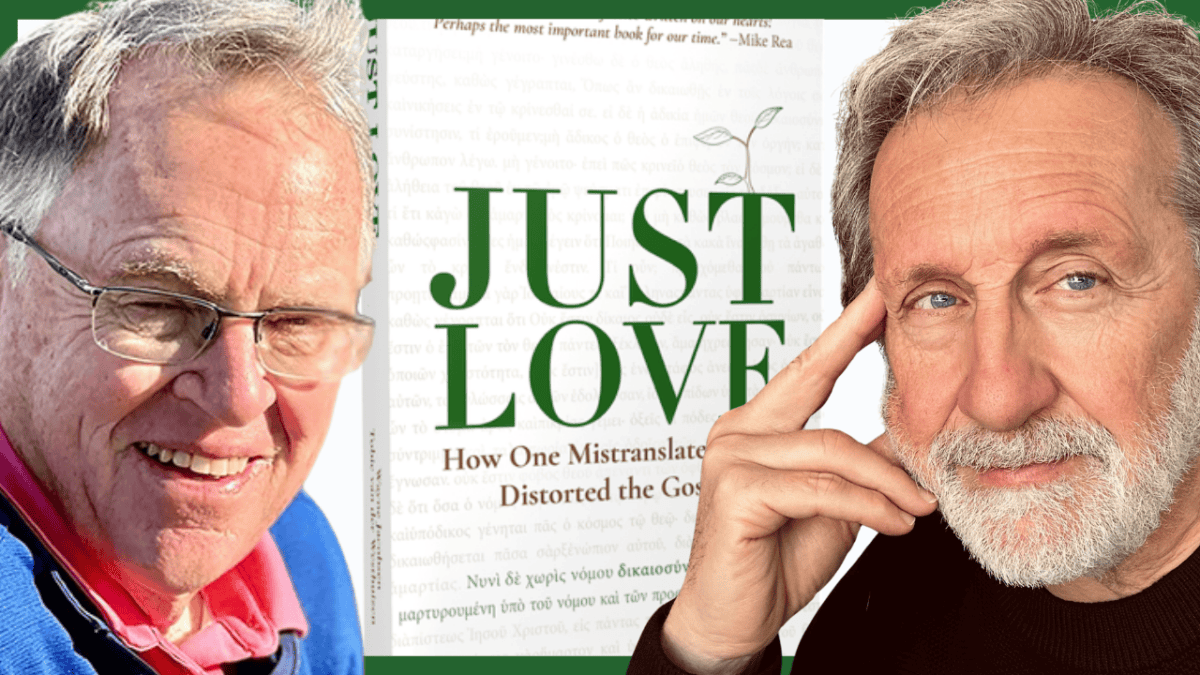
Tobie and I are about to meet face-to-face for the first time, and we’d love for you to join us in Kansas City as we spend three days exploring the glorious implications of Just Love: How One Mistranslated Word Distorted the Gospel.

This won’t be a seminar as much as a conversation—an opportunity to sit together with the wonder of a Gospel far richer than a get-out-of-hell-free card. We lost so much when we traded God’s justness for our imagined righteousness, reducing the life of Jesus to religious schemes of behavior modification that were never meant to work. The Gospel offers something far better: freedom from guilt and shame through the work of Jesus, and a marvelous process of transformation as his love reshapes us from the inside out.

That’s what Tobie and I want to explore with you—not just as an idea to be explained, but as a reality to be discovered together. How does love-produced justice change the way we see salvation, Scripture, transformation, and God’s kingdom taking shape in the world?

If you haven’t read Just Love yet, give it a look. And if you can find your way to Kansas City, July 9–12, come join us for three days of conversation, connection, and discovery. We’ll gather at Westbrooke Church in Overland Park, Kansas. There’s no cost to attend, though donations are welcome to help cover expenses. If you’re coming from out-of-town, reservations must be made by June 16 to qualify for our reduced group rate.

Space is limited, and registration is first-come, first-served. To reserve your place, email wa****@********am.org with the names of those coming.

We’re calling it the Just Love Conversations, and I’d love to see you there.

You can get all the details here.

Last Chance to Join Us in Kansas City Read More »

Writing Justice with the Pen of Love

In regard to Just Love, I have friends of mine in both Germany and France who have written to me letting me know that their versions of Scripture already contain the word “justice” where our English versions use “righteousness.”

So, does this book hold any application for them?

If it were just about a linguistic change, the answer would be no. Tobie and I are aware that linguistically, this is an obvious problem in English. However, it is a more subtle problem in other languages. Since the Reformation, a distorted view of imputed righteousness has spread mostly through the English-speaking Protestant world, so that even non-English readers think of the concept of righteousness, even though their text already contains justice.

They just added the meaning of “uprightness” to their word for “justice”; thus, they have the same conceptual misunderstanding, even though they have retained the word for justice.

Here’s what Tobie wrote to someone who said the same problem exists in Afrikaans, where justice may be in their text, but still not in their hearts:

The unique meaning of the English word “righteousness” has crept into Protestant theology to such an extent that “justice” now has two meanings—a spiritual version that carries the definition of righteousness and a legal version that carries the definition of justice. So, the problem persists outside of English, but without the solution of replacing the word with an alternative that is uncontaminated and has always had a single meaning.

English readers of the Bible need a word-shift, the rest need a mind-shift.

Truth be told, we both need the mind-shift.

When you read Just Love, you will first notice the linguistic problem and how it distorted our view of the Gospel. But in the second part of the book, we show how  Jesus writes his justice on our hearts with the pen of his love. By filling us with his love, light, and life, we won’t be able to live an ego-centric life in the world. Our awareness of others will rise to the awareness of ourselves, and we will not need to manipulate or exploit others to get what we desire from them. Instead, we will guard their hearts as much as we guard our own.

God’s desire was always to have just people on the earth, as he transforms us, so we become a fountain of his love to the people around us without even trying.

______________________

And if you want to hear Tobie and talk about the book, you can do so here:

The God Journey: Love-Lived Justice, Part 1
The God Journey: Love-Lived Justice,Part 2 
With Insight Incorporated on YouTube

And, if you’ve already read Just Love, would you please consider writing a review of it at Amazon and/or Goodreads. I’m told the algorithms need that to help a book find its audience. I am grateful for those who already have

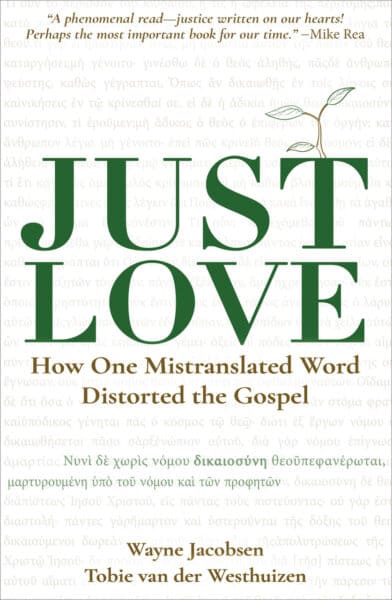
"Just Love" - How One Mistranslated Word Distorted the GospelJust Love:
How One Mistranslated Word Distorted the Gospel

by Wayne Jacobsen and *Tobie van der Westhuizen
174 pages
Trailview Media
Available from Amazon, Tuesday, March 3
in Kindle ($10.99)
or in Paperback ($16.99)

Writing Justice with the Pen of Love Read More »

It’s Finally Done!

We have made it to Colorado, though the trip out was not easy. We had some mechanical issues and severe weather to navigate, but we arrived on time and spent the first couple of days getting our issues resolved. We are now set up alongside a beautiful creek in Golden, CO, with a walking path along it that stretches out in both directions. And Mandy enjoys the creek every day.

Next week, we will head north with stops for conversations and sightseeing in Rapid City, SD, Sheridan, WY, Bozeman, MT, Kalispell, MT, and hopefully in Calgary, AB.  Then, we’ll work our way homeward through Washington and Oregon. If you want to join us somewhere, let me know.

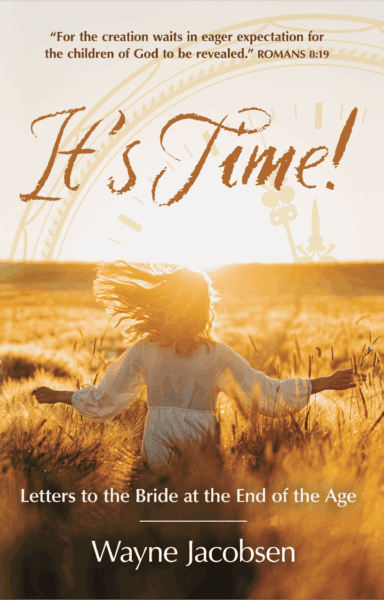
I am writing this to let you know that my newest book, It’s Time: Letters to the Bride of Christ at the End of the Age, is finally complete and ready for purchase. You can order it in paperback ($10.99) or e-book ($8.99). If you purchased the Kindle version for Part 1, the new version with Part 2 will be added to your file the next time you update it. It may already be there.

This book has been a labor of love over the past three years. When God first put it on my heart to write it, I knew this would be a very different book for me. It would be like living loved on steroids, through the darkest challenges life can throw at us. What I didn’t know at the outset was how my life would be put through the wringer in so many different ways as I wrote it. Through it all, I have discovered a depth of trust in his love and rest in his work that has rewritten the script of my life in a wonderful way.

Everything Jesus has taught me in the last five years is in this book, how the life of Jesus and his goodness can shine through us, regardless of whatever darkness we face. That’s what Creation yearns for and what the world needs to see—a people who have found their Life in him, and nothing that happens in this world can destroy it.

Now, I want to share all of that with you.

It’s Time is about God revealing himself in his sons and daughters as the end of days unfolds. I’m not a date-setter, but I will be surprised if this world makes it another decade before Jesus returns. Whether this is the end or not, I cannot say with any degree of certainty. I see signs that make me wonder, and the possibility delights my heart. If this is not the beginning of the end, then when it does come, it will look a lot like this.

The time of Jesus’s coming may be at hand; the time for letting his love be revealed through us definitely is.

Here is an excerpt from the last chapter:

These pages carry a gentle invitation to draw into the deep places where our love and trust in him aren’t based on us getting what we want, but the simple and profound magnificence of his presence in us. This is how Jesus prepares us for whatever may come. Too many followers of Jesus are playing the world’s games, thinking they are following Jesus. They have been deluded by the lie that the kingdom comes by coercion. Their wounded hearts look to lash out at their perceived enemies. Their only hope is to be loved back into life, where the tactics of darkness hold no sway.

“Even so, come quickly, Lord Jesus.” (Revelation 22:20)

That phrase makes my heart soar in a way it hasn’t before. I’m convinced we live in the moments before the dawn. Certainly, darkness seems to rule everywhere we look, but for those with eyes to see, the skies have already begun to brighten ever-so- slightly on the eastern horizon.

And, here is the Table of Contents

  1. It’s Time
  2. Is This Where It Ends?
  3. This Scares Me to Death
  4. Who Are You to Write Such Things?
  5. The Tender Call
  6. Following the Lamb
  7. The Power of Tenderness
  8. Love What Is True
  9. Eyes to See, Ears to Hear
  10. Only One Thing Matters
  11. Love, Rest, and Play
  12. Rise and Shine
  13. Riding the Wind
  14. By Every Word
  15. The God-Shaped Life, Part 1
  16. The God-Shaped Life, Part 2
  17. Embracing God in Our Pain
  18. Holding God’s Pain
  19. Children of the Day
  20. Stand By
  21. And Then the End Shall Come

_______________________________________________

It’s Time: Letters to the Bride of Christ at the End of the Age
221 pages, paperback ($10.99) or e-book ($8.99)

It’s Finally Done! Read More »

We Are About Half Way There

Last week, I asked if you could help my friends in Kenya once again. They are about to lose the petrol station we built for them at a government auction due to nonpayment of fees they were unaware they owed. The profits from this station support an orphanage and education center, as well as help their graduating students find their way in life. It has been in operation for over fifteen years.

Thanks to your generosity, we’ve received almost $9900.00 of the $22,328 in a few days. I’m so grateful to those of you who felt inspired to help us here. We have to send the money at the end of this week to prevent the auction and restore the petrol station to our brothers and sisters in Kenya.

So, in case there are others still considering this, I thought I’d ask one last time. If you can help us raise the remaining funds, please visit our Donation Page at Lifestream. Please designate “Kenya” in the Note section of your donation, or email us to let us know that your gift is intended for Kenya. You can also Venmo contributions to “@LifestreamMinistries” or mail a check to Lifestream Ministries  •  1560 Newbury Rd Ste 1  •  Newbury Park, CA 91320. Or, if you prefer, we can take your donation over the phone at (805) 498-7774.

As always, every dime you send will end up in Kenya. We do not take out any money for administrative overhead.

Thank you for your concern and prayers for these people in Kenya.

We Are About Half Way There Read More »