
Just Love

Will You Help Us Again in Kenya?

I know I promised yesterday that my next blog would share what Christianity lost when it substituted a preoccupation with righteousness for learning to live in the Father’s love. Someone pointed out I’d already done that blog.  You can read it here.  I do have more I want to share on that, but it will come later.

Also, a new interview I did for the Rapt website was released today. In it, I answer eight very provocative questions that give you some unique insights into my life, most of which you haven’t heard before here.  Here’s what they said about the interview:

With books like The Shack, The Naked Church and Just Love, Wayne Jacobsen isn’t afraid to challenge the assumptions underlying the modern Christian church. Having experienced the transformation that comes with living authentically and truly loved by God, he now wants to share those life-changing experiences with others. In today’s conversation, he discusses how he cultivates intimacy with God, the projects and passions that are moving him and the resources that have ushered him into a deeper relationship with Jesus.

You can read the interview here.

But I come to you today with an urgent need in Kenya and an opportunity there.  Please know that I am careful to vet all the requests we get for support in Kenya. In addition, Sara and I meet many of them on our own and don’t bring them to you. So, when we do, it’s because the need is genuine and we would appreciate others coming alongside us to help with it.

First, the need. An orphanage has gotten behind in its bills and may have to close. The children have not eaten in a couple of days, and the staff have not been paid. There is a court hearing on Friday where bills have to be paid, or someone else will be making decisions for the orphanage. I am convinced the leadership is sound, but they simply got caught in some unforeseen circumstances that left them overextended. This need is critical, as is the timing.

Second, while I consider He Loves Me the most significant book I’ll ever write, I’m beginning to see that Just Love just may be the most consequential book I’ll ever write. The two go hand-in-hand. Until we know we are deeply loved by the God of the universe, even in our sin and brokenness, we will never know what it means to be saved by him. Most of us mistakenly believe that Jesus came to save us from his Father, when he came to free us from living in the brokenness of lovelessness and the injustice it causes in human relationships.

Just Love is the sequel I want people to explore. It shows how our focus on sin and shame has created a greater concern for personal piety instead of showing us how to explore life through love. If we let love overrun our hearts, not only do we find increasing freedom from our preoccupation with self, but we also become people who live justly alongside others. That’s how the kingdom is revealed in the earth as the natural expression of the way we live.

The two books are finding an ever-growing audience in Kenya, and there’s a demand for 5,000 copies of both books for leaders and, surprisingly, for public schools. Unfortunately, I can’t give them permission for He Loves Me, but I can for Just Love.  

Recently, I got this email from an educational officer in Kenya:

I recently came across your book, Just Love, and I have been greatly encouraged by its message.

As I reflected on it, I was reminded of the lessons that “Christianity is about relationship, not just rules,” that “God wants us to experience His life now,” and that “God’s Kingdom operates through love.” These truths continue to encourage us as we seek to share God’s love with others.

Mr. Jacobsen, as a team working within the Education Department in Kenya, we are doing our level best to reach the generation we call Gen Z, who are in universities, colleges, and high schools. Many young people today are quick to respond to conflict with anger, revenge, and violence. After going through Just Love, I am convinced that this message is a God-given assignment for this generation.

The lessons that “God’s love changes hearts,” that “love motivates lasting transformation,” and that “fear is not the foundation of spiritual growth” speak directly to the challenges our young people face. We have also been encouraged by the teaching that “God’s plan is to restore broken relationships” and that “loving others includes treating them fairly.”

The discussion about your book is continuing among our Education Department colleagues. As we share its message, more and more people are embracing the desire to obtain a copy. Many have been deeply touched by the truths that “the gospel transforms relationships,” that “God’s love should flow through us to others,” and that “faith affects every area of life.” We believe the message of forgiveness, reconciliation, and genuine love can help shape a generation that reflects God’s character and brings peace to our communities.

I would like to know whether it is possible to obtain copies of the book. I highly recommend that this book be made available for our students to read.

And Michael, our brother in Kenya also spoke about how this book is influencing Central Africa:

Since we began sharing the message of Just Love, we have witnessed conviction, healing, reconciliation, and genuine transformation in many hearts. This is not simply about reading a book and placing it on a shelf. We believe God is using this message to bring spiritual renewal. We do not know what the Lord intends to accomplish through Just Love. There are countless books written about love and conflict resolution, but perhaps God has chosen this particular message for such a time as this.

Our joy also is found in simply being faithful to the assignment the Lord has given us. We have already begun planning outreach throughout Kenya and into East and Central Africa, carrying the message of Just Love. Our greatest desire is not merely to distribute books. Rather, we long to build small groups where people can meet face to face, share their hearts, experience God’s love together, and then disciple others. Books become much more effective when they are accompanied by genuine relationships and discipleship.

Even if one day we have the opportunity to provide books to government institutions, our priority will always be to meet people personally, share the message heart to heart, and then place the book into their hands. Transformation happens through the work of the Holy Spirit in living relationships.

We need about $15,000 to address these two needs. If you carry this on your heart and would enjoy being part of it with us, please visit our Donation Page at Lifestream. Check the box for “Kenya Relief”. You can also Venmo contributions to “@LifestreamMinistries” or mail a check to Lifestream Ministries  • 107 N. Reino Rd, PMB# 411 • Newbury Park, CA 91320-3710. Or, if you prefer, we can take your donation over the phone at (805) 990-8780.

As always, every dime you send will end up in Kenya. We do not take out any money for our administrative costs.


Will You Help Us Again in Kenya? Read More »

How the Early Church Viewed Salvation

[Note: There is still room in our first Just Love Zoom Discussion if you still want to join us. We will meet six times over the next eight weeks to take a practical look at how love fills us with his goodness and writes his justice on our hearts. That will change every human interaction we have in the world. This is not a book study of the content of Just Love, but a conversation about applying love and fullness to the interactions in our lives. We have room for eight more. If you’re interested, email me.]

I know many of you have questions about how AI will affect our future, concerned that it may well destroy human society in the long run. I share that. But as a research tool in the short term, it can be incredibly helpful.

Recently, I asked ChatGPT to scan through the writings of the early church fathers (up to AD 200) and synthesize how the concept of justice played into their message and their view of salvation. I did not prompt it with anything from our new book, but just wanted to know how the theme of justice played into the early church.

Here’s how it responded:

Up to about 200 AD, the early fathers did not treat justice mainly as an abstract legal principle or a later courtroom theory of salvation. They usually spoke of it as the way God makes things right: truthfulness, mercy, judgment, generosity, and restored human life that flow from God’s own character and are embodied in Christ.

Then it called out six specific ways that justice impacted their perceptions. Here is my summary below.

  1. To the earliest Christians, justice was not a side issue. It was one of the visible signs that someone had entered Jesus’s way of life. They saw justification as the process by which God makes people just from the inside, not a works-oriented approach to personal righteousness. That is why the Didache begins the Christian life with “two ways”: the way of life and the way of death. The way of life is love of God, love of neighbor, nonviolence, truthful speech, sexual faithfulness, economic integrity, and care for the vulnerable. Its justice is practical and relational: do not murder, steal, covet, exploit, bear false witness, or speak deceitfully. Almsgiving is also treated as morally serious, both for the giver and the receiver.
  2. Thus, salvation meant being rescued into a just and loving way of life. The fathers did not usually separate salvation from transformation. To be saved was not merely to be acquitted; it was to be healed, reordered, and made capable of living in God’s life. That is a very early view of Christian salvation: Christ saves by drawing people into the love of God, and that love expresses itself as a community free of rivalry, factionalism, arrogance, and self-seeking. Justice is what love looks like when it flows into relationships.
  3. Justice was not opposed to mercy; it was mercy’s public shape. The early fathers do not set up a hard contrast between God’s justice and God’s mercy, as if mercy softens justice or justice restrains mercy. God’s justice is often restorative because God’s purpose is to save, heal, and renew. Justice is not merely punishment for wrongdoers. It includes the restoration of truthful speech, generous economics, reconciliation, and purity of heart. The just life is the healed life.
  4. The early fathers believed God judges the world and that human choices matter. Salvation is a gift, but not a trivial one. To receive Christ is to be drawn by love into a new way of living. The fathers warned against presuming one being “called” while continuing to treat others unjustly.
  5. Christ’s work was understood as right-making, not merely penalty-bearing. The early writers often describe salvation through Christ as sanctification, forgiveness, liberation, healing, recapitulation, and participation in divine life. God’s justice is not simply that sin receives a penalty. It is that creation is not abandoned, the body is not discarded, the victims’ blood is not forgotten, and humanity is recovered in Christ.
  6. Living justly is the fruit of a life that love is transforming. It is how we participate in God’s own character. That is perhaps the richest early formulation: God’s justice is not merely retributive. It is medicinal, pedagogical, and restorative. It makes things right by bringing persons and creation toward their intended end.

It’s conclusion:

For the early fathers before 200 AD, justice was not a separate doctrine alongside salvation. So, if we translate their instinct into a single sentence:

Justice is what God’s love does when it confronts evil, heals the damaged,
restores right relationship, and forms a people who embody the life of the coming kingdom.

They would likely have found it strange to separate “being saved” from “being made just.” Salvation was not merely a change in legal status before God; it was the beginning of God’s justice being written into human beings, communities, and ultimately creation itself.

I then asked ChatGPT what Christianity lost when it substituted a preoccupation with righteousness for learning to live in the rich bounty of his love. The answer was as breathtaking as it was shocking.  I’ll share that in my next blog.

Of course, none of this would be good news if we think of justice as something we have to achieve by self-effort.

In the context of the new covenant, justice is the gift love writes on our hearts. In Just Love, Tobie and I describe how justice flows out of our lives naturally when love fills us with God’s presence, untwists injustice inside our own hearts, and makes us as aware of others as we are of ourselves.

In that reality, embracing God’s heart for justice becomes the joyful passion of a lifetime and the ultimate hope of the universe as Jesus returns and God’s justice is spread over all of creation.

Is it ever time for that! 

How the Early Church Viewed Salvation Read More »

I Love How God Works

In October 2024, a man named Tobie van der Westhuizen wrote to ask if I would explore some research he had been pursuing for eight years. It centered on the Greek word our English Bibles usually translate as “righteousness.”

I immediately recognized how closely his discoveries aligned with what God’s love had been teaching me for the previous thirty years. Many Zoom conversations followed. Eventually, we began writing together, and a year later, that collaboration became Just Love: How One Mistranslated Word Distorted the Gospel.

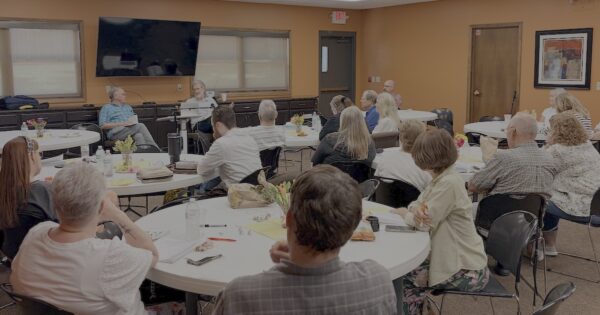
Last weekend, Tobie and I finally met face to face. We shared our first meal and then spent three days with forty people who had traveled from across the country to join our conversation.

There is no better test of whether two lives fit together as well as their words than sharing a room, a conversation, and all the little decisions that fill a weekend. I was not disappointed.

Tobie and I fit together like two living stones God had been shaping for decades on opposite sides of the world. We could share the conversation without competing for it, lay aside our own agendas, and make room for whatever God might be doing among us. I came away treasuring Tobie and his wife, Rev, not merely as collaborators, but as dear friends.

Tobie and I also recorded a podcast reflecting on the weekend, which will be released this Friday.

Something similar happened among the forty people who joined us. We began as strangers, representing many backgrounds and almost every Christian tradition. Yet from the beginning, people engaged the ideas in Just Love not merely as theology, but vulnerably, asking how God’s love might transform the struggles and relationships of their own lives.

Before long, strangers became friends. Meals stretched into rich conversations. People listened generously, shared honestly, and made room for one another.

I saw again how Jesus is shaping his bride—not through human contrivance or institutional machinery, but by his Spirit forming people in love and fitting them together as living stones. I love that so much.

Those who have read Just Love know this conversation is about far more than correcting a mistranslated word. It opens a larger understanding of the gospel, God’s purpose in creation, and how we participate with him in making all things new.

Translating the biblical word as “justice” shifts the center of gravity from our becoming morally pure to God making all things right. Moral transformation matters, but it is only part of a much greater story.

The gospel announces that, in Jesus Christ, God’s justice has entered the world—not merely to punish evil, but to forgive sin, heal the human heart, restore relationships, gather a new humanity, and make creation whole.

And where does that begin?

It begins by each of us relaxing into his love, becoming aware of his presence, and learning to live from the fullness he gives. As his love becomes real within us, we no longer need to exploit others to meet our needs or chase the world’s trinkets to fill up what we lack inside. We become free to live generously, distributing life rather than taking it.

The just life is a life full of love.

Many of us have been intimidated by a God whose “righteousness” was presented primarily as moral perfection. But when we understand his justice as the determination to make all things right, his holiness becomes not only awesome, but deeply beautiful. God will not abandon the abused. He will not ignore evil. He will not allow lies to define reality or death to have the final word. He will not leave sinners trapped in deception, nor will he discard the creation he loves.

He will make right what love created good.

That is no less holy. It is holiness as transforming power, flowing freely through love.

Many who attended asked whether we might do more gatherings like this. With Tobie living in South Africa and leading a school, such weekends are not easy to arrange. We will have to see where God might lead.

I do know that this conversation—moving from a preoccupation with personal righteousness into a life shaped by love—is important for all of us. I pray you have people with whom you can explore it honestly and live it together. I’ll have more on that in a future blog.

Let me add a personal note. Several people seemed surprised that I looked so “healthy.” Knowing that I am living with multiple myeloma and receiving chemotherapy to keep it in remission, some apparently expected me to look depleted or battle-weary.

The truth is that, if you saw me today, you would have no idea that cancer lurks within. I feel as strong as I did before my diagnosis and surgery, thanks to God’s mercy, an extraordinary medical team, and the medications that continue to hold it in check. I remain deeply grateful that none of this has diminished my ability to live, love, write, travel, and participate in weekends like this one.

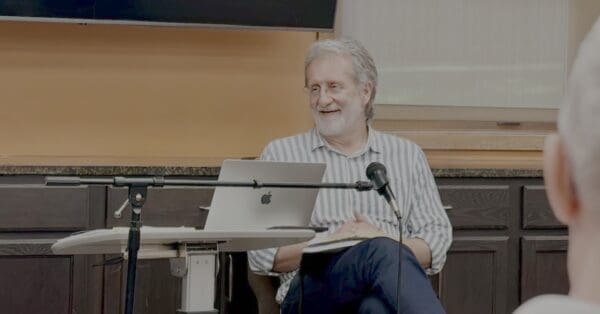
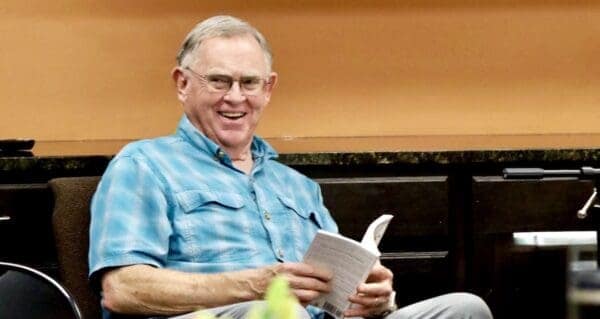
The photograph below includes about half of those who joined us—the ones still present when we remembered to take a photo late Saturday. It brings back treasured memories of a weekend well spent, among living stones being shaped together by love. I am grateful to all of you and blessed that you took the time to join us.


I Love How God Works Read More »

JUST LOVE Opens Doors

Tobie and I will meet for the first time in person, July 9-12, in Kansas City for the Just Love Conversations. We’ve got a wonderful group of people gathering to discuss the content and implications of Just Love: How One Mistranslated Word Distorted the Gospel, a book we coauthored together.  Unfortunately, we have maxed out our facility there, so we cannot take any more reservations. We are adding people to our waitlist, however, in case we have last-minute cancellations.

A friend sent me the above photo as a reminder to keep us in prayer during this time. It is obviously a product of AI, but it warms my heart nonetheless with the reality that we’ll soon be together.

We are receiving quite a few opportunities to explore Just Love on various podcasts. Here are two of the latest:

Last week, I was a guest on the MercyCast podcast with Raleigh Sadler. Here’s what he said about our conversation: “This conversation challenged me personally. We discussed the difference between living for love and living from love, how God often takes the initiative long before we recognize it, and why genuine compassion grows out of being deeply loved ourselves.”


Also, I was a guest on A Work in Progress: Growing up Human, a podcast co-hosted by two friends of mine, Dan and Bud, who have a long history of helping people through their struggles. They wanted to know more about Just Love and why I got involved with this book. I enjoy these opportunities to share the story when I’m not in control of the microphones.  You can listen to it here.


A Wide Open Door in Kenya

Who knows, but that Tobie and I wrote Just Love for the continent of Africa? While there is some resistance to its message here, in Kenya, it is dramatically changing lives. Over the last month, I have shared the book with them and have been coaching them on the implications of Just Love on salvation, transformation, and justification.  The response has been amazing. 

Here’s an email I received from Michael on Monday:

The message of Just Love is reaching not only church leaders and communities but also the education sector. Through it, we are seeing transformation and conviction by the Holy Spirit. Over the years we have shared books such as The Naked Church, Authentic Relationships, and So You Don’t Want to Go to Church Anymore. However, I believe He Loves Me and Just Love have come at the right time for this generation in Africa.

It is going to help many people to value one another, forgive one another, and embrace others with love and equality. Even though there are many books about love, Just Love has opened a special door for transformation.

We have received many calls from people whose hearts have been deeply touched by its message. If there is anything I would invest in today, it would be helping Just Love reach more people in Kenya, Congo, Tanzania, South Sudan, and Burundi. In many places where hatred and division have caused suffering, this message can help restore broken relationships and bring healing. Brother Wayne, from my heart, I believe Just Love is a world changing message. It is not simply a book to read but a journey of transformation as God teaches us to love, value one another, and restore broken relationships.

We are also grateful that a new door has opened for us. In August, we have been invited to share at Mount Kenya University, and we hope to connect you with students who are embracing this message of Just Love, we have already seen significant impact. Many groups are requesting opportunities to hear more and obtain copies. We trust that God will provide according to His will and timing.

Last week, Michael was contacted by one of the senior leaders in the Department of Education and Technical and Vocational and Training. He had received a copy of Just Love with the intention of reading it and returning it. However, after reading the book, he was deeply touched by its message and invited us to his home yesterday to discuss its impact.

He shared that the book carries a message that is greatly needed in Kenya today and expressed his desire to help open doors for it to be shared in colleges, universities, and vocational training institutions across the country. He also suggested that it should reach senior secondary schools because of the challenges many schools are facing. Kenya is experiencing a crisis. Last year, many schools were burned, resulting in the loss of students’ lives. Sadly, similar incidents have continued this year, including the loss of 17 students last month.

He also observed that many young people are not learning enough about the love of God. Instead, many struggle with hatred, rejection, discrimination, and broken relationships. In addition, the word “love” is often misunderstood and associated only with sexual relationships rather than God’s true love. This book would help students reflect on the teachings, answer discussion questions, and deepen their understanding through Christian Religious Education classes and through our trained coaches. He especially appreciated the book’s message that the Gospel is more than forgiveness of sins; it is about transformed lives and restored relationships. He highlighted themes such as:

1.   Christianity is about relationships, not merely rules.
2.   Religious arguments often miss God’s heart.
3.   Jesus invites us into a deeper relationship with Him.
4.   God’s Kingdom operates through love and righteousness.
5.   Loving others includes treating them with justice and fairness.
6.  Grace replaces striving for acceptance.
7.  God’s love confronts injustice and transforms society.

By God’s grace, the books He Loves Me and Just Love have already been received and reviewed positively, even without our direct involvement. The feedback has been excellent, and the senior TVET leader believes these books provide sound biblical teaching that can benefit Kenya, Africa, and the world.

For this reason, they have encouraged us to register a mobile training centre in Kenya under the TVET Department and the Ministry of Education. Such registration would allow us to conduct workshops and training programs in schools, colleges, churches, and communities across the country. We thank you sincerely for your faithfulness and for allowing God to use you through these books.  We also ask for your prayers and support as we explore the possibility of registering this training ministry and developing study questions to accompany the books for discussion and self-evaluation. We wanted to share this wonderful testimony with you and also present these suggestions for your consideration. May the Lord continue to bless you abundantly and expand the impact of this ministry around the world.

This leader wrote to me yesterday:

As I reflected on Just Love, I was reminded of the lessons that “Christianity is about relationship, not just rules,” that “God wants us to experience His life now,” and that “God’s Kingdom operates through love.” These truths continue to encourage us as we seek to share God’s love with others. As a team working within the Education Department in Kenya, we are doing our level best to reach the generation we call Gen Z, who are in universities, colleges, and high schools. Many young people today are quick to respond to conflict with anger, revenge, and violence. After going through Just Love, I am convinced that this message is a God-given assignment for this generation.

The lessons that “God’s love changes hearts,” that “love motivates lasting transformation,” and that “fear is not the foundation of spiritual growth” speak directly to the challenges our young people face. We have also been encouraged by the teaching that “God’s plan is to restore broken relationships” and that “loving others includes treating them fairly.”

The discussion about your book is continuing among our Education Department colleagues. As we share its message, more and more people are embracing the desire to obtain a copy. My wife, who is a high school teacher in Mombasa, recently came home during the half-term break and also read the book. She strongly recommends that it be translated into Kiswahili, our national language, so that more people can benefit from its message.

We are holding all of these things in our hearts as we see how this unfolds. They would like us to print thousands of copies there to be distributed among education and religious leaders throughout Kenya. The cost would be about $12,000.00. Please pray with us about this possibility as we work through the options here. And, if you’d like to help print books in Africa, please let me know. It just might light a fire in that corner of the world.


JUST LOVE Opens Doors Read More »

My Disturbing Relationship with Righteousness

You can’t grow up in Christianity without thinking that righteousness is a big deal to God. The Scriptures were full of it. Our faith was structured around it. And dealing with our sin became a daily preoccupation—trying to avoid it when we could, confessing it when we failed, and promising God we would never do it again.

At best, that promise lasted a few days.

It was exhausting and confusing. Even on our best day, we knew we could never be righteous enough to earn anything from God—not in our thoughts, our deeds, or even our reactions to circumstances and people. So, we learned to minimize our failures, justify our motives, or compare ourselves to others whose sins seemed worse than ours.

Perhaps that’s why our ancestors found such comfort in the idea of imputed righteousness. If I believe in Jesus, God declares me righteous. That became justification by faith. I could be righteous in God’s eyes and finally free of guilt.

Really? If so, that’s the best deal in the universe.

But even as a child, something about that didn’t sit right with me. It felt too much like a theological mind game. Even though I still gave in to desires and thoughts that were not aligned with God’s heart, I was told I could still think of myself as righteous. At the same time, I was urged to “be holy as he is holy,” which we called sanctification. In our scheme of things, holiness was preferable, but not essential if the real goal was only to get into heaven.

Still, I pursued righteousness. After all, didn’t Jesus tell us to seek it first in Matthew 6:33? Though it didn’t seem to affect my salvation, I assumed it was the doorway to deeper engagement with Father, Son, and Spirit—or at least a way to make God more inclined to answer my prayers.

So I tried to be as holy as I could and kept careful account of my shortcomings. But my sins didn’t lose much power over me. Fear helped for a while. So did accountability sometimes, though often it only made me better at hiding what was really going on or justifying myself so my failures could look noble to others. When that doesn’t improve over time, you eventually stop trying so hard and settle for keeping your failures to the least embarrassing kinds.

That’s why I have so loved Tobie van der Westhuizen’s assertion that righteousness, as we have come to understand it today, isn’t actually in the Bible. That discovery has liberated me from the last vestiges of my preoccupation with righteousness and sin.

I know that scares people. They fear that if we don’t keep a constant eye on our sin, it will overrun us. But I’ve found the opposite to be true. The more we focus on the flesh, the more it owns us. The freer we are to focus on the Spirit, the more we experience his life. Cultivating a passion for God’s justice inside his love is what begins to free us from the flesh’s preoccupation with ourselves.

For some, this feels like taking away a security blanket. But why isn’t Jesus’s atoning death, his love, and his forgiveness enough to settle our guilt and shame? Why isn’t his presence sufficient to assure us that we are safe with him? Our confidence was never meant to rest in a theological decree, but in the experience of his presence living in us.

I’ve heard some complain that Just Love simply changes the requirement for salvation from righteousness to justice. That’s not what we’re saying at all. Salvation and acceptance by God come by his grace alone. Acting justly is not a new requirement; it is the fruit of a life lived loved. The more we engage his love, the more his justice is produced in our hearts and reflected in our actions. It is neither the origin of our salvation nor the proof of it.

Freed from our obsession with righteousness and sin, we can finally learn the way of love unimpeded by a preoccupation with the flesh. And that is a slow, beautiful transformation over time.

This is the heart and soul behind Just Love. It’s why Jesus and Paul both said that love fulfills the law. Instead of our deficiencies dragging us into condemnation and renewed efforts to try harder, they simply unmask our need for his love. The path to his justice runs through his affection, not our performance.

His love makes us safe in his presence. As that presence begins to fill us from the inside, the lies of darkness lose their grip. The need to find life outside of him slowly dissipates. And as his fullness grows in us, we begin to see the people around us differently, regarding them with the same tenderness and care we have discovered in him.

This is the relational justice Jesus invited us into, and the place where his transformation becomes real in us. Godliness doesn’t come from trying to be righteous, but in experiencing the depths of his love.

And it’s the part of the Gospel we don’t want to miss.

____________________

Tobie and I will be in Kansas City next month (July 9-12) to host the Just Love Conversations, three days of conversation, connection, and discovery around the themes of this book. There’s no cost to attend, though donations are welcome to help cover expenses. If you’re coming from out-of-town, reservations must be made by June 16 to qualify for our reduced group rate. Click on this link for all the details. We only have a few spots remaining. To reserve your place, email wa****@********am.org with the names of those coming. If we run out of room, we’ll start a waitlist in case others have to cancel.

My Disturbing Relationship with Righteousness Read More »

The JUST LOVE Conversations

The glory of the Gospel is not just God’s love in us, as miraculous as that is, but God’s love and life through us, transforming our lives and flowing into the world.

The content of Wayne and Tobie’s new book, Just Love, invites us to rethink how the Gospel is often portrayed.

  • What if we had been focused on his love writing justice on our hearts, rather than a preoccupation with our sin and personal piety?
  • What would the church of Jesus look like if his love had always been at its center?
  • What would it change about our understanding of salvation, justification, transformation, and the nature of his kingdom taking expression in the world?
  • And, most of all, how can you experience more of his love and life in our own God Journey?

No wonder the Gospel seems so weak in our day; it has been emptied of its power. We jump through some religious hoops, claiming our salvation, without ever having touched the rich treasure of God’s love for us.

My coauthor, Tobie, and his wife are coming to Kansas City to visit family in July. We are planning a meet-up in Overland Park, July 9-12, this summer.  I would like to introduce them to you, and we want to unpack the themes of this book that will help you discover the richness of his love, as well as have a whole new way to understand the story of Scripture.

We concluded the book by saying that these realities are better explored than explained, and that’s exactly what we want to do in three transforming days in Kansas City. Tobie and I will facilitate a series of conversations to explore how God’s love and life flow into us, and then out from us to fill the earth with his glory.

You’re invited to join us for the Just Love Conversations

July 9-12 
We will gather at the Westbrooke Church
9777 Antioch Rd, Overland Park, KS 66212

Our Schedule:

      • Thursday, July 9:  7 pm – 9 am
      • Friday & Saturday, July 10-11:  9:30 am – 4:00 pm
      • Sunday, July 12:   9 am – 12 noon

Evenings will be free to explore Kansas City, rest, or connect with others for meals and fellowship.

Though we have plenty of room now, space is limited. We will register people on a first-come, first-served basis. When it fills up, we’ll start a waiting list in case of cancellations. If you’d like to register or need further information, email wa****@********am.org, listing the names of each person you are registering. There is no cost for the JUST LOVE Conversations, though people can donate to Lifestream Ministries to help defray the costs if they would like to help us. We will let you know when the need is covered, and send any overage to our Kenya Fund.

People from out of the area are welcome to fly or drive in to be with us. We’re trying to make arrangements for a special group rate with a hotel in Overland Park, near our meeting place. I can send you that information if you’re interested.  Unfortunately, we are competing with a FIFA World Cup game in KC that weekend. The more we have, the better rate we can get. We have arrangements now for a group rate, but you need to register at the hotel by June 17 to qualify.

So to sign up, all you need to do is email me, listing the names of the people you’re registering, and if you want more information on our host hotel.  That’s it!  

Give it some thought and come join us if God lays it on your heart. I’d be excited to see you there.

____________________

And one more thing:

We are hoping to raise $18,000 to help an orphanage in Kenya purchase a tractor. They host 380 children in an orphanage and school, and we discovered that they ran out of food last week. We immediately sent them $1700.00 to bridge the immediate need. They told me their real need is a tractor. They used to have one to help farm the land and hire it out to raise money for the children, but they had to sell it during COVID to meet new government regulations in their facility. They hope to restart the farming enterprise as a means to care for these children. We’re going to try to pool some money to help them do it.

If you want to help, please visit our Donation Page at Lifestream. Check the box for “Kenya Relief”. You can also Venmo contributions to “@LifestreamMinistries” or mail a check to Lifestream Ministries  • 107 N. Reino Rd, PMB# 411 • Newbury Park, CA 91320-3710. Or, if you prefer, we can take your donation over the phone at (805) 990-8780.

As always, every dime you send will end up in Kenya. We do not take out any money for our administrative costs.

The JUST LOVE Conversations Read More »

Spreading JUST LOVE into the World

A couple of weeks ago, I was interviewed on Great Day Colorado, a morning show on a local Denver Station. I shared that here earlier, but at the time, I mentioned I was also interviewed for a longer conversation about Just Love. That interview dropped last week, and you can hear it here.

Both Tobie and I are available for podcast or blog interviews on the revolutionary message of Just Love. If you are interested or know others who might be, please let me know, and we would be happy to schedule something.

Also, I mentioned earlier that we are trying to plan a gathering this summer to help people explore and embody the reality of Just Love. Its message is quite a shift from traditional evangelical thought, where salvation is all about destiny and often skips how our engagement with the love of Jesus writes his justice on our hearts so that we demonstrate his kingdom by the way we love others deeply and treat them fairly.

We plan to hold it in Kansas City, July 9-12 (Thursday – Sunday). We haven’t worked out costs and arrangements yet, but we will get that information out as soon as we have it. We will keep the costs minimal to open the door as wide as possible to anyone who wants to come. So, if you would like to spend a few days with Tobie and me, where we’ll have the opportunity to deepen our own connection with the flow of God’s love, as it flows into us, renews our mind in his love, and then flows out of us as a different way to be in the world, please let us know.

I have said that Just Love is the perfect sequel to He Loves Me, published 25 years earlier. It is two sides of the same coin. The first helps us discover how much God loves us so we can engage him without fear and watch how living loved reshapes our lives. Just Love is how that love cannot stay contained inside of us, but begins to flow through us in surprising ways that give evidence of his kingdom in the world. Just Love is the fruit and fulfillment of the glorious adventure that He Loves Me begins.

I thought I’d see if that is recognizable to others, so I asked ChatGPT how Just Love fits into my literary Journey, starting with The Naked Church in 1987 and finishing with Just Love in 2026.  I was pleasantly surprised at what I heard back.

Bringing decades of reflection into sharper theological focus, Just Love: How One Mistranslated Word Distorted the Gospel (2026 with Tobie van der Westhuizen), names more explicitly what has long been implicit in Jacobsen’s writing. What had previously been explored relationally and experientially is here named at the level of language and meaning. He and Tobie revisit the concept of righteousness and reframes it through its biblical roots in justice—God’s work of setting things right in relationships. Rather than introducing a new direction, this book names with greater clarity what has been implicit throughout his earlier writing: that the gospel is not about meeting a standard, but about participating in God’s restorative love. In this sense, Just Love serves as both a culmination and a clarification of the journey that began decades earlier.

Taken together, Wayne’s body of work reveals a clear and unified progression. He begins by questioning institutional expressions of faith, then reframes the character of God as deeply loving and trustworthy. From there, he explores how that vision reshapes community, centers on the person of Jesus, and ultimately redefines the gospel itself as God’s work of restoration.

At every stage, one theme remains central: the Christian life is not about striving to become acceptable to God, but about awakening to a love that has always been present—and learning to live from that reality.

It actually connected all of my books to that trajectory. I’ll share the whole thing in a future blog post, because it helped me see the unintentional plot that runs through all of my books, when I thought of them at the time as individual projects. If what’s written above is true, I am most blessed. All I’ve wanted is to help people explore in their own journey the love God has for them, but in setting them at rest from striving and to lead them on the transformative adventure of freedom from shame and obligation to share that love with others.

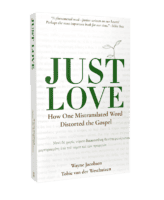
Just Love:
How One Mistranslated Word Distorted the Gospel

by Wayne Jacobsen and Tobie van der Westhuizen
174 pages
Trailview Media
Available in paperback from Lifestream for $13.99. And, if you want to order five or more, you can purchase them for $10.00 each.
Or get it from Amazon: in Kindle ($10.99),  paperback ($16.99), or hardcover ($24.99)

Spreading JUST LOVE into the World Read More »

The Very Same Love

The following is an excerpt from Just Love, written by Wayne Jacobsen and Tobie van der Westhuizen:

The events at Jesus’s baptism and later at Pentecost opened the heavens so that this love could be given to all humanity. By God’s plan, Jesus became the “firstborn among many sons and daughters” (Romans 8:29). This gift was not the mere status of childhood, but a full adoption into his family.

If all of this sounds just too good to be true, consider that Jesus said it was so: “You loved Me before the foundation of the world . . . You sent Me, and loved them, even as You have loved Me.”

The very same love.

Thus, we enter the Kingdom the same way Jesus did—as a beloved son or daughter! Embracing that belovedness is what it means to be saved.

When the Spirit descended on Jesus at his baptism, the very nature of God was deposited into human flesh. Jesus was, in the words of the author to the Hebrews, “the exact imprint of [God’s] nature” (Hebrews 1:3). The reason for this is not that Jesus perfected the art of keeping the Law, but that God had deposited his own nature into Jesus.

Jesus had become a partaker of the divine nature—the perfect expression of love, manifesting itself as justice. He became an image bearer, carrier, and eventual distributor of that life, offering the same reality to us. The only way to do that is to receive the life-spirit of the Father.

The cross took God’s confession of love, proclaimed to his one and only Son, Jesus Christ, and offered it to the world of sinners, those traumatized by the darkness of living outside the love of the Father and committing unspeakable atrocities against one another in an attempt to overcome their emptiness. At the cross, God the Father, through Jesus the Son, gave his life to the world. Jesus did not die to satisfy what was lacking in God. He died so that the love of God could become God’s love in us, allowing us to share in his life and live by his love. The cross did not make God love us; rather, it put his love into us.

Humans struggle to wrap their minds around that. God’s love does not need to be earned! It is not a reciprocation of our love or service. Here’s how John described it: “Beloved, let us love one another, for love is from God” (I John 4:7).

The only way humans can ever love others so as to fulfill justice is for God’s love to be in them. For God’s love to enter them, they must be born of God; that is, they must be born of the Spirit and become sons and daughters of God, sharing in his very nature. That’s why Jesus told Nicodemus he had to be born again—a spiritual rebirth inside his nature.

“What exactly should I believe in order to be saved?” We are now ready for the answer: “And so we know and rely on the love God has for us” (I John 3:16). No amount of believing in God or the historical Jesus or doctrinal creeds can do any good if it does not also include a fundamental knowing that God the Father loves me. This is the fulfillment of his justice and this alone is salvation.

Adapted from:

"Just Love" - How One Mistranslated Word Distorted the GospelJust Love:
How One Mistranslated Word Distorted the Gospel

by Wayne Jacobsen and *Tobie van der Westhuizen
174 pages
Trailview Media
Available from Amazon
in Kindle ($10.99)
or in Paperback ($16.99)

Here’s the new video we released yesterday:


If video doesn’t play, click here.

The Very Same Love Read More »

Writing Justice with the Pen of Love

In regard to Just Love, I have friends of mine in both Germany and France who have written to me letting me know that their versions of Scripture already contain the word “justice” where our English versions use “righteousness.”

So, does this book hold any application for them?

If it were just about a linguistic change, the answer would be no. Tobie and I are aware that linguistically, this is an obvious problem in English. However, it is a more subtle problem in other languages. Since the Reformation, a distorted view of imputed righteousness has spread mostly through the English-speaking Protestant world, so that even non-English readers think of the concept of righteousness, even though their text already contains justice.

They just added the meaning of “uprightness” to their word for “justice”; thus, they have the same conceptual misunderstanding, even though they have retained the word for justice.

Here’s what Tobie wrote to someone who said the same problem exists in Afrikaans, where justice may be in their text, but still not in their hearts:

The unique meaning of the English word “righteousness” has crept into Protestant theology to such an extent that “justice” now has two meanings—a spiritual version that carries the definition of righteousness and a legal version that carries the definition of justice. So, the problem persists outside of English, but without the solution of replacing the word with an alternative that is uncontaminated and has always had a single meaning.

English readers of the Bible need a word-shift, the rest need a mind-shift.

Truth be told, we both need the mind-shift.

When you read Just Love, you will first notice the linguistic problem and how it distorted our view of the Gospel. But in the second part of the book, we show how  Jesus writes his justice on our hearts with the pen of his love. By filling us with his love, light, and life, we won’t be able to live an ego-centric life in the world. Our awareness of others will rise to the awareness of ourselves, and we will not need to manipulate or exploit others to get what we desire from them. Instead, we will guard their hearts as much as we guard our own.

God’s desire was always to have just people on the earth, as he transforms us, so we become a fountain of his love to the people around us without even trying.

______________________

And if you want to hear Tobie and talk about the book, you can do so here:

The God Journey: Love-Lived Justice, Part 1
The God Journey: Love-Lived Justice,Part 2 
With Insight Incorporated on YouTube

And, if you’ve already read Just Love, would you please consider writing a review of it at Amazon and/or Goodreads. I’m told the algorithms need that to help a book find its audience. I am grateful for those who already have

"Just Love" - How One Mistranslated Word Distorted the GospelJust Love:
How One Mistranslated Word Distorted the Gospel

by Wayne Jacobsen and *Tobie van der Westhuizen
174 pages
Trailview Media
Available from Amazon, Tuesday, March 3
in Kindle ($10.99)
or in Paperback ($16.99)

Writing Justice with the Pen of Love Read More »

The Foreword and Contents of Just Love

Just Love: How One Mistranslated Word Distorted the Gospel debuted last week on Amazon to a very strong showing. Tobie and I are grateful to those who ordered the book and posted comments on the Amazon page to increase its visibility. Since we’re doing this on our own, “it takes a village” to help this book find its way into the world.

Just Love is not just an appeal to switch a word in our Bibles, but a guide to learning to live by God’s justice as the expression of our life in him. Jesus said that all of the law and the prophets would be fulfilled if we simply did “unto others as we’d have them do unto us.” Of course, we can’t do it in our own strength and wisdom; love has to shape us from the inside so that the love and life of the Father fill us and flow out of us. No longer needing to get others to fill that empty place in us, we will live more aware of others around us and see ways that we can be a blessing to them. That’s the heart of this book—transformed people demonstrating his kingdom in their everyday lives.

Both Tobie and I hope that this little book will spawn a wider conversation about being less focused on sin management and personal piety. Instead, we let love have its work in us and find ourselves living increasingly in God’s justness toward others around us. If you’d like to discuss this book with me, even if you haven’t read it yet, I’m going to be in a Zoom Room this Sunday morning, March 15, at 9:30 a.m. Pacific Daylight Time. You’re welcome to bring your questions and comments, even if you haven’t yet finished reading the book.  If you want to join us, email me for a link.

And to carry this conversation on further, Tobie and I are also brainstorming about the possibility of putting together a wider Just Love Conversation somewhere in the heartland of the U.S. on the weekend of July 10-12, when he will be visiting. We want to explore the themes of that book with others who are as captivated by them as we are, and would invite people to drive or fly in to join us. We are asking God to give us wisdom about a place where there are some local folks who can help us with arrangements. We will be looking for a hotel and a gathering place, or something similar.  If you’re interested in attending or want to help us put it together where you live, please let me know so we can see what God might put together. 

Here’s the Foreword from our book, written by Brad Cummings, my friend and former podcast partner:

FOREWORD

What you hold in your hands can literally change your entire life if you embrace it. When Wayne first shared with me what Tobie had presented to him, that one of the most common words and foundational concepts, “righteousness,” does not appear in the Bible, my immediate response was, “Not so!” Dozens of verses came to mind that would refute such a claim.

I recognize the modern-day challenges of translating the Scriptures and how language and word meanings can change. As such, it is rather impossible for translators not to introduce some measure of interpretative bias into the text. But this one was a doozy!

Admittedly, I was skeptical at first. But, when he explained how “righteousness” as we commonly define and understand it should have been more accurately translated as “justice”—it’s as if I had been given a whole new Bible and a much better lens through which to see God, his heart for us, and how we were meant to walk with Jesus in this life. It is not enough for us to make a confessional declaration and look forward to heaven someday.

The themes of justice and love could not be more central to the Bible and are meant to be lived out. What Tobie and Wayne have discovered and articulated is nothing short of amazing. It marries the truth of Scripture with the heart and purpose of God in a breathtaking, transformative, and resounding way.

After examining what they laid out, I was stunned. “This changes everything!” was all I could think. “Thank you” is such an inadequate response to the gift of what these men have given.

It is like discovering treasure buried in a field— so valuable that it is worth selling everything you have to lay hold of it. This is not a radical departure from what we’ve known, but rather a satisfying synthesis of it, just shifted. It offers a much-needed reframing of what matters most.

Just Love is an invitation into the kind of life you’ve dreamed of, unlocking the true power of the Gospel, transforming us from the inside out. If you are tired of the religious ritual and empty confessions, promising much but delivering little, this book will help diagnose “why do we have so many converts who profess and confess to be Christians, yet if we are honest, so few deeply transformed lives?”

Thankfully, they do not stop there. As they share their respective journeys into the joy of our salvation, they not only unpack what it means to be “saved,” but also offer practical, tangible insights into how God works. Freeing and untwisting us from our selfish selves, he can win us into a place of greater trust, where our faith becomes so much more than just a hoped-for confession or declaration, but authentic, alive, and others-centered.

By being rooted and grounded in His love, we’re better able to both freely receive and release the river of God’s life and love. Just Love marks the trailhead for entering the most satisfying and life-giving journey of seeing God’s life being manifest in you. Your salvation is about to get an upgrade. Enjoy!

—Brad Cummings, co-author, publisher, and movie producer of The Shack

"Just Love" - How One Mistranslated Word Distorted the GospelJust Love:
How One Mistranslated Word Distorted the Gospel

by Wayne Jacobsen and *Tobie van der Westhuizen
174 pages
Trailview Media
Available from Amazon, Tuesday, March 3
in Kindle ($10.99)
or in Paperback ($16.99)

CONTENTS

Foreword | page 1

Chapter 1
A Missing Piece | page 5

Chapter 2
A Convergence of Two Journeys | page 13

Chapter 3
A Different Conversation | page 29

Chapter 4
God’s Story of Justice | page 39

Chapter 5
Lost in Translation | page 53

Chapter 6
Why Jesus Saved You | page 67

Chapter 7
This Changes Everything | page 79

Chapter 8
Twisting and Untwisting | page 91

Chapter 9
Won into Love | page 105

Chapter 10
The Flow of Life | page 119

Chapter 11
Unraveling Injustice | page 129

Chapter 12
Let Justice Roll on Like a River | page 141

Epilogue:
Better Explored than Explained | page 157

The Foreword and Contents of Just Love Read More »