Wayne Jacobsen

Try Out Our New Trail Guide

A few weeks ago, my web guy asked whether I’d be interested in adding an AI guide to my websites—something that could help people search for information, explore questions, or stimulate their thinking and prayers in situations they are facing.

I was skeptical at first. I wasn’t sure we needed another feature. But with thousands of pages from books and blogs, along with hundreds of hours of audio, I began to wonder whether it might help people find resources that would otherwise remain buried. It does a wonderful job of synthesizing my thoughts into a few paragraphs on every topic I’ve covered.

The contents of my books and Lifestream blogs, along with more than 1,000 episodes of The God Journey, have now been made available to our new Trail Guide. It can help you explore a question, locate relevant resources, summarize material, or point you toward books, articles, and conversations that may be useful for your journey.

It can also respond in multiple languages, allowing people around the world to receive recommendations and summaries in the language most comfortable for them.

I’ve been testing it over the past few days, and I’m genuinely impressed by how helpful it can be. That said, it won’t always get everything right. It is AI, after all. In one of my test runs, it confidently informed me that my friend Luis was from Kenya. He is not, and we trained it not to make that mistake again.

So, use it as a guide rather than an authority. And should it tell you something that doesn’t sound like me—or simply gets the facts wrong—please let me know. To find it, simply click on this button on the bottom right of any page at Lifestream.org or TheGodJourney.com. They look like this:

At Lifestream:


At The God Journey:


It is the same bot, so the answers you get will be drawn from all the resources at both websites. We’ve also included information from  My Friend Luis.

To give you a taste of how you can use it, here are three sample questions I posed to it:

Question: I love the way Wayne presents relational church life, but what would he say about Hebrews 10:25, “forsake not the assembling of yourselves together.”

Trail Guide:
Wayne takes that verse seriously—but not the way many churches do. He’d say the problem isn’t with Hebrews 10:25 itself; it’s with how we’ve narrowed what “assembling together” actually means.

In Relational Church, Wayne points out that this passage has “suffered more abuse than” almost any other Scripture. It’s been weaponized to mean you must show up to a Sunday service regularly or you’re disobedient—but that’s not what the writer of Hebrews is talking about. The call is to relationship, not to meetings. It’s about staying connected, not isolated. Wayne notes that he’s watched gifted people “die on the vine” because they got relationally isolated—and that’s what the passage is warning against.

The real assembling, as Wayne sees it, happens when your life is genuinely open to others’ lives and theirs to yours. In Thinking Outside the Box, he explores the Greek word for “gathered together”—it’s reflexive, intimate, suggesting real interconnectedness. That can happen in a pew, sure. But it also happens at coffee with a friend, in a home, or anywhere two or three are genuinely present to each other in Jesus.

The point isn’t where you assemble or how often. It’s whether you’re living in authentic connection with other believers who know you, encourage you, and help you grow in Jesus. That’s what Hebrews is protecting—and Wayne would say that’s exactly what relational church life offers.

_______________________

Question: I am frustrated with my wife’s spiritual journey. She doesn’t seem to share the same level of passion. What might Wayne say to help us?

Trail Guide: I hear the frustration, and Wayne has thought deeply about this. The heart of what he’d say is this: your wife’s spiritual journey is hers, not yours to manage or measure against your own passion.

In “Lonely Seasons On a Relational Journey,” Wayne talks about a couple where the husband had deep spiritual passion but the wife’s approach was different. Instead of letting him have his own journey, she kept trying to badger him into alignment with hers—and it became painful for both of them. The answer wasn’t to make him see what she saw. It was to stop trying to control his path.

The same applies in reverse. Wayne has written about this in “The Obnoxious Self” and touched on it in “The Simplicity of a Loving Life“—when we’re passionate about something spiritual, we can become deceptive in our passion to help people see what we see. We end up trying to make them into versions of ourselves, which actually damages the relationship.

What Wayne encourages instead is to let her be herself on her own journey with God. Support her where she is. Don’t badger, evangelize, or try to awaken her to your level of passion. That’s between her and the Father.

For a deeper exploration of marriage when partners are on different spiritual paths, I’d point you to the curated collection on Family Life in The God Journey archives—there’s real wisdom there about honoring each other’s journeys.

_______________________

Question: I’m thinking about forming a house church in my area. Would Wayne have an advice for me?

Trail Guide: Wayne has a lot of wisdom on this, and it flows from his deep conviction that the church Jesus is building is far more organic and relational than most people imagine.Start with “Finding Church” — it’s his book on exactly this question. Wayne explores what authentic church actually looks like when it’s not bound by institutional structures. He talks about the beauty of smaller, relational gatherings where people can truly know one another and encounter Jesus together, rather than performing for an audience. The book will give you a framework for thinking about what you’re building.

Beyond that, Wayne’s core conviction is this: don’t start with a model or a program. Start with people and relationship. In his teaching on church, he emphasizes that real church happens when a group of people genuinely know the Father’s love and are learning to live that out together. It’s not about getting the structure right; it’s about creating space where people can be honest, vulnerable, and help one another encounter Jesus more deeply.

A few things Wayne would likely encourage: First, make sure the foundation is grace, not performance or control. Second, let the gathering serve the people’s real spiritual hunger, not an agenda. Third, invest in genuine relationships—that’s where the real work of God happens. And fourth, stay flexible. Let the Spirit lead rather than trying to replicate someone else’s model.

For more on the nature of relational church life, explore the curated page “Where will I find the church Jesus is building?” — it has organized links into Wayne’s teaching on authentic community.

People often ask me where to find certain things on my website; this will make it much easier and more fun for you to explore on your own.

What do you want to ask our Trail Guide?


Try Out Our New Trail Guide Read More »

How Does Love Make This Right?

What might change if, instead of asking who is right, who is wrong, or who deserves what, we learned to ask a more redemptive question:

How does love make this right?

After our Just Love Conversations in Kansas City earlier this month, Tobie and I want to offer a similar conversation to those who couldn’t join us. So, Tobie and I will host a six-session Zoom conversation for those who have read—or are currently reading—Just Love. Rather than simply reviewing the book chapter by chapter, we want to explore how love produces a just way of living that can reshape our marriages, families, friendships, churches, workplaces, and communities.

Together, we will consider questions such as:

  • How do I find fullness in God’s presence?
  • How does God write justice on my heart?
  • Am I giving life to others—or trying to take it?
  • What do I do when someone has taken something from me?
  • Can love hold truth without making an enemy?
  • How can love make this right—here and now?

These will not be lectures or another Bible-school course. Tobie and I will help frame each conversation around Scripture and the themes of Just Love, but much of our time will be spent exploring real-life experiences, listening to one another, and discovering practical tools to help us respond differently when relationships become difficult.

We are not offering a formula to master in six easy steps. Learning to live in love takes time. Knowing is not the same as doing, and our mistakes need not become reasons for shame. They can become part of the way God teaches us to live more freely, honestly, and generously.

The group will meet on Zoom —

Sunday mornings at 10:00 a.m. Pacific Time:
August 9, 16, 23, take a two-week break and continue September 13, 20, 27 

There is no cost, but space will be limited to the first thirty people who register, so that everyone has an opportunity to participate. Please sign up only if you will be taking part in all of the sessions. To register, email me.

 We will also create a waiting list, in case we have cancellations. Since we can only have thirty people, we plan to offer more opportunities in the future.

We would love to explore with you what can happen when God’s love becomes more than something we believe—and begins to shape the way we live alongside others in the world.

How Does Love Make This Right? Read More »

In Pursuit of Legacy

When I was invited to speak to Loma Linda University Health’s Transformational Leadership Program about building a personal legacy, I told them they had the wrong person.

Few things have complicated my spiritual journey more than the pursuit of significance. What I once mistook for a divine calling often became twisted with ambition—the need to accomplish something important, be noticed, and leave a lasting mark. It became a tyranny.

In thirty years of learning to live in Father’s love, I’ve discovered that it is also a mask for personal emptiness. As I came to rest in his love, I watched this inner drive for significance fade away. I’m convinced that those who pursue legacy, seek to be significant, or seek popularity all come from a place of brokenness. I’ve seen it too often with politicians, authors, influencers, entrepreneurs, and anyone who tries to measure their worth at the expense of others.

When I explained that to the man inviting me, I told him I did not want to help wire another generation to chase significance as I had. To my surprise, he said that was exactly why they wanted me to come. So, on Wednesday, I sat down with a group of leaders in the health industry who wanted to hear my journey from the tyranny of seeking significance to the contentment of simply following Jesus.

I cannot remember a time when I did not want to be in the spotlight. But that hunger continually collided with the life Jesus was inviting me to live. Through much pain—disappointed expectations, betrayal, family deception, and opportunities he asked me to decline—he gradually loosened my need to be noticed. The more I found my identity in being the beloved son of a gracious Father, the more of his fullness I could see. That alone slowly unraveled my desire for significance and legacy. It has been one of God’s greatest freedoms to me.

I began to understand why he sought obscurity and how that opened wider doors to really help people know him. Freedom from recognition made room for love.

I told them about my lifelong desire to love one woman well—and how, four years ago, I thought I had utterly failed. Then the story turned. Loving Sara well meant walking with her through the pain and distortions of trauma while God healed something buried deep within her.

That journey reminded me that life moves at the speed of relationships. Healed and whole relationships are among the greatest treasures we are given.

The group responded with warmth and tenderness. They saw hope in the fact that God can be deeply present in life’s most painful places, bringing healing and freedom where we least expect it.

Together, we explored a better pursuit than notoriety: the wholehearted life Jesus offers. When we no longer need to use others to fill what is empty within us, we are free to live from fullness. Then creativity, calling, and passion can unfold without comparison or competition. Our lives can be marked by the kindness of serving rather than exploiting, the quiet faithfulness of caring for a spouse, coworker, neighbor, child, or friend.

Afterward, people described the conversation as inspiring and hopeful. One spoke of “loving without anger” as a healing power. Another said that no matter how deep the hurt, hope remains.

How different might our world become if we found our fullness in God and gave his love away freely, instead of being consumed with our own need to matter?

When people think of legacy, they usually imagine achievement, influence, and notoriety. Few think of a life shaped by love.

And yet, there may be no greater legacy to leave.

In Pursuit of Legacy Read More »

Spreading the Word Today

I’ll be live at 11 am PDT today on Point of View Radio for an interview about Just Love, along with other things. Here’s the link to the recorded interview.

Also, Tobie and I were interviewed recently on Greatheart’s Table with Randy Greenwald. That episode drops today, and you can listen in on Spotify or Apple Podcasts.

Something we talked about last week in KC continues to resound in my heart. “Love cannot be taught.”

For all the books, articles, sermons, and podcasts that have been shared about it, Father’s love has to be caught. That’s often first modeled by someone who cares about you, who expects nothing in return, and then it is finally revealed in our hearts by the Spirit.

If you know that love, share it freely with others. If you don’t, don’t make the mistake of thinking it will come through books or teaching. It is a revelation of the Spirit and, even when you can’t taste it yet, know that God is rearranging what he needs to in your heart so that you can recognize that love inside your own heart. Sometimes that takes a while, especially if you didn’t have examples of that love when you were younger.


Spreading the Word Today Read More »

I Love How God Works

In October 2024, a man named Tobie van der Westhuizen wrote to ask if I would explore some research he had been pursuing for eight years. It centered on the Greek word our English Bibles usually translate as “righteousness.”

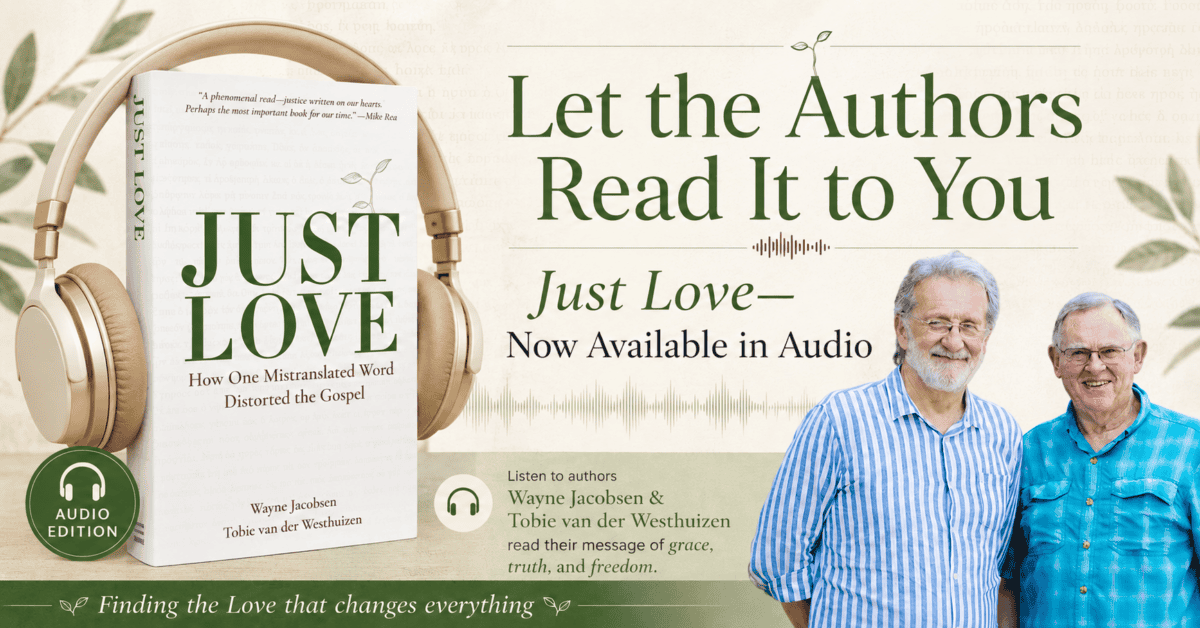
I immediately recognized how closely his discoveries aligned with what God’s love had been teaching me for the previous thirty years. Many Zoom conversations followed. Eventually, we began writing together, and a year later, that collaboration became Just Love: How One Mistranslated Word Distorted the Gospel.

Last weekend, Tobie and I finally met face to face. We shared our first meal and then spent three days with forty people who had traveled from across the country to join our conversation.

There is no better test of whether two lives fit together as well as their words than sharing a room, a conversation, and all the little decisions that fill a weekend. I was not disappointed.

Tobie and I fit together like two living stones God had been shaping for decades on opposite sides of the world. We could share the conversation without competing for it, lay aside our own agendas, and make room for whatever God might be doing among us. I came away treasuring Tobie and his wife, Rev, not merely as collaborators, but as dear friends.

Tobie and I also recorded a podcast reflecting on the weekend, which will be released this Friday.

Something similar happened among the forty people who joined us. We began as strangers, representing many backgrounds and almost every Christian tradition. Yet from the beginning, people engaged the ideas in Just Love not merely as theology, but vulnerably, asking how God’s love might transform the struggles and relationships of their own lives.

Before long, strangers became friends. Meals stretched into rich conversations. People listened generously, shared honestly, and made room for one another.

I saw again how Jesus is shaping his bride—not through human contrivance or institutional machinery, but by his Spirit forming people in love and fitting them together as living stones. I love that so much.

Those who have read Just Love know this conversation is about far more than correcting a mistranslated word. It opens a larger understanding of the gospel, God’s purpose in creation, and how we participate with him in making all things new.

Translating the biblical word as “justice” shifts the center of gravity from our becoming morally pure to God making all things right. Moral transformation matters, but it is only part of a much greater story.

The gospel announces that, in Jesus Christ, God’s justice has entered the world—not merely to punish evil, but to forgive sin, heal the human heart, restore relationships, gather a new humanity, and make creation whole.

And where does that begin?

It begins by each of us relaxing into his love, becoming aware of his presence, and learning to live from the fullness he gives. As his love becomes real within us, we no longer need to exploit others to meet our needs or chase the world’s trinkets to fill up what we lack inside. We become free to live generously, distributing life rather than taking it.

The just life is a life full of love.

Many of us have been intimidated by a God whose “righteousness” was presented primarily as moral perfection. But when we understand his justice as the determination to make all things right, his holiness becomes not only awesome, but deeply beautiful. God will not abandon the abused. He will not ignore evil. He will not allow lies to define reality or death to have the final word. He will not leave sinners trapped in deception, nor will he discard the creation he loves.

He will make right what love created good.

That is no less holy. It is holiness as transforming power, flowing freely through love.

Many who attended asked whether we might do more gatherings like this. With Tobie living in South Africa and leading a school, such weekends are not easy to arrange. We will have to see where God might lead.

I do know that this conversation—moving from a preoccupation with personal righteousness into a life shaped by love—is important for all of us. I pray you have people with whom you can explore it honestly and live it together. I’ll have more on that in a future blog.

Let me add a personal note. Several people seemed surprised that I looked so “healthy.” Knowing that I am living with multiple myeloma and receiving chemotherapy to keep it in remission, some apparently expected me to look depleted or battle-weary.

The truth is that, if you saw me today, you would have no idea that cancer lurks within. I feel as strong as I did before my diagnosis and surgery, thanks to God’s mercy, an extraordinary medical team, and the medications that continue to hold it in check. I remain deeply grateful that none of this has diminished my ability to live, love, write, travel, and participate in weekends like this one.

The photograph below includes about half of those who joined us—the ones still present when we remembered to take a photo late Saturday. It brings back treasured memories of a weekend well spent, among living stones being shaped together by love. I am grateful to all of you and blessed that you took the time to join us.


I Love How God Works Read More »

A World Made Right

Today, we begin the Just Love Conversations in Kansas City, not only helping people explore the content of the book, but also helping us all find a better language to share God’s love and life with the world.  How I wish you were all here, but that might have made our conversation a bit unwieldy.

This is the first time I’ll meet Tobie and his wife in person. I’m excited about that. I can’t tell you what a high-wire act this is, writing a book together in the mere hope that the love and justice we write about will guide the way we treat each other. No, we don’t have a contract between us, and yes, I remember how horribly wrong that went last time I went down this road.

But so far, so good, and both of us feel that if we can’t truly personify the love and justice we’ve written about as God’s ultimate desire in human relationships, we deserve another disaster. If God’s kingdom is ever going to be revealed in our world, it’s because we will embody God’s love in how we treat the other. Time will tell the tale.

And that has implications that go far beyond this book and our relationship. This question gets to the heart of Just Love.

What if the answer to a world coming apart is not winning, controlling, or condemning—but becoming people in whom love knows how to make things right?

Setting the world right has been God’s desire from the fall, and what human ambition has continually thwarted. What I love most about restoring God’s love and justice to the word most of us translate a righteousness is seeing salvation not as securing our eternal destiny, but more importantly, rescuing us from a world gone mad.

It redefines our place as ambassadors of his love within it.  God’s justice is not about civility, compromise, or pretending every political idea is equally healthy. It asks: What would love do to make my world whole? That includes truth, repentance, protection of the vulnerable, repair, forgiveness, boundaries, restitution, courage, and sometimes confrontation.

And it doesn’t begin in political movements, but in the people we encounter daily. Our focus shifts from…

  • Who is right?
  • Which side are you on?
  • Who deserves blame?

To:  How does love make this right?

The world does not need another argument about justice or teaching about love; it needs to see love-produced justice embodied in those who claim to be followers of Jesus.

We do not overcome injustice by becoming more unjust toward those we blame for it. Rather, we allow God’s love to make us the kind of people who can see clearly, speak truthfully, empower the vulnerable, repair what we have broken, and seek the restoration of others without needing vengeance.

    • In a marriage.
    • In a friendship.
    • In a divided family.
    • With someone who has harmed us.
    • With someone we have harmed.
    • In an institutional conflict.
    • Across political differences.
    • In racial or economic injustice.
    • In our use of power.
    • In a world at war.

That’s what God’s love working in our hearts wants to accomplish. Jesus’s work on the cross didn’t just declare us righteous; it opened the door for us to experience his love with such power that it writes his justice on our hearts by making us as aware of the other as we are of ourselves.

That’s the power of God making us just in his love, and rescuing us from the kingdom of darkness, to live in the light and life of his Son. That is the priority of his kingdom, the source of our greatest joy while living amid the chaos of a broken world.

We hope that Just Love encourages that kind of transformation in the world.

A World Made Right Read More »

When God Invites You through a New Door

Summer decks and dining room tables are some of my favorite places to sit with people who are learning to live loved. I love the conversations that spill out in unhurried spaces and the relationships that deepen over relaxed days of reflection, laughter, and discovery.

Last week, I was in upstate New York doing just that with people I’ve known for nearly two decades. I got home Tuesday, and these photos still carry the sweetness of those days. Many had already read Just Love, or knew enough about it to want to explore its implications together.

One of the questions that surfaced there is one I understand well: Do we really need one more voice telling us Christianity got something wrong, after 2,000 years? If this is true, why didn’t we see it sooner?

I get that hesitation. There is so much content on the Internet these days shouting, “You’re doing it wrong; this is what you should be doing.” It can be exhausting. And if sorting out truth means comparing competing voices, weighing credentials, or making an intellectual judgment between people who all sound certain, the pressure can feel unbearable. If you don’t know Greek or haven’t been trained in Bible interpretation, it can seem like you’re left to choose truth by your own best guess.

But that’s not how I process new input on this journey.

I don’t begin by trying to outthink it or decide which “expert” I should trust. I pause long enough to understand what is being said, and while I’m doing that, I hold it before the Spirit who lives in me. Does it awaken curiosity? Does it resonate with something Jesus has already been showing me? Or does it raise a caution I need to pay attention to?

I enjoy being curious. With my background in Scripture, I do ask whether something violates his revelation. Even then, I hold that humbly, because along the way I’ve discovered that some things I thought the Bible taught were actually shaped more by religious tradition than by Jesus himself. Most new ideas that come my way don’t prove helpful in the end, but I still want to remain open to any door that brings me closer to him.

I also hold new ideas up to the Jesus I see in Scripture. Can I imagine him saying this? Can I imagine him doing this? Does it make him more real, more central, more beautiful in the way I live today?

And I don’t process alone. I am constantly sharing my thoughts with trusted friends—those who know me well and whose growth in the life of Jesus is evident in the character he is forming in them.

But most of all, I listen inwardly for the Spirit’s settling or unsettling. That matters more to me than any argument, credential, or tradition. John reminded us that we have an anointing from the Holy One to help us recognize truth from error (1 John 2:20). Jesus didn’t say we would be guided into truth primarily by a book, a religious leader, or a doctrinal council. He said his Spirit would guide us into all truth (John 16:13). He is my Yuck Meter, constantly wanting to draw me into what’s true and away from what is not.

“What is the Spirit showing me?” That’s the most important question.

That doesn’t mean I embrace whatever feels comfortable or confirms what I already want to believe. I desire to know what is true, so I can live more freely and wisely in his life, which is often more challenging and risky. For me, this is a relaxed process. I don’t have to rush to a conclusion when God is the one doing the inviting. I can sit with something for weeks or months until his clarity settles.

That’s why I’m not afraid of learning whatever God wants to show me. Even at 73, I keep discovering insights about God and his life that deepen my joy, free my heart, and align me more closely with him. I trust his Spirit within me to help me discern what is true, even when it challenges assumptions I’ve carried for a long time.

That doesn’t have to make us gullible either. Much of what is shouted on the Internet or written in religious books is laced with performance and shame, often designed to make people dependent on an author, teacher, or movement. I have little interest in anything that makes Jesus less significant in my everyday life.

But when God is inviting me to see his way more clearly, I’m all in. I know I don’t have him figured out. Of all his truth, I only see a small sliver. So whether I eventually agree or disagree with a new idea, I can enjoy the conversation, the contemplation, and the growing trust that lets him keep leading me into what is true.

When God Invites You through a New Door Read More »

JUST LOVE Opens Doors

Tobie and I will meet for the first time in person, July 9-12, in Kansas City for the Just Love Conversations. We’ve got a wonderful group of people gathering to discuss the content and implications of Just Love: How One Mistranslated Word Distorted the Gospel, a book we coauthored together.  Unfortunately, we have maxed out our facility there, so we cannot take any more reservations. We are adding people to our waitlist, however, in case we have last-minute cancellations.

A friend sent me the above photo as a reminder to keep us in prayer during this time. It is obviously a product of AI, but it warms my heart nonetheless with the reality that we’ll soon be together.

We are receiving quite a few opportunities to explore Just Love on various podcasts. Here are two of the latest:

Last week, I was a guest on the MercyCast podcast with Raleigh Sadler. Here’s what he said about our conversation: “This conversation challenged me personally. We discussed the difference between living for love and living from love, how God often takes the initiative long before we recognize it, and why genuine compassion grows out of being deeply loved ourselves.”


Also, I was a guest on A Work in Progress: Growing up Human, a podcast co-hosted by two friends of mine, Dan and Bud, who have a long history of helping people through their struggles. They wanted to know more about Just Love and why I got involved with this book. I enjoy these opportunities to share the story when I’m not in control of the microphones.  You can listen to it here.


A Wide Open Door in Kenya

Who knows, but that Tobie and I wrote Just Love for the continent of Africa? While there is some resistance to its message here, in Kenya, it is dramatically changing lives. Over the last month, I have shared the book with them and have been coaching them on the implications of Just Love on salvation, transformation, and justification.  The response has been amazing. 

Here’s an email I received from Michael on Monday:

The message of Just Love is reaching not only church leaders and communities but also the education sector. Through it, we are seeing transformation and conviction by the Holy Spirit. Over the years we have shared books such as The Naked Church, Authentic Relationships, and So You Don’t Want to Go to Church Anymore. However, I believe He Loves Me and Just Love have come at the right time for this generation in Africa.

It is going to help many people to value one another, forgive one another, and embrace others with love and equality. Even though there are many books about love, Just Love has opened a special door for transformation.

We have received many calls from people whose hearts have been deeply touched by its message. If there is anything I would invest in today, it would be helping Just Love reach more people in Kenya, Congo, Tanzania, South Sudan, and Burundi. In many places where hatred and division have caused suffering, this message can help restore broken relationships and bring healing. Brother Wayne, from my heart, I believe Just Love is a world changing message. It is not simply a book to read but a journey of transformation as God teaches us to love, value one another, and restore broken relationships.

We are also grateful that a new door has opened for us. In August, we have been invited to share at Mount Kenya University, and we hope to connect you with students who are embracing this message of Just Love, we have already seen significant impact. Many groups are requesting opportunities to hear more and obtain copies. We trust that God will provide according to His will and timing.

Last week, Michael was contacted by one of the senior leaders in the Department of Education and Technical and Vocational and Training. He had received a copy of Just Love with the intention of reading it and returning it. However, after reading the book, he was deeply touched by its message and invited us to his home yesterday to discuss its impact.

He shared that the book carries a message that is greatly needed in Kenya today and expressed his desire to help open doors for it to be shared in colleges, universities, and vocational training institutions across the country. He also suggested that it should reach senior secondary schools because of the challenges many schools are facing. Kenya is experiencing a crisis. Last year, many schools were burned, resulting in the loss of students’ lives. Sadly, similar incidents have continued this year, including the loss of 17 students last month.

He also observed that many young people are not learning enough about the love of God. Instead, many struggle with hatred, rejection, discrimination, and broken relationships. In addition, the word “love” is often misunderstood and associated only with sexual relationships rather than God’s true love. This book would help students reflect on the teachings, answer discussion questions, and deepen their understanding through Christian Religious Education classes and through our trained coaches. He especially appreciated the book’s message that the Gospel is more than forgiveness of sins; it is about transformed lives and restored relationships. He highlighted themes such as:

1.   Christianity is about relationships, not merely rules.
2.   Religious arguments often miss God’s heart.
3.   Jesus invites us into a deeper relationship with Him.
4.   God’s Kingdom operates through love and righteousness.
5.   Loving others includes treating them with justice and fairness.
6.  Grace replaces striving for acceptance.
7.  God’s love confronts injustice and transforms society.

By God’s grace, the books He Loves Me and Just Love have already been received and reviewed positively, even without our direct involvement. The feedback has been excellent, and the senior TVET leader believes these books provide sound biblical teaching that can benefit Kenya, Africa, and the world.

For this reason, they have encouraged us to register a mobile training centre in Kenya under the TVET Department and the Ministry of Education. Such registration would allow us to conduct workshops and training programs in schools, colleges, churches, and communities across the country. We thank you sincerely for your faithfulness and for allowing God to use you through these books.  We also ask for your prayers and support as we explore the possibility of registering this training ministry and developing study questions to accompany the books for discussion and self-evaluation. We wanted to share this wonderful testimony with you and also present these suggestions for your consideration. May the Lord continue to bless you abundantly and expand the impact of this ministry around the world.

This leader wrote to me yesterday:

As I reflected on Just Love, I was reminded of the lessons that “Christianity is about relationship, not just rules,” that “God wants us to experience His life now,” and that “God’s Kingdom operates through love.” These truths continue to encourage us as we seek to share God’s love with others. As a team working within the Education Department in Kenya, we are doing our level best to reach the generation we call Gen Z, who are in universities, colleges, and high schools. Many young people today are quick to respond to conflict with anger, revenge, and violence. After going through Just Love, I am convinced that this message is a God-given assignment for this generation.

The lessons that “God’s love changes hearts,” that “love motivates lasting transformation,” and that “fear is not the foundation of spiritual growth” speak directly to the challenges our young people face. We have also been encouraged by the teaching that “God’s plan is to restore broken relationships” and that “loving others includes treating them fairly.”

The discussion about your book is continuing among our Education Department colleagues. As we share its message, more and more people are embracing the desire to obtain a copy. My wife, who is a high school teacher in Mombasa, recently came home during the half-term break and also read the book. She strongly recommends that it be translated into Kiswahili, our national language, so that more people can benefit from its message.

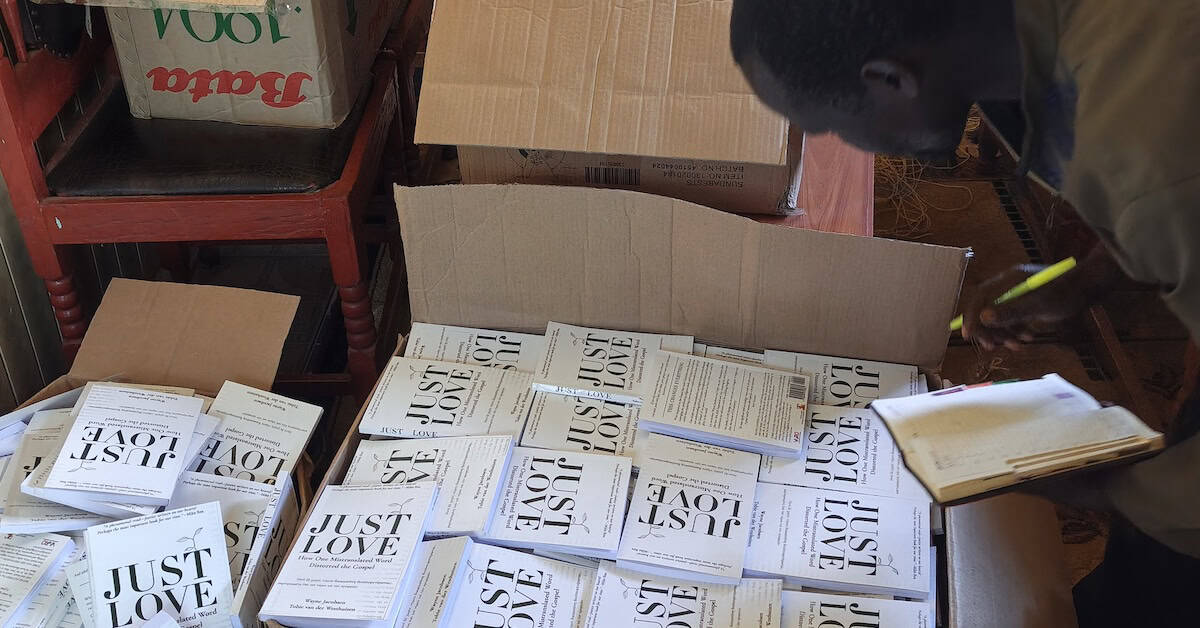
We are holding all of these things in our hearts as we see how this unfolds. They would like us to print thousands of copies there to be distributed among education and religious leaders throughout Kenya. The cost would be about $12,000.00. Please pray with us about this possibility as we work through the options here. And, if you’d like to help print books in Africa, please let me know. It just might light a fire in that corner of the world.


JUST LOVE Opens Doors Read More »

My Disturbing Relationship with Righteousness

You can’t grow up in Christianity without thinking that righteousness is a big deal to God. The Scriptures were full of it. Our faith was structured around it. And dealing with our sin became a daily preoccupation—trying to avoid it when we could, confessing it when we failed, and promising God we would never do it again.

At best, that promise lasted a few days.

It was exhausting and confusing. Even on our best day, we knew we could never be righteous enough to earn anything from God—not in our thoughts, our deeds, or even our reactions to circumstances and people. So, we learned to minimize our failures, justify our motives, or compare ourselves to others whose sins seemed worse than ours.

Perhaps that’s why our ancestors found such comfort in the idea of imputed righteousness. If I believe in Jesus, God declares me righteous. That became justification by faith. I could be righteous in God’s eyes and finally free of guilt.

Really? If so, that’s the best deal in the universe.

But even as a child, something about that didn’t sit right with me. It felt too much like a theological mind game. Even though I still gave in to desires and thoughts that were not aligned with God’s heart, I was told I could still think of myself as righteous. At the same time, I was urged to “be holy as he is holy,” which we called sanctification. In our scheme of things, holiness was preferable, but not essential if the real goal was only to get into heaven.

Still, I pursued righteousness. After all, didn’t Jesus tell us to seek it first in Matthew 6:33? Though it didn’t seem to affect my salvation, I assumed it was the doorway to deeper engagement with Father, Son, and Spirit—or at least a way to make God more inclined to answer my prayers.

So I tried to be as holy as I could and kept careful account of my shortcomings. But my sins didn’t lose much power over me. Fear helped for a while. So did accountability sometimes, though often it only made me better at hiding what was really going on or justifying myself so my failures could look noble to others. When that doesn’t improve over time, you eventually stop trying so hard and settle for keeping your failures to the least embarrassing kinds.

That’s why I have so loved Tobie van der Westhuizen’s assertion that righteousness, as we have come to understand it today, isn’t actually in the Bible. That discovery has liberated me from the last vestiges of my preoccupation with righteousness and sin.

I know that scares people. They fear that if we don’t keep a constant eye on our sin, it will overrun us. But I’ve found the opposite to be true. The more we focus on the flesh, the more it owns us. The freer we are to focus on the Spirit, the more we experience his life. Cultivating a passion for God’s justice inside his love is what begins to free us from the flesh’s preoccupation with ourselves.

For some, this feels like taking away a security blanket. But why isn’t Jesus’s atoning death, his love, and his forgiveness enough to settle our guilt and shame? Why isn’t his presence sufficient to assure us that we are safe with him? Our confidence was never meant to rest in a theological decree, but in the experience of his presence living in us.

I’ve heard some complain that Just Love simply changes the requirement for salvation from righteousness to justice. That’s not what we’re saying at all. Salvation and acceptance by God come by his grace alone. Acting justly is not a new requirement; it is the fruit of a life lived loved. The more we engage his love, the more his justice is produced in our hearts and reflected in our actions. It is neither the origin of our salvation nor the proof of it.

Freed from our obsession with righteousness and sin, we can finally learn the way of love unimpeded by a preoccupation with the flesh. And that is a slow, beautiful transformation over time.

This is the heart and soul behind Just Love. It’s why Jesus and Paul both said that love fulfills the law. Instead of our deficiencies dragging us into condemnation and renewed efforts to try harder, they simply unmask our need for his love. The path to his justice runs through his affection, not our performance.

His love makes us safe in his presence. As that presence begins to fill us from the inside, the lies of darkness lose their grip. The need to find life outside of him slowly dissipates. And as his fullness grows in us, we begin to see the people around us differently, regarding them with the same tenderness and care we have discovered in him.

This is the relational justice Jesus invited us into, and the place where his transformation becomes real in us. Godliness doesn’t come from trying to be righteous, but in experiencing the depths of his love.

And it’s the part of the Gospel we don’t want to miss.

____________________

Tobie and I will be in Kansas City next month (July 9-12) to host the Just Love Conversations, three days of conversation, connection, and discovery around the themes of this book. There’s no cost to attend, though donations are welcome to help cover expenses. If you’re coming from out-of-town, reservations must be made by June 16 to qualify for our reduced group rate. Click on this link for all the details. We only have a few spots remaining. To reserve your place, email wa****@********am.org with the names of those coming. If we run out of room, we’ll start a waitlist in case others have to cancel.

My Disturbing Relationship with Righteousness Read More »

Last Chance to Join Us in Kansas City

Tobie and I are about to meet face-to-face for the first time, and we’d love for you to join us in Kansas City as we spend three days exploring the glorious implications of Just Love: How One Mistranslated Word Distorted the Gospel.

This won’t be a seminar as much as a conversation—an opportunity to sit together with the wonder of a Gospel far richer than a get-out-of-hell-free card. We lost so much when we traded God’s justness for our imagined righteousness, reducing the life of Jesus to religious schemes of behavior modification that were never meant to work. The Gospel offers something far better: freedom from guilt and shame through the work of Jesus, and a marvelous process of transformation as his love reshapes us from the inside out.

That’s what Tobie and I want to explore with you—not just as an idea to be explained, but as a reality to be discovered together. How does love-produced justice change the way we see salvation, Scripture, transformation, and God’s kingdom taking shape in the world?

If you haven’t read Just Love yet, give it a look. And if you can find your way to Kansas City, July 9–12, come join us for three days of conversation, connection, and discovery. We’ll gather at Westbrooke Church in Overland Park, Kansas. There’s no cost to attend, though donations are welcome to help cover expenses. If you’re coming from out-of-town, reservations must be made by June 16 to qualify for our reduced group rate.

Space is limited, and registration is first-come, first-served. To reserve your place, email wa****@********am.org with the names of those coming.

We’re calling it the Just Love Conversations, and I’d love to see you there.

You can get all the details here.

Last Chance to Join Us in Kansas City Read More »