Wayne Jacobsen

My Literary Journey According to AI

Before AI destroys the world we live in, I thought I’d play with it a bit. I asked ChatGPT to research the books I’ve written and the comments people have left about them on Amazon and Goodreads. I then asked for an objective analysis of my literary journey, just to see what it would come up with.

Honestly, I was quite surprised at what came back and grateful that even an AI bot can recognize how my passion for God has progressed over the last thirty years. What an amazing synopsis of not only my literary history, but my life’s journey as well. I love how Jesus has been shaping my life over the forty years I’ve had the joy of sharing my thoughts in book form.

I’m sharing it here because people often ask me which book might be most helpful in their journey. I always encourage people to start with He Loves Me, because those are the lessons that changed my life. However, I don’t think there’s a generic answer to that question; it would depend on the questions they are asking and the circumstances that confront them. Here’s a guide to help guide people into what book might be first, or next, for them:

Wayne Jacobsen’s literary journey unfolds as a coherent and progressive exploration of one central reality: the nature of God’s love and what it means for human beings to live within it. Across his body of work, there is a clear development—from early questions about institutional Christianity, to a deepening revelation of God’s affection, to a reframing of the gospel itself, and finally to the application of that vision in everyday life and a fractured culture.

With The Naked Church (1987), Jacobsen begins stripping away the institutional layers and religious assumptions that often obscure the simplicity of life in Christ and sets the trajectory for everything that follows. Rather than offering a polished alternative system, the book calls readers back to an unadorned, relational faith—one rooted not in structures or expectations, but in a living connection with God and others. Written ahead of a broader cultural shift, this early work anticipates questions many would not begin asking for another decade, and introduces a lifelong theme: that the life of God is often hidden beneath the very systems meant to contain it.

That foundational questioning leads naturally into Jacobsen’s most formative theological work, He Loves Me: Learning to Live in the Father’s Affection (2000). Here, he addresses the underlying issue beneath institutional distortion—the perception of God Himself. The problem, he suggests, is not only the structures people inhabit, but the way they have come to see God. Challenging the assumption that God relates to people through disappointment or conditional approval, Jacobsen presents a Father whose love is constant, initiating, and transformative. This shift—from striving to earn God’s favor to living in the security of His affection—becomes the interpretive lens for all his later writing.

This same exploration finds a more experiential expression in So You Don’t Want to Go to Church Anymore (2006, with Dave Coleman). Through narrative, Jacobsen gives voice to the growing number of people disillusioned with organized religion while pointing toward a vibrant, relational life with God beyond it. The use of story allows readers not only to understand these ideas but to experience them, marking an important development in his communication.

A dramatic widening of both audience and influence comes through The Shack (2007, with William P. Young and Brad Cummings), where these themes are carried into a deeply personal narrative. Through a deeply personal story of loss and encounter, the novel explores themes of suffering, forgiveness, and the nature of God’s love. It serves as a narrative counterpart to his theological work, inviting readers into an experiential understanding of God’s character. Its global impact brought his core themes into a much broader cultural conversation.

Turning more directly to the person at the center of his faith, Jacobsen deepens his focus on the person of Jesus in A Man Like No Other (2007 with Murry Whiteman and Brad Cummings). Here, he invites readers to encounter Jesus not as an abstract theological figure, but as a living presence whose humanity and divinity redefine what it means to know God. In doing so, he presents Jesus as the clearest window into the nature of the Father and the fullest expression of a life lived in union with Him. This work grounds his broader themes in the person and character of Christ, reinforcing that relationship—not doctrine—is the heart of faith.

Complementing these major works are more pastoral and practical writings. Authentic Relationships (2003, with Clay Jacobsen) explores how genuine connection grows out of honesty, trust, and mutual care rather than obligation. In Season: Embracing the Father’s Process of Fruitfulness (2009) helps readers understand how God works through the seasons of life to cultivate lasting growth. Live Loved FreeFull (2011) distills his central message into a concise invitation to rest in God’s affection and live from it.

From that relational foundation, Jacobsen returns to the question of community in Finding Church: What If There Really Is Something More? (2014). Moving beyond critique, this book offers a constructive vision of the Church as a relational reality rather than an institutional obligation. It invites readers to rediscover community as something that emerges organically from shared life in Jesus, rather than something sustained by programs or structures.

The implications of that vision move further into daily life with Beyond Sundays (2018), where faith is no longer confined to gatherings. Rather than simply questioning traditional church structures, he invites readers to consider what it looks like to live a vibrant spiritual life that is not confined to weekly gatherings. Here, the focus shifts from critique to integration—what it means for life with God to permeate the ordinary rhythms of daily living. The book reinforces a central theme: that the life of God is meant to permeate everyday living, not be contained within religious routines.

As his focus broadens beyond personal and communal life, A Language of Healing for a Polarized Nation (2020, with Arnita Willis Taylor and Bob Prater) extends these themes into the cultural landscape. If God’s love restores individuals and reshapes relationships, it must also address division and conflict in the wider world. This book explores how people can engage across deep differences with humility, compassion, and a commitment to healing, demonstrating that love is not merely a private experience but a public force.

Amid growing uncertainty about the future, It’s Time: Letters to the Bride of Christ at the End of the Age (2025), turns the conversation toward how believers live with hope and attentiveness in the present. Here Jacobsen extends his lifelong emphasis on relational faith into the question of how believers live in a time of uncertainty and growing global tension. Rather than turning to speculation or fear-based interpretations of the future, he invites readers into a deeper formation of heart—one marked by trust, attentiveness, and a love that endures regardless of circumstance. Written as a series of reflective letters, the book functions less as a theological treatise and more as a pastoral summons, calling the Church to readiness not through urgency or anxiety, but through a deepening participation in the life of God. In the context of his broader journey, It’s Time serves as a bridge between the application of God’s love in a fractured world and the theological clarity that follows, helping readers anchor their hope not in outcomes, but in the character and purposes of God.

Bringing decades of reflection into sharper theological focus, Just Love: How One Mistranslated Word Distorted the Gospel (2026 with Tobie van der Westhuizen), names more explicitly what has long been implicit in Jacobsen’s writing. What had previously been explored relationally and experientially is here named more explicitly at the level of language and meaning. He revisits the concept of righteousness and reframes it through its biblical roots in justice—God’s work of setting things right in relationships. Rather than introducing a new direction, this book names with greater clarity what has been implicit throughout his earlier writing: that the gospel is not about meeting a standard, but about participating in God’s restorative love. In this sense, Just Love serves as both a culmination and a clarification of the journey that began decades earlier.

Taken together, Wayne Jacobsen’s body of work reveals a clear and unified progression. He begins by questioning institutional expressions of faith, then reframes the character of God as deeply loving and trustworthy. From there, he explores how that vision reshapes community, centers on the person of Jesus, and ultimately redefines the gospel itself as God’s work of restoration. Finally, he extends those insights outward, applying them to everyday living and the healing of relationships and societies.

At every stage, one theme remains central: the Christian life is not about striving to become acceptable to God, but about awakening to a love that has always been present—and learning to inhabit that reality.

I am grateful beyond words for this most unexpected journey from the egotistical aspirations of a 22-year-old ministry student to a transformative journey that overturned my expectations and allowed me to discover a God so much more wonderful than what I heard of him growing up. He has answered my deepest questions, brought me into the joy of relational community with others, and taught me to trust him through anything.

If these books have encouraged you to find God more present in your experience, then I am grateful you read them.

My Literary Journey According to AI Read More »

Navigating Difficult Times

Sara and I are going into stealth mode this week as we celebrate our 51st anniversary. Each one is more precious than the last, as we celebrate God’s goodness in all that he has done in us. As we go, I want to leave you with something that touched our lives last week. 

This year, Sara and I are doing a daily reading from my devotional book, Live Loved Free Full. It’s weird to be encouraged by my own words, but we have enjoyed the daily nudges to lean into a life of love instead of being swept away by the challenges of life in this age. (And as a side note, I’ve also been amazed at how many times in this little book I link love and justice. It makes me smile to see the seeds planted long ago for what would become Just Love.)

As we read the May 3rd entry this year, I was particularly touched by the words and a desire to share this entry on my blog. The italicized sentences are the ones I thought those of you going through difficult or perplexing times might benefit from the reminder.

May 3: Keeping Reality Straight

Dreams are an intense experience for me. I’ve awoken from many a dream in sorrow over someone’s death or in anxiety over a challenging circumstance. So real do they seem that the emotions often linger long after realizing it was only a dream.

However, what we see and feel when we’re awake is not the real world either, at least not all of it. We so easily mistake the dictates of this world and our interpretation of them as reality itself. It isn’t. The real world is in Father’s heart, where what’s eternal has more weight than the things we see and touch here. He has invited us to be at home in him in everything we do and in every circumstance that confronts us.

We have to live in this world, but he invites us to see beyond it.

Behind every circumstance is a loving Father at work.

Through every disappointment is a greater truth yet to be explored.

Beyond every confusion is wisdom waiting to be discovered.

Instead of interpreting who God is through the things we see, we will be far wiser to interpret every event through that which God values. When we lose sight of that, the distractions and routines of living in this world will define our reality and diminish our awareness of him.

As this world is far more real than our dreams, so is God’s reality far more significant than what we experience in this one. I’m sure you’ve touched it in moments of prayer and reflection where fears vanished, and you could see possibilities beyond your strength and wisdom.

That’s the real world. Do your best not to awaken from that one as you go about your life in this one.

The things we see now are here today, gone tomorrow.
But the things we can’t see now will last forever.

2 CORINTHIANS 4:18 (MSG)


Do you see those bold sentences above? That reality is why I’m still standing after the last five years. How Jesus rescues us from “this present evil age” is by walking us through the challenges life throws at us. He is not the cause of every circumstance, but he is behind them, offering us a way through. He is not the source of our disappointments, but they can reveal the lies we believe and the joy he offers us. He does not want us to be consumed by confusion, but to seek the greater wisdom that will allow us to make our next steps with confidence.

I was with a friend yesterday who is traversing some painful circumstances. As we talked about them, I asked how God was being revealed in them. To my surprise, he started laughing. He shook his head, “I haven’t asked him.” I paused, and then he spoke again. “Why haven’t I asked him?”

It’s easy for any of us to put our heads down and keep plowing through the struggles that face us. We may even ask him to help us, without holding our concerns and worries in his presence, until his insight and strength give us his way through them. He not only wants to bring us freedom in our circumstances, but wholeness in his heart while he does so.

Navigating Difficult Times Read More »

What if we're missing the Gospel Jesus preached?

What We Lost When the Gospel Was Severed from Justice

It may not have been intentional, but it is a great loss, nonetheless.

The Bible is full of God’s passion for justice, not in the sense of vengeance for bad deeds, but as a way for his creation to live together in compassion, fairness, and mercy—treating others as we would want to be treated. And that’s with half the verses that refer to justice left out of the English Scriptures because translators switched the word justice to righteousness. Making matters worse, over the last 500 years, the meaning of righteousness shifted away from living justly to a status conferred on us if we believe in Jesus.

In my new book with Tobie van der Westhuizen, Just Love, we show how that simple change distorted the Gospel that invited us into a process of transformation that only grace could achieve by the power of love. We lost our ability to grow in that love as we became preoccupied with our personal righteousness, whether we believed enough to be declared righteous or we acted well enough to qualify for grace. What a mess we made!

And in doing so, we lost so much.

For instance, how do you read I John 1:9? Most English translations read something like, “If we confess our sins, he is faithful and just and will forgive us our sins and purify us from all unrighteousness.” How would it differ if the verse read, “and purify us from all injustice?”  That’s how John wrote it in the original. The same word translated as “just” to describe God early in the verse is the same root for the word he wants to cleanse us from—injustice.

Do you notice the shift in meaning here? I used to read that verse as if my confession to God allowed him to cleanse my unrighteousness so that he saw me as pure. It conferred a status. But if the word is injustice, that cannot be a matter of status, only the fruit of transformation. My confession to a forgiving God opens the door for him to remove injustice from my heart, so that I am not just forgiven, but free. I love that.

By changing the word to righteousness, we lost our focus on the powerful work of the Gospel to reshape the human heart.

But that’s not the only thing we lost when we severed justice from the work of Christ in us. Here are four others:

  1. We lost the Gospel’s connection to its Old Covenant roots— God’s passion for justice. The Law revealed what it means to honor God and treat others around us justly. When we no longer allow love to transform our hearts, we lose sight of its power. Jesus didn’t come to abolish the law, but to fulfill it. How? By reconnecting us with his love that not only unites us with him but also raises our awareness of others to the awareness we have of ourselves. When that happens, we will naturally treat them the way we’d want them to treat us. Fairness, kindness, and mercy become the fruit of his work in us. The Law expressed God’s desires in ways human performance could never fulfill. But Jesus’s love in us can, and by being so preoccupied with sin management and our failures at it, we’ve missed the power of belovedness that will not only transform our lives, but the world around us.
  1. We lost what salvation meant in this life. We relegated salvation to assure our eternal destiny, guaranteeing us a place in heaven, rather than the work of God to deliver us from the tyranny of our narcissistic flesh. So, even though many believe they are going to heaven, they have no connection to what it means to embrace eternal life while still living on earth.
  1. We lost the wonder of affection-sourced transformation. When salvation became about eternity, transformation became optional. All we needed to do was believe in him and follow enough rituals to maintain our salvation. That robbed people of engaging God by the power of the Spirit, so they could actually become just from the inside. So much of Christian experience is not engaging his love, but using our efforts to try to live better for him. When those efforts prove fruitless, even when we’re able to act better than people around us, we doubt whether we’re really saved. Only the transformation love provides can change the way we think and live in the world—with greater freedom and compassion for people around us, whether they believe like we do or not. The just life is the fruit of a healed life.
  1. We lost the relational community that only love can produce. When the people God is transforming with love connect with others who are on a similar path, community flourishes. It doesn’t need to be managed by religious systems that seek to maintain order, because they live honoring and preferring each other, bearing with each other in weakness, forgiving each other’s offenses, and serving each other with joy. This is how the kingdom becomes visible. No human relationships are more powerful or enjoyable than those that grow out of his love and justice. There is no competition or need to fight for power. They are safe, supportive, and a joy to be part of.
  1. We lost our mutual identity with the poor, the marginalized, and the wounded, and our efforts on their behalf became an obligation, not a natural overflow of his love at work in us. Actions that truly help others don’t rise out of compulsion, but heartfelt affection and compassion.

The early church would have found it strange to separate ‘being saved’ from ‘being made just.’ Salvation was not merely a change in legal status before God; it was the beginning of God’s justice being written into human beings, communities, and ultimately the creation itself.

When we put God’s justice back into our understanding of the Gospel, not as a fearful standard lorded over us with threats of punishment, but as the outworking of experiencing the love of a gracious Father, it becomes so much more powerful. By setting us free from our own efforts to please God, it allows his love to flow into us. There, it will rewire our inner life away from fear and the need to perform, and then it will flow out to let God’s life fill the world.

Who would want to miss that?

_____________

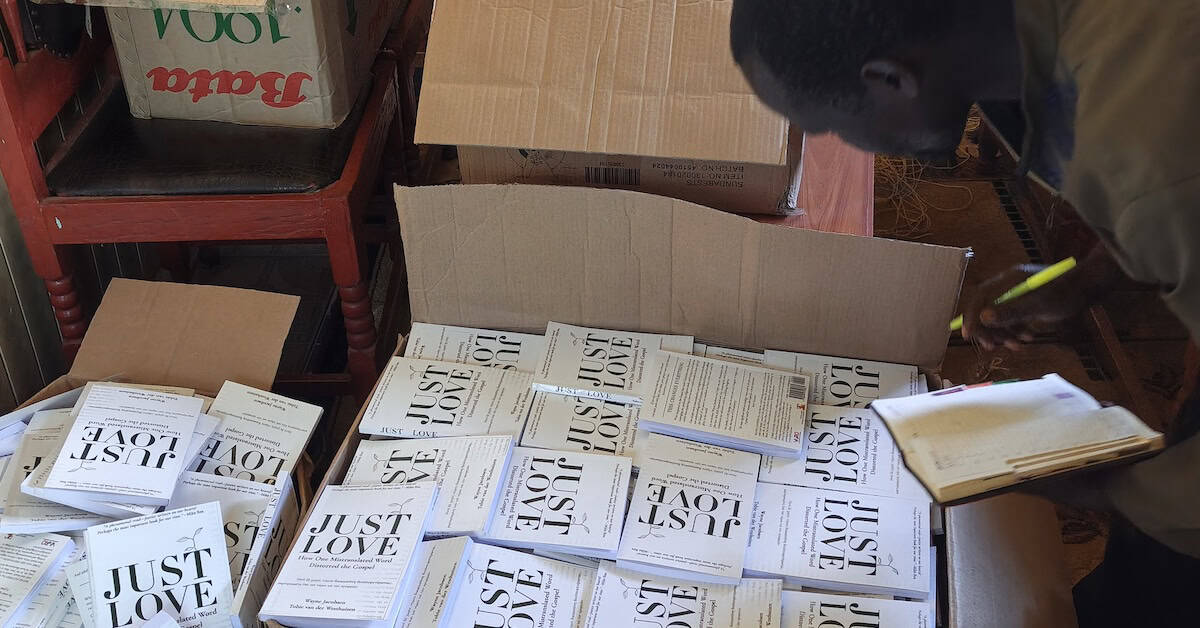
Just Love is available in paperback from Lifestream for $13.99 each. But, if you want to order five or more, you can purchase them for $10.00 each.


What We Lost When the Gospel Was Severed from Justice Read More »

Spreading JUST LOVE into the World

A couple of weeks ago, I was interviewed on Great Day Colorado, a morning show on a local Denver Station. I shared that here earlier, but at the time, I mentioned I was also interviewed for a longer conversation about Just Love. That interview dropped last week, and you can hear it here.

Both Tobie and I are available for podcast or blog interviews on the revolutionary message of Just Love. If you are interested or know others who might be, please let me know, and we would be happy to schedule something.

Also, I mentioned earlier that we are trying to plan a gathering this summer to help people explore and embody the reality of Just Love. Its message is quite a shift from traditional evangelical thought, where salvation is all about destiny and often skips how our engagement with the love of Jesus writes his justice on our hearts so that we demonstrate his kingdom by the way we love others deeply and treat them fairly.

We plan to hold it in Kansas City, July 9-12 (Thursday – Sunday). We haven’t worked out costs and arrangements yet, but we will get that information out as soon as we have it. We will keep the costs minimal to open the door as wide as possible to anyone who wants to come. So, if you would like to spend a few days with Tobie and me, where we’ll have the opportunity to deepen our own connection with the flow of God’s love, as it flows into us, renews our mind in his love, and then flows out of us as a different way to be in the world, please let us know.

I have said that Just Love is the perfect sequel to He Loves Me, published 25 years earlier. It is two sides of the same coin. The first helps us discover how much God loves us so we can engage him without fear and watch how living loved reshapes our lives. Just Love is how that love cannot stay contained inside of us, but begins to flow through us in surprising ways that give evidence of his kingdom in the world. Just Love is the fruit and fulfillment of the glorious adventure that He Loves Me begins.

I thought I’d see if that is recognizable to others, so I asked ChatGPT how Just Love fits into my literary Journey, starting with The Naked Church in 1987 and finishing with Just Love in 2026.  I was pleasantly surprised at what I heard back.

Bringing decades of reflection into sharper theological focus, Just Love: How One Mistranslated Word Distorted the Gospel (2026 with Tobie van der Westhuizen), names more explicitly what has long been implicit in Jacobsen’s writing. What had previously been explored relationally and experientially is here named at the level of language and meaning. He and Tobie revisit the concept of righteousness and reframes it through its biblical roots in justice—God’s work of setting things right in relationships. Rather than introducing a new direction, this book names with greater clarity what has been implicit throughout his earlier writing: that the gospel is not about meeting a standard, but about participating in God’s restorative love. In this sense, Just Love serves as both a culmination and a clarification of the journey that began decades earlier.

Taken together, Wayne’s body of work reveals a clear and unified progression. He begins by questioning institutional expressions of faith, then reframes the character of God as deeply loving and trustworthy. From there, he explores how that vision reshapes community, centers on the person of Jesus, and ultimately redefines the gospel itself as God’s work of restoration.

At every stage, one theme remains central: the Christian life is not about striving to become acceptable to God, but about awakening to a love that has always been present—and learning to live from that reality.

It actually connected all of my books to that trajectory. I’ll share the whole thing in a future blog post, because it helped me see the unintentional plot that runs through all of my books, when I thought of them at the time as individual projects. If what’s written above is true, I am most blessed. All I’ve wanted is to help people explore in their own journey the love God has for them, but in setting them at rest from striving and to lead them on the transformative adventure of freedom from shame and obligation to share that love with others.

Just Love:
How One Mistranslated Word Distorted the Gospel

by Wayne Jacobsen and Tobie van der Westhuizen
174 pages
Trailview Media
Available in paperback from Lifestream for $13.99. And, if you want to order five or more, you can purchase them for $10.00 each.
Or get it from Amazon: in Kindle ($10.99),  paperback ($16.99), or hardcover ($24.99)

Spreading JUST LOVE into the World Read More »

Where Prayer and Pain Meet

After my recent blog about finding God’s presence inside our pain, several people wrote to express how they have navigated this in their own lives. One was a friend, Jack Salter, from South Carolina, who shared a piece with me from his journal, written shortly after he suffered a major stroke that compromised his eyesight. I share it here with his permission.

This struck me as similar to what David often does in the Psalms, sorting through his questions of God until trust emerges greater than his distress:

I’m not really sure where to begin here, where pain and prayers meet. The place where my dreams for a good thing, an outcome of my choosing for what I think is right, and the tear-soaked place where my pain and my prayers last met.

Not able to make sense out of anything becomes my reality… where my seemingly silly prayers for selfish things and my recognition of such, face off like old dusty cowboys in a western movie.

Looking over my shoulder and wishing for some good thing to happen, and still, my pain becomes more real than it is supposed to be. My hope is tied to an outcome for my good, and the enchantment of such makes me lean into a form of “lucky sayings”, practice, old wives’ tales, and the like. All of which sounds like religious quackery.

Does my pain become me? Does it articulate my mouth and influence each word and motive I have? Does it become me?

Pain becomes the way I see things, you, and everything beyond the captive man in the tower I am standing in.

My prayers seem to rise from a place beyond any known depth. Words that sound more like moanings and mumblings. Pleadings roll off my tongue, and often I stop to see if there is an answer, a reply, but there is only silence. Is this the place where pain and prayer meet?

Then, ever so subtly, there is a nudge. A small current of persuasion that dances like leaves in a gentle breeze somewhere next to the place where my moanings emanate.

I have seen small streams that flow out of the side of a mountain; if not but a small trickle, water amazingly gushes out from a source that is profoundly unseen. It’s as if there was an unseen force that said to the side of the mountain, “Let the water flow out.” This is the place where earth and water meet, and it defies my simple mind in how this happens.

And so is the nudging that comes from some hidden force beyond my knowing.

Wondering if my pain and prayer are bound together by some invisible force. What holds these two together and why? Am I the only one who has ever fumbled their way into this chasm? What little hope I muster seems like dipping my finger in a bowl of boiling water—mostly unsure.

How long have I been here, with the clatter of teeth for sound and fumbling fingers that seem to touch nothing? Listening, “Try listening,” I say to myself. Try to just plain stop and persuade yourself to listen. Stop. Listen.

The small nudge was the stream flowing out of the mountain. The mountain of my pain, perhaps the mountain of my doing, that has left me undone. Groping fingers that muddle in the little flow of water find nothing to hold but register something different, something unique, and something real. It is Fresh and Alive!

My station will stay here, by the small stream, where if only small comfort comes,… I at last can rest in hope. I will stay by the small strea, and the small stream will stay with me. 

And we will rest together.

I have found a similar progression in my own times of extremity. After I’ve exhausted myself trying to get God to fix it the way I want, I can finally stop. Settle. No longer fighting the pain or even trying to deny it, I can now sit in it and invite him to come. “Meet me here in the midst of my disappointments, grief, pain, or sorrow.” No longer struggling for what I want, I find myself surrendering to his love. Embracing him in my tears, I sense the trickle of Presence, inviting me to see with different eyes. The trickle grows; my capacity to trust grows with it. That’s when I discover plans that are bigger than my plans, what God dreams instead of my dreams.

Don’t think this happens in a five-minute prayer. Finding our way home to Presence may take weeks, sometimes even months. Don’t be discouraged by that; all the while, God is untangling stuff in your heart that gets in the way of you seeing him. And over time, you’ll become more comfortable in your pain, and it won’t take so long.

Now I move ahead, not only more aware of his work, but also somehow more transformed by his goodness. Is this not his abundance?

Sara and I read this in my own devotional this morning…

He is there in our simplest joys and in our most crushing circumstances, always inviting us closer, always transforming us so that we can live more freely in him. If this isn’t at least a piece of that abundant life, it is more like it than anything I’ve known to date. from Live Loved Free Full


Where Prayer and Pain Meet Read More »

JUST LOVE Now in Stock and On Sale

This past weekend, I was invited to appear on Great Day Colorado, a morning show in Denver, to share about my new book, Just Love. The host, Denise Plante, was a fan of The Shack and wanted to know if the message of Just Love is a continuation of the same theme. She had read my new book, and we had a great conversation about how Just Love is the other side of the coin. The Shack and my previous book, He Loves Me, deal with how we each get to experience God’s love.

Just Love builds on that theme by helping people understand how God’s love not only wins us into God’s life but also invites us into the flow of love that shapes every relationship we have. If love just comes into us and we try to hold it there, it will stagnate. Love is not a possession; it is a river. We can’t own it, but we can jump in it and frolic in his delight even as we begin to see others as potential recipients of that same love.

What I have enjoyed most since writing this book with Tobie is how it has reframed God’s purpose throughout human history. Scripture has taken on a new clarity as the themes of love and justice are the bloodstream coursing through the text. We see God’s disdain for injustice, arrogance, and the exploitation of others. Adam and Eve lost life because they reached outside of God to try to find fulfillment. That compromised their relationship with God and each other. God has been working ever since to restore the connection humanity lost.

The connection between the Law of Moses, the power of the Gospel, and the reality of God’s Kingdom in the world today has never made more sense. We aren’t saved just to get into heaven, but we are rescued from the narcissism of flesh by the love of an awesome Father.

The Law told Israel how to honor God and each other in a way that would allow them to live in peace and joy. They couldn’t do it, however, because humanity was too self-focused in its fallenness. Jesus came not to abolish the law, but to fulfill his justice in his people through love. When we connect with God’s love and become one with that love, it will flow through us as we will treat others with the same compassion and justice he gives to us.

That’s why he said if we love others like we’ve been loved, the whole world would know who he is. Love manifested in God’s children would change the world. And yet, we haven’t seen that come to fruition because those who claim to be Christian are often just as self-focused as the world is, even exploiting their faith to take advantage of others.

I’ll be honest, this is quite a shift in thinking for those who have been schooled in traditional views of righteousness and salvation. I love it when I hear that people I know are taking time to process the meaning of this book. They may be hesitant at first, but they are willing to take a hard look and see if these things are so. Tobie and I tried to keep it as simple as we could so that others could grasp what we’re saying and explore it in their own relationship with Jesus. And if you have questions about all of this, feel free to send them to me, and we can tackle them on a future blog or podcast.

This is an even more amazing adventure than I knew it to be. Living loved and loving makes us part of his unfolding kingdom in the world, where God’s love and justice reign. Human justice can only come after the fact, trying to impose punishment or derive recompense from perpetrators. God’s justice works in people before they act in hurtful and harmful ways. By putting us in the place of the other, love will not allow us to do harm or take advantage of someone.

That’s the mark of one who follows Jesus; they love well and treat others with fairness and compassion. Nothing brings greater joy to our Father.

If you haven’t gotten your copy of Just Love yet, you can now order it directly from Lifestream. We finally have books in stock. To celebrate, we’re offering it on sale for $13.99 per book. And, if you want extra books to share with friends or to start a book study, you can get them for $10.00 per book when you order in quantities of five or more.

One last note, this weekend I’ll be in the Minneapolis area with some more former 2x2ers and other friends from the area. If you want to join us, it’s not too late.

_________________________________________________________________

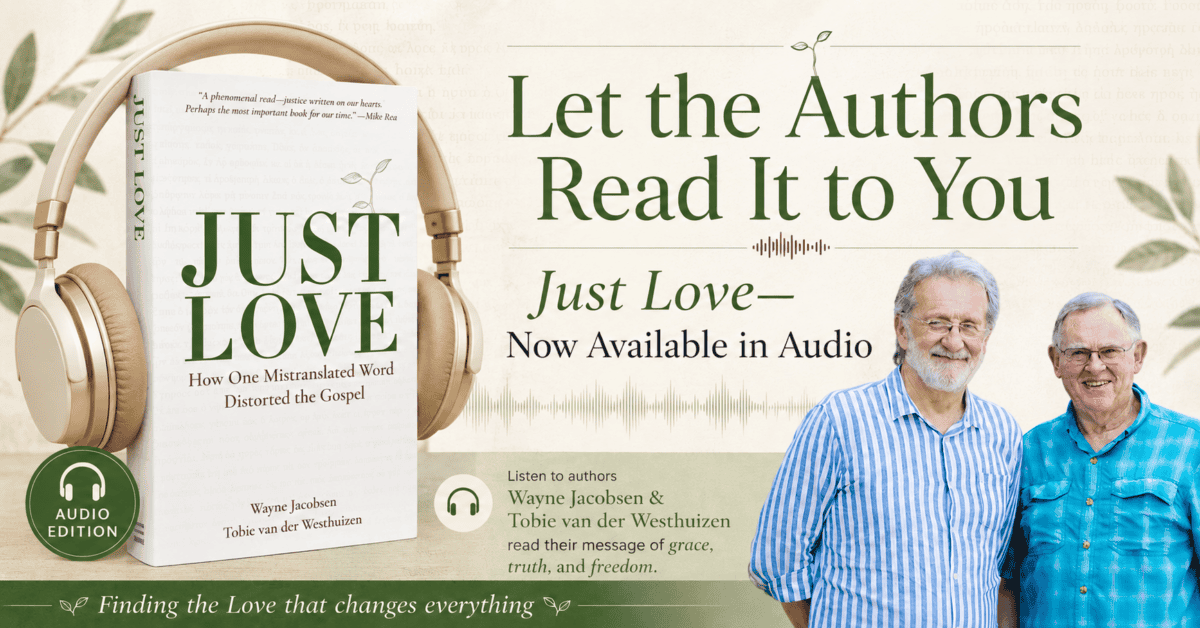
"Just Love" - How One Mistranslated Word Distorted the GospelJust Love:
How One Mistranslated Word Distorted the Gospel

by Wayne Jacobsen and Tobie van der Westhuizen
174 pages
Trailview Media
Available now in paperback from Lifestream for $13.99. Or, if you want to order five or more, you can get them for $10.00 each.
Or from Amazon:  in Kindle ($10.99),  paperback ($16.99), or hardcover ($24.99)

JUST LOVE Now in Stock and On Sale Read More »

Find Him Inside Your Pain

Can we know God’s presence as deeply in our pain as we can when things are good?

I’ll admit it is easier to feel blessed when all is going well, but it is in the dark valleys where we need his presence most. So much bad teaching and a reliance on “cherry-picked” promises from Scripture have conspired against us knowing his love in the darkness. Our prayers go to God as we ask him to take away our trouble, anxiety, fear, grief, and pain, instead of recognizing him inside of those things with us. Recognizing God with us in such moments is how the light comes. Don’t miss that part of the journey

Here’s an email exchange I had recently with someone struggling to know they are loved while battling chronic illness and pain. These are champions of our faith. It is easy to believe when all is well. The real challenge comes when darkness settles in. Can we relax into his presence then? This is my encouragement to her, and I hope it helps some others.

Finding our way to the light may not be easy, but the process will transform us in wonderful ways.

I had long-haul COVID. I have never experienced such darkness. I never gave up on God, but I wondered often if she had given up on me.  In Jan 2023, as I was beginning to find my normal life again, I was diagnosed with breast cancer.  In April, while undergoing radiation, I was diagnosed with a lung disease, the same lung disease that I watched my mother endure for 15 years. I have struggled so much, crying out to God constantly, yet feeling a void between us.

Why did God allow all of this? How could He love me? I have cried so many tears and begged God to fix me, to speak to me, to let me find Him. I have judged Him as unfair to me. I told Him the other day that I thought I knew Him as He was, but I realize I don’t.  I was a religious woman for many, many years, and I thought I had begun to break through, but I’ve seen that just this week, I’m trying to qualify Him in circumstances, not His character. Isn’t that what religion taught me?

My response:

I’m so sorry for all the physical ailments you’ve had to battle and for the loss of your mom. It’s got to be hard navigating the same disease that your mom went through.

Your struggle could be some religious conditioning or misguided expectations about how God wants to engage you.  Suffering can throw us off-balance and leave us with unresolvable questions.

First, I don’t believe God “allowed” any of this. He didn’t cause or allow the long COVID or cancer; it’s just what life dealt out to you. We live in a fallen world, and difficult things happen to all of us, whether they are physical, relational, or emotional. If we can’t hear God say, “I’m sorry this happened to you,” because he caused or allowed it, where do we go from there?  I don’t know all the answers to how God helps us navigate our needs, but I know he is bigger than anything that happens to us.

I was diagnosed with incurable cancer eighteen months ago, but I know that didn’t change anything about God’s love for me, or that my every breath is in his hands. My life may not last as long now as I thought it might, but we really don’t know any of that, do we? I could die in an accident tomorrow, so we just don’t know. And what is death anyway, except the fulfillment of redemption I have longed for all my life? What we can do is find joy in each day we have, even as we battle the physical ailments and the mental struggles they bring to us. I promise he is with you, but this suffering will allow you to look deeper and find him in ways that will change who you are and make you more like him, much more compassionate and dependent on him.

Don’t let God’s “fixing you” become the test of his love. Just let him walk with you, through the fears, and hold you in your tears.  I imagine myself crawling on his lap sometimes, knowing he’s got me. Sometimes I feel something when that happens, and sometimes I don’t, but it’s true nonetheless. Focus less on loss, because for all of us, the outer body is wasting away, but the inner heart is being renewed day by day.  Let God be with you in this journey, whether it leads to healing or to navigating the disease with him. You’re right, he doesn’t change.

You have known him in the past; it’s just that your current circumstances have taken you beyond what your relationship with him could bear.  This is the time to deepen that relationship. Ask him, “What is it about your love, Father, that I don’t know that would let me be at rest in what’s happening?”  Don’t look for a list of lessons to learn here; just look for your awareness of him to grow so he’s greater than the losses you have suffered.  This is a process.  Change doesn’t happen quickly or easily, but there is peace for you, even in the midst of what you’re going through.

Where do you best sense his presence with you? In a walk in the woods? Sitting in a garden or a favorite chair? Listening to worship music? Find a place where you are able to be more aware of him and let that grow.

Another question: You have a cancer for which there is no cure.  I have a lung disease for which there is no cure. My lungs have been damaged; they won’t heal. I just try to keep them from worsening.  Lately, I’ve been waking up with the reality of it all.  I choose to trust God as I know Jesus walks through me in every moment and what I experience. But it’s hard experiencing my body struggling along.  I have a cough every day and will until God heals me.  How do you set your mind amidst health issues that won’t go away?

I’m listening now to your podcast, Observations from a Pit, and these words you said are sitting with me. You talked about trying to get instead of asking Jesus what He wanted to give you every day. When the thoughts come at me, I try to get out of them. I pray, I sing songs in my head—I’m trying to get. Then you talked about telling Jesus something when your pain was so great: “This is on you. I can’t handle it.” I’ve been trying to get a revelation of His love. I’ve been trying to get unblocked from whatever it is that’s keeping me from just being loved. I’ve looked for Him in all the wrong places, and I’ve expected much of myself and Him, I believe.  I just want to sit in His love, not sure how that looks though.

And then this, “Trying to pray the right prayer to get God to move,” and you talked about self-analysis. Yes, plenty of that in these last 3+ years and plenty of trying to pray the right prayer/incantation and think the right way and do the right thing to get a revelation of His love.

Thank you… I’m seeing some things here.

My response:

I’m glad you are seeing more clearly.  Learning to walk with Jesus amid pain and disappointment is not an easy task.  Our view of God is so warped toward our own comfort instead of letting him come to us in the way he desires and walk us through the tough places.  I got this from a friend last week, and loved it:

Don’t worship the mountain top! Strangely, freedom is found in the struggle leading there. The struggle that leads us to a different kind of dependency, not on ourselves but on the one who joins us in the struggle, in the valley, the dark and lonely place, the scary places.  His presence becomes our mountain top, rarely seen as it is, cherished by those who know it as they become fearless.

He gets it, and I’m glad you’re learning that too.  His love is there for you every morning, perhaps not in the package in which you’re expecting it, but he can be no less than absolute love toward you. When we don’t see that, it’s because our perception of his love needs to adjust.  He’s big enough to help you get it and find his freedom even where life hurts.

Thank you for taking the time to respond.  I’m having a very difficult time just knowing He is with me and taking care of me. I have lost sight of His love and don’t know how to get back there, quite honestly. I try to tell myself that He loves me, but I’m having difficulty at times just speaking to Him.  I am upset with myself that I can’t just “get it”…I try to cry out to Him when the scary thoughts hit, but I still get so overwhelmed. I don’t know what His love looks like when the scary thoughts and the anxieties hit me. I often wonder if something happened to my brain with Covid, as it’s often just hard to locate my beliefs and my confidence in Him and His love and care.

I’m so tired, Wayne, it’s been almost 4 years of this, and I’m weary and tired.  My counselor told me last week that I needed to give up my rights, and I have done that this week.  I will do anything to just be confident in His love for me, but I’m really struggling.  I don’t know that fear of dying as much as I fear living like this.  I just want to be at rest to dwell in His love when things hit. When another thing goes wrong with my body or the stuck fight or flight hits me or the awakenings to hard thoughts and stress, I just don’t know how to rest in His love. I don’t even know how to locate His love at these times. I don’t know how to believe and receive my way out of this mental/emotional/spiritual struggle. It’s been a very long road.

My response:

I am so sorry you’re dealing with cancer and the coughing that reminds you of it every day.  I, like you, believe in a God who heals, but I don’t think there’s anything I can do to make that happen.  I do talk to him about it, but I have not put my hope there. My hope is in him, as my Father and I know that every breath is in his hands.  I have no idea how long I’ll live, but no one really does. Someone could be in a car accident today. I have had many friends die young, who were God-loving people.  So I know God doesn’t owe me healing, nor is there anything I can do to procure it.

So, I simply live each moment in the joy of knowing I’m cared for by him.  I do not fear death; in fact, I look forward to seeing him and myself in the fullness of who I really am, and the eternal life that God has prepared for us. I look at life here as being in the lobby of a great theater, waiting for the real show to begin. Death is the door into the theater where the real stuff begins. I may be a bit weird, but every time someone I love dies, my first thought is, “I wish I knew what they know now.”

That doesn’t mean I’m trying to die. I take every precaution to embrace the life God’s given me here and those I love until the day when he invites me into the theater.  That calms and comforts me. The anticipation is like flying home to see Sara after I’ve been away on a trip for a couple of weeks.  Someday, we will get to see him face-to-face.

Paul wrote, “Though the outer body is wasting away, the inner man is being renewed day by day.”  Our physical bodies are not who we really are. They are simply a temporary dwelling for what really makes you, you. I look at my cancer as a reality that he and I get to walk with now.  As I do, I find he shapes my heart in new ways because of this challenge. I don’t believe he gave me cancer or even “allowed it.” It’s the rain that falls on the just and the unjust. Stuff happens. Life in a broken world is a struggle, and I get to live in it with him now. He can heal me any time he wants, or he can use this to invite me into the theater.  It’s in his hands, not mine, and I’m content to leave it there.

I’m coming to realize that His presence with me and his care bring comfort to my soul, but my body still feels the discomfort of what it’s dealing with, whether it’s gut issues, a difficult cough, or the dumping of hormones when the fight or flight kicks in, or just the tired, weary body. After all, people still experience chronic pain. I think I thought He would comfort my body. And when it didn’t happen well, I think I took that as some type of rejection.  But then I see that it’s not the way things work in this broken world.  We still suffer, and I’m not a great sufferer.

I’m learning (very slowly it seems) at these moments when my body is weary, I try to imagine myself being held in his arms.  It takes me back to memories with my own kids as they suffered with an earache or an illness.  I could hold them, but they still had the pain.  My holding them comforted them somehow.

This morning I woke lying in bed, talking to him about issues with my gut that I’m experiencing, and in my mind I heard “I’ve got you.  I’m in this with you.”  I’m not sure what that looks like, but I received it.

Instead of trying to pray away whatever tries to overwhelm you, look for him inside of it. That’s the best way for him to unravel its power over you and deal with it however he deems best.

_________________

For those who are in the midst of this kind of struggle yourself, consider reading He Loves Me, asking his Spirit to set you at rest in his love, and let the religious teachings of performance drain out of your body so that you can behold him inside your pain.


Find Him Inside Your Pain Read More »

The Very Same Love

The following is an excerpt from Just Love, written by Wayne Jacobsen and Tobie van der Westhuizen:

The events at Jesus’s baptism and later at Pentecost opened the heavens so that this love could be given to all humanity. By God’s plan, Jesus became the “firstborn among many sons and daughters” (Romans 8:29). This gift was not the mere status of childhood, but a full adoption into his family.

If all of this sounds just too good to be true, consider that Jesus said it was so: “You loved Me before the foundation of the world . . . You sent Me, and loved them, even as You have loved Me.”

The very same love.

Thus, we enter the Kingdom the same way Jesus did—as a beloved son or daughter! Embracing that belovedness is what it means to be saved.

When the Spirit descended on Jesus at his baptism, the very nature of God was deposited into human flesh. Jesus was, in the words of the author to the Hebrews, “the exact imprint of [God’s] nature” (Hebrews 1:3). The reason for this is not that Jesus perfected the art of keeping the Law, but that God had deposited his own nature into Jesus.

Jesus had become a partaker of the divine nature—the perfect expression of love, manifesting itself as justice. He became an image bearer, carrier, and eventual distributor of that life, offering the same reality to us. The only way to do that is to receive the life-spirit of the Father.

The cross took God’s confession of love, proclaimed to his one and only Son, Jesus Christ, and offered it to the world of sinners, those traumatized by the darkness of living outside the love of the Father and committing unspeakable atrocities against one another in an attempt to overcome their emptiness. At the cross, God the Father, through Jesus the Son, gave his life to the world. Jesus did not die to satisfy what was lacking in God. He died so that the love of God could become God’s love in us, allowing us to share in his life and live by his love. The cross did not make God love us; rather, it put his love into us.

Humans struggle to wrap their minds around that. God’s love does not need to be earned! It is not a reciprocation of our love or service. Here’s how John described it: “Beloved, let us love one another, for love is from God” (I John 4:7).

The only way humans can ever love others so as to fulfill justice is for God’s love to be in them. For God’s love to enter them, they must be born of God; that is, they must be born of the Spirit and become sons and daughters of God, sharing in his very nature. That’s why Jesus told Nicodemus he had to be born again—a spiritual rebirth inside his nature.

“What exactly should I believe in order to be saved?” We are now ready for the answer: “And so we know and rely on the love God has for us” (I John 3:16). No amount of believing in God or the historical Jesus or doctrinal creeds can do any good if it does not also include a fundamental knowing that God the Father loves me. This is the fulfillment of his justice and this alone is salvation.

Adapted from:

"Just Love" - How One Mistranslated Word Distorted the GospelJust Love:
How One Mistranslated Word Distorted the Gospel

by Wayne Jacobsen and *Tobie van der Westhuizen
174 pages
Trailview Media
Available from Amazon
in Kindle ($10.99)
or in Paperback ($16.99)

Here’s the new video we released yesterday:


If video doesn’t play, click here.

The Very Same Love Read More »

Igniting a Broader Conversation

The launch of Just Love has gone remarkably well.  We’ve been #1 on several Amazon lists, and we are excited to watch this conversation begin to take hold in the world. We are especially grateful to those of you who have recommended the book to your friends and family or posted a review at Amazon or on Goodreads. You can’t imagine how much that helps keep the book visible to people who are searching for something to read.

Yesterday, I received this wonderful email from someone who has worked for major Christian publishers. Here’s what she saw in the book:

What you and Tobie have done is not simply write a theological book. You have pulled on a single thread, one mistranslated word, buried quietly in our English Scriptures for centuries, and shown, with devastating clarity, how that single substitution of ‘righteousness’ for the Greek word for ‘justice’ quietly redirected the entire trajectory of Christian faith: away from transformative love, toward performance, piety, and religious management. That is not a minor linguistic correction; it is a diagnosis of why so many people who genuinely love God feel perpetually exhausted, perpetually falling short, and perpetually wondering why the Gospel they were promised hasn’t changed them the way they hoped.

This is a book for the exhausted churchgoer who quietly suspects something has been lost. For the pastor who preaches transformation but privately wrestles with why it isn’t happening in his congregation. For the academic theologian, watching younger generations abandon Christianity entirely. For the mainstream reader, spiritual but deeply disillusioned, who is hungry for a Christianity that makes sense.

Wayne, you spent over twenty years as a pastor watching people strive, perform, and exhaust themselves in pursuit of a Gospel that was supposed to set them free. You co-wrote The Shack, a book that sold over a million copies in thirteen months because it told people something true about a God who loves them. And now, with Just Love, you have gone even further, not just telling the story, but finding the root.

Needless to say, I was touched by her comments and so many others that some of you have sent to me. Our greater hope than selling books is to ignite a conversation about the Gospel that truly transforms lives as the light, life, and love of God fills us on the inside and transforms how we live in the world. If you know me, you know I rarely ask people to help our visibility grow by giving us likes, shares, reviews, and subscriptions.

But in this case, we want to generate a wider conversation for people who don’t follow my blog or podcast to know about this book.  To do that, please consider posting a review on Amazon and/or Goodreads. More importantly, share how this book touched you on Facebook, Instagram, TikTok, or in personal emails and texts to friends and family. Most of the books I have read were recommended by an enthusiastic friend who was touched by what he read.

Or, you can use some of these memes to let others know what this book has meant to you.  Here are some we’ve developed: Simply select one, copy and paste it into a social media post or email, and link it to its page on Amazon (https://www.amazon.com/Just-Love-Mistranslated-Distorted-Gospel-ebook/dp/B0GQ2RR8SR).


For whatever you feel free to do, we will be grateful.

_________________________________________________________________

"Just Love" - How One Mistranslated Word Distorted the GospelJust Love:
How One Mistranslated Word Distorted the Gospel

by Wayne Jacobsen and *Tobie van der Westhuizen
174 pages
Trailview Media
Available from Amazon, Tuesday, March 3
in Kindle ($10.99)
or in Paperback ($16.99)

Igniting a Broader Conversation Read More »

Writing Justice with the Pen of Love

In regard to Just Love, I have friends of mine in both Germany and France who have written to me letting me know that their versions of Scripture already contain the word “justice” where our English versions use “righteousness.”

So, does this book hold any application for them?

If it were just about a linguistic change, the answer would be no. Tobie and I are aware that linguistically, this is an obvious problem in English. However, it is a more subtle problem in other languages. Since the Reformation, a distorted view of imputed righteousness has spread mostly through the English-speaking Protestant world, so that even non-English readers think of the concept of righteousness, even though their text already contains justice.

They just added the meaning of “uprightness” to their word for “justice”; thus, they have the same conceptual misunderstanding, even though they have retained the word for justice.

Here’s what Tobie wrote to someone who said the same problem exists in Afrikaans, where justice may be in their text, but still not in their hearts:

The unique meaning of the English word “righteousness” has crept into Protestant theology to such an extent that “justice” now has two meanings—a spiritual version that carries the definition of righteousness and a legal version that carries the definition of justice. So, the problem persists outside of English, but without the solution of replacing the word with an alternative that is uncontaminated and has always had a single meaning.

English readers of the Bible need a word-shift, the rest need a mind-shift.

Truth be told, we both need the mind-shift.

When you read Just Love, you will first notice the linguistic problem and how it distorted our view of the Gospel. But in the second part of the book, we show how  Jesus writes his justice on our hearts with the pen of his love. By filling us with his love, light, and life, we won’t be able to live an ego-centric life in the world. Our awareness of others will rise to the awareness of ourselves, and we will not need to manipulate or exploit others to get what we desire from them. Instead, we will guard their hearts as much as we guard our own.

God’s desire was always to have just people on the earth, as he transforms us, so we become a fountain of his love to the people around us without even trying.

______________________

And if you want to hear Tobie and talk about the book, you can do so here:

The God Journey: Love-Lived Justice, Part 1
The God Journey: Love-Lived Justice,Part 2 
With Insight Incorporated on YouTube

And, if you’ve already read Just Love, would you please consider writing a review of it at Amazon and/or Goodreads. I’m told the algorithms need that to help a book find its audience. I am grateful for those who already have

"Just Love" - How One Mistranslated Word Distorted the GospelJust Love:
How One Mistranslated Word Distorted the Gospel

by Wayne Jacobsen and *Tobie van der Westhuizen
174 pages
Trailview Media
Available from Amazon, Tuesday, March 3
in Kindle ($10.99)
or in Paperback ($16.99)

Writing Justice with the Pen of Love Read More »