Finding Deep Friendships In the Rush of Life

This has been a busy week around here. In response to the Injustice in Kenya, which I wrote about on Wednesday, we collected all we needed by Wednesday evening, and money has continued to come in. We are amazed at your overwhelming generosity and have sent the money on to rescue the orphans from this travesty of justice.  Thank you so much. Sara and I are deeply grateful for how quickly people responded. The excess we will keep in our fund for relief in Kenya, as the needs there are always ongoing. Please know that everything given toward Kenaya will get there.

Also, this week I was on the Face-to-Face podcast with Melinda and Cathy. They called it Untangling Love: A Journey with Wayne Jacobsen. If you’re interested, you can watch it on YouTube here or get the audio wherever you normally get your podcasts. They really drilled down into some of my thoughts about living in the liberty of love and how that transforms us.

Finally, I wanted to recommend a book to you. I often get emails about how to find community, which for me means compassionate and supportive in-depth friendship with others on a Jesus journey. It can be a challenge in this age, where technology can be as much a barrier to relationships as a tool to connect.

A long-time friend of mine has just published a book to help with that challenge. It is called Relationships On the Run: How to Grow Authentic Connections and Lasting Intimacy in a Hurried Culture, by Stephanie Bennett. This book is not about instant friendships in a hurried culture; it’s about how to make space for the deeper connections available beneath the fast-paced society we live in. With stories from Scripture and real life, Stephanie helps readers find inspiration for love and friendship that flourish rather than simply survive.

Stephanie is the real deal. With a doctorate from Regent University, she is the Professor of Communication and Media Ecology at Palm Beach Atlantic University. She is also the author of the Within the Walls trilogy, a series of books about relationships amid hostile technology. I enjoyed the books immensely and recommended them here years ago.   More importantly, she and her husband Earl have embraced relational life in Jesus for multiple decades. I first met them decades ago in New Jersey and have watched them in different environments find deep and meaningful relationships that enrich others, as well as themselves. 

She asked me to write the Foreword for her book on relationships, which I was honored to do.  Here it is

Foreword

Relationships make us rich.

And of course, by that I mean the good ones. Relationships that set us at ease, allow us to explore our own journey alongside others, and reward authenticity and vulnerability are the true riches of our humanity. To share the struggles and challenges of living in the twenty-first century with mutual compassion and encouragement, and to celebrate joy, however we find it, with good friends, gives life deep meaning and fulfillment.

My greatest joys have all been inside close, meaningful relationships.

But to be honest, they have also been the source of my deepest anguish.

When relationships are good, they are incredibly good, but when they turn manipulative or destructive, especially with people you care about, they cause untold pain. And yet, I have found that the joy of the former easily outweighs the risk of the latter.

The trick is learning to manage our relationships wisely, cultivating those that nourish our spirit, limiting our expectations so we make room for human weakness, repairing those we can that have been damaged and, when necessary, creating boundaries for those fraught with insecurity, jealousy, dishonesty, or threatening behaviors.

Relationships used to be far less complicated in the last century when I grew up. We weren’t hounded by social media or encouraged to brand ourselves. Most people we met lived down the street from us or were visible in our community. Character was more important than image. We held a lot of beliefs and passions in common, and it was far easier to connect.

But the lines for healthy relationships have shifted in recent decades.

Living authentically and vulnerably has never been more terrifying, and the things that can suddenly take a relationship sideways are often unforeseen. Our society rewards achievement over friendships and amusement over community; consequently, healthy relationships aren’t always easy to find.

This is a masterful work that will help you find and cultivate the kind of relationships that will make your life rich and rewarding. I couldn’t recommend this book highly enough. There are few opportunities to help us discover how healthy relationships work and to avoid the pitfalls that cause harm. You now hold one of those in your hands.

Your guide on this journey is Stephanie Bennett, a researcher and college professor specializing in communication and media ecology. She has a deep understanding of the power of healthy relationships. This isn’t just her academic pursuit; this is her life. Stephanie has been my friend for nearly thirty years. And even though we live on opposite coasts, we have found occasion to cross paths somewhere in the world and explore our combined passion for a relationship with God that’s transforming and connections with people that offer a continual resource of wisdom and encouragement.

She can help you appreciate the power of relationships and find ways to explore them joyfully.

What I respect most about Stephanie is that her words and her life synch up as a beautiful and authentic symphony. That’s not true of every writer I know; many espouse things for others they don’t aspire to themselves. I have seen her commitment to loving relationships inside her own family as a wife and mother, but also well beyond it to a wide circle of friendships. And this isn’t just in good times; I’ve seen her deal with difficult relationships, and she always finds a way to enhance the lives of others around her. I’ve watched her navigate crisis and heartache and have been a benefactor of her love and graciousness in my own times of struggle.

That’s what I appreciate most about writers I enjoy. I don’t look for perfection; we all have our blind spots and weaknesses. People don’t have to be successful, humorous, or well-connected. I want them to be real—to enjoy what they enjoy, have the vulnerability to struggle where they struggle, and the curiosity to question what they need to question while respecting that same process in others.

For me, genuineness is even more important when someone puts thoughts to paper for others to consider. Words are empty if they aren’t backed by a life that reflects them. Rest assured that these words are backed up by a kind and conscientious heart.

So more than recommending her thoughts to you, let me commend the woman herself. She’s as genuine a person as I’m pleased to know. Her compass is locked on a purpose greater than herself and that informs her actions and her graciousness to others.

As she shares the things that she has learned, you can rest assured she speaks from a reservoir of wisdom she has gained through personal experience. Her wisdom is enlightening, her passion for Jesus contagious, her ethics exemplary, and her faith deep and abiding.

These are the words of a woman who means them. I trust they will enrich and inspire you as much as her life has touched mine.

Get this book.  You won’t regret it.

Finding Deep Friendships In the Rush of Life Read More »

A Severe Injustice in Kenya

[Updates: As of 8 p.m. PDT, Wednesday, we have enough money promised to cover this need. If more money comes in we will hold it in our Kenya Fund for future needs, or refund it at the donor’s request.]

[As of 4:00 p.m. PDT, Wednesday afternoon, we have taken in almost $17,000.  I’m blown away. Thank you. Only a few thousand to go!]

Due to an unfortunate error in judgment and a dishonest system of governance, our friends in Kenya are about to lose the Forkland School, which includes dormitories and education facilities for nearly 300 orphans, and the water enterprise that helps sustain the school, and gives water to the impoverished community around them.

Sadly, the man who sold them the property never had the title split for their parcel. He promised to do it, but before he did, he was stricken with cancer. He died a few days ago in the hospital, with an outstanding bill. His relatives used the property title to satisfy the hospital debt, so they could retrieve the body and bury their brother. Now, the hospital is demanding $40,000 from our friends to retrieve their deed, or they will auction the property in seven days. They have consulted a lawyer who said they have no recourse since the title was not in their name. They will get a clear title once the hospital debt is paid.

They are undone and at risk of losing everything invested in that property to care for these orphans. There are a lot of pirates in this story. Is it fair? No. Was it a huge mistake not to secure the title before developing the land? Yes. Has the family stolen the property with the hospital’s complicity? Yes, again. This makes my heart sick. It is the orphans who will pay for the mistakes others have made here. We just can’t lose all that we have built there.

We have been redirecting the Kenyan people to depend on Father for their provision and to no longer rely on Lifestream for support. This need, however, has taken them by surprise have not been able to find the resources to save this school, and once again are appealing for our help.

This one is difficult, since it is completely contrived through dishonesty and callousness by the people involved. Our people had demonstrated good faith, and the family has taken advantage of them. To lose this school is to lose the water enterprise and put 300 children out on the street.  I don’t always like being reminded of my own words, but this quote from Just Love comes to mind:

Justice defends the powerless and calls out the injustice of the wealthy and powerful. While we can’t always change unfair systems that hurt people we love, we can use our generosity to make up for what injustice has cost others. In doing so, not only will our fullness grow, but God’s purpose in the earth will be fulfilled.

We need your help if we’re going to save the Forkland School.  We need $40,000 by Friday to purchase the deed for Forkland School. I know we’ve come to you far too many times to save the school from a contaminated well, flooding that threatened the buildings, and now this. I’m so sorry, but they are desperate.

Here is their plea:

You helped drill a well in our compound in Bungoma, as our girls would travel 4 km to collect clean water. We are really humbled by the great love you and your friends have for our Kenyan family. You have helped us and trusted in North Pokot, the Rehabilitation Center, the water company, the grain enterprise, and the petrol station. Lastly, you repaired the Living Loved Care center and many other things, including the water bottling machine. We feel shame when we come to you again and again, but because what has happened to Forkland School is beyond our thinking.

We didn’t know that this could happen, but brothers and sisters and friends, we appeal to you again for the rescue of these children because it has become their homeland. We know that we have a mess, and could be accused of not being good stewards. I am in the Rehabilitation Center now, and we are joining with some children here in prayers for God intervention (pictured above). So we ask on behalf of this innocent family to help us to rescue this property for the benefit of the community and the children. May the Lord bless you so much to understand our challenge for this land.

I called a man this morning, who has shouldered the burden of the Kenyan people with me for nearly two decades. He said he would pick up half of the amount, hoping we could find the other half. If you have anything to help us here, please visit our Donation Page at Lifestream. Check the box for “Kenya Relief”. You can also Venmo contributions to “@LifestreamMinistries” or mail a check to Lifestream Ministries  • 107 N. Reino Rd, PMB# 411 • Newbury Park, CA 91320-3710. Or, if you prefer, we can take your donation over the phone at (805) 990-8780.

As always, every dime you send will end up in Kenya. We do not take out any money for our administrative costs.

Thank you for your prayers and your generosity on their behalf.

With love,

Wayne

A Severe Injustice in Kenya Read More »

What Others Are Saying about JUST LOVE

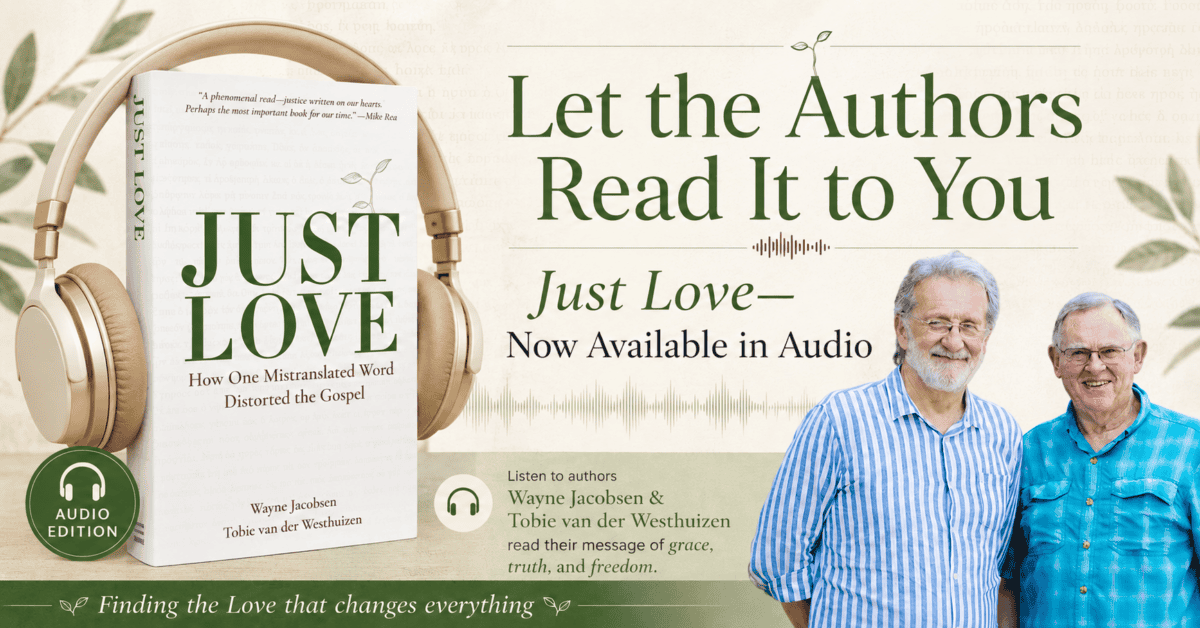
Today, you can secure your copy of Just Love, available at Amazon. In a few weeks, we will have copies available through Lifestream so people can order bulk quantities at significantly reduced costs for those who want to share with friends or host a book study. Here’s my invitation:


If there isn’t a viewer in your email, you can click on this link.


We had a few advance readers take an advance look at Just Love, and here’s what they said about it:

The most significant book on theology I have read in the past 30 years. This book offers insights in why faith gets stuck in a perpetual cycle of not righteous enough or far too righteous. These issues in this slender volume have the deepest roots and the most profound consequences. A great read for anyone who hopes for a better tomorrow.
—Ron Vincent, retired high school teacher in California

Stunning! Absolutely life-changing! Not since Luther nailed his ninety-five theses to the door of the Church or the outpouring of the Holy Spirit at the turn of the century has there been such an important rediscovery of truth. It’s amazing how one unfortunate mistranslation of an essential part of the Gospel can be so breath-takingly simple and yet so transformative. This changes everything!
—Brad Cummings, co-author, publisher, and movie producer of The Shack

I could barely make it past the first page before I was overcome with emotion. From the very beginning, the presence of Abba’s heart is unmistakable—woven into every word with tenderness, truth, and divine intention. This book didn’t just move me; I was undone in the most beautiful and transformative way. It reached places in my heart I didn’t even realize were waiting to be touched, leaving me both humbled and profoundly changed. This is not just a book you read—it’s an encounter you experience. I whole- heartedly give it a 15 out of 10.
—Daron Maughon, musician in Nashville

A phenomenal read—justice written on our hearts! Perhaps the most important book written for our time. The reality of justice found within properly understood love resets Scripture to its original intent, revealing the purpose and trajectory of love, justice, and the Kingdom of God.
—Mike Rea, title agent in Florida

Just Love beautifully expresses the transforming power of love, a love so personal and metamorphic that it brings actualized justice and “expresses the kingdom of God” in this messy world. When I read that God “is the most endearing presence in the universe and the ultimate source of our provision,” I wanted that truth to sink so deeply in my mind and soul that I would never forget it.
—Tracy Levinson, former atheist and author of Unashamed-Candid Conversations about Dating, Love, Nakedness, and Faith

A most helpful, readable, wonderful book, providing a refreshing look at what it means to be a Christ-follower in this age of religious overdrive. You thought you knew it, but in Just Love, Wayne and Tobie offer eye-opening insight into the layers of God’s justice and love. No more faith in our religious performance, traditions, or personal piety. We can come with arms wide open to a God who has loved us from the start and place our faith in His just, life-giving hands.
—Dr. Stephanie Bennett, communication professor and author of Within the Walls, and Relationships on the Run

Just Love is at times a scholarly lexicography, and at others a thought-provoking personal journey of two men. Many paragraphs beckoned long pondering. Love within us is Christ’s call to us. Blessed are we to be loved and love. Thank you, Wayne and Tobie, for further reasons to let God lead our ways.
—Marty Beert, former school district superintendent

I’ve no doubt Just Love is God’s call today to the Body of Christ. The Reformation was a response to radical shifts in politics, tech-nology, and access to information when the Body of Christ had moved away from the heart of the Gospel. Just Love brings the same invitation to us in similar circumstances. It both confronts those who have abused power and need to be humbled, and it lifts up those who have labored under oppression. This is an invitation back to our roots—to the love we need to receive from God, and then how that love flows through us to the world.
—Tom Stephen, pastor, Monte Vista Presbyterian

In He Loves Me, you helped to define love. In Just Love, you redefine the justness of Father, and how the fullness of his love lets us share his passion for justice. I am soaking up this book. It is thrilling to read, but it’s messing with me. I cannot get past the statement, “Established by a ruler-king yet to come, his kingdom would not be predicated on the justice of a written law but the justness of love!”
—Jack S., retired pastor in South Carolina

Concise, easy to read, and soaked in love, Just Love is a significant work with a transformative message. By replacing ‘righteousness’ with ‘justice’ in our English translations, Scripture becomes so much more accurate, understandable and life-giving. Why all this is true is the reason you will want to read this book. Wayne and Tobie brilliantly attest that becoming morally perfect is not the goal of the Christian life, but rather it is about embracing God’s love—and when you do that you naturally become a vessel of God’s love and justice in the world.
—Sean Kennedy, author of Church Uncorked: Leadership That Releases Our Potential

Just Love is as timely and potent as anything I could imagine. Its resounding message of personal righteousness vs. justice for all our neighbors is akin to an asteroid hitting the planet. I’m not sure there’s been a more important spiritual discovery during my time on this earth. Prepare to be challenged and hopefully, changed. This is the book that each and every Christian needs to read and ponder. And it might very well be what your heart and spirit have been longing for your entire life.
—Bob Prater, co-author of A Language of Healing for a Polarized Nation

This little book is so good; it’s an invitation to a lifelong exploration in the best and most transformative way—to encounter the love of God and to be changed from the inside out. Living within this love, I am becoming a woman who is willing to be in the mess of life, not having to fix everything, but to have the courage to let him meet me, hold me, and change me even through heartache. And living this way, God will invite others through us into this sacred way.
—Dana Andreychen, poet and mother

This is far more than an explanation of how “righteousness” in the New Testament is actually “justice.” It is a call to live justly, to move from the idea that we can be “righteous in God’s eyes” and still hate our enemies. It charges us to love as we are loved, to be just because He is just. Treating others as you would like to be treated is Jesus’ definition of justice. It reflects Father’s unconditional love for us. Justice is a call to action. Righteousness is the state of being that results from being just. Justice comes first.
—Phil Hinton, vascular surgeon

If you only read one book this year, make it this one! This book uncovers and clarifies a truth your soul needs! Just Love is a key that unlocked areas of my spiritual journey and practical living while simultaneously giving me a new way to hear God throughout the Bible. Buy a few copies; you’re going to want to give some away so others will understand what you’ll soon be unable to stop talking about!
—Samantha Schmeltzer, mother and entrepreneur

Love is the living fountain within us, and justice is its overflow. Humanity needs to wake up to this. To live in Just Love is a high calling, offering each reader the quiet, supernatural work that opens a human heart. Approach these pages the way Paul prayed for the Ephesian believers, “that the eyes of your understanding may be enlightened… that you may know the love of Christ which passes knowledge.” This little book is best received with deep humility, seeking revelation and surrender to the love of a Father who is love. In that posture, something lasting can happen, not inspiration that fades, but transformation that settles into bone and breath. —Dr Stephan Vosloo, occupational medical practitioner

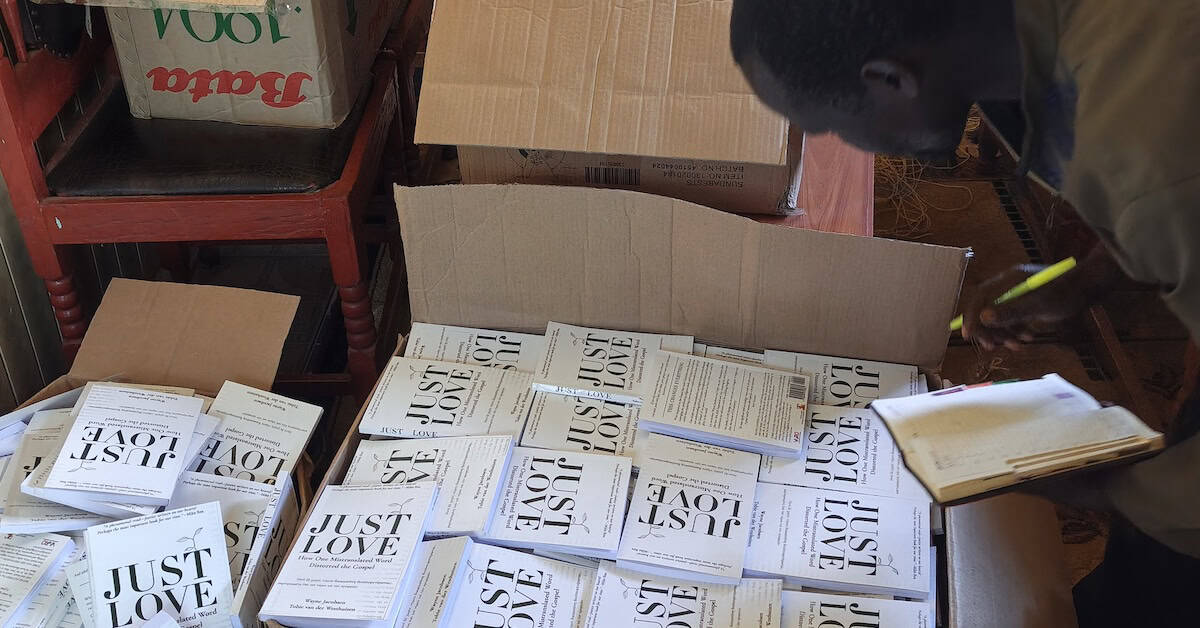
We are printing copies now and will offer bulk discounts on Lifestream when they arrive, hopefully by the end of the month. We do not have an audio version of this book available now, but we will be putting one together in the next couple of months.

"Just Love" - How One Mistranslated Word Distorted the GospelJust Love:
How One Mistranslated Word Distorted the Gospel

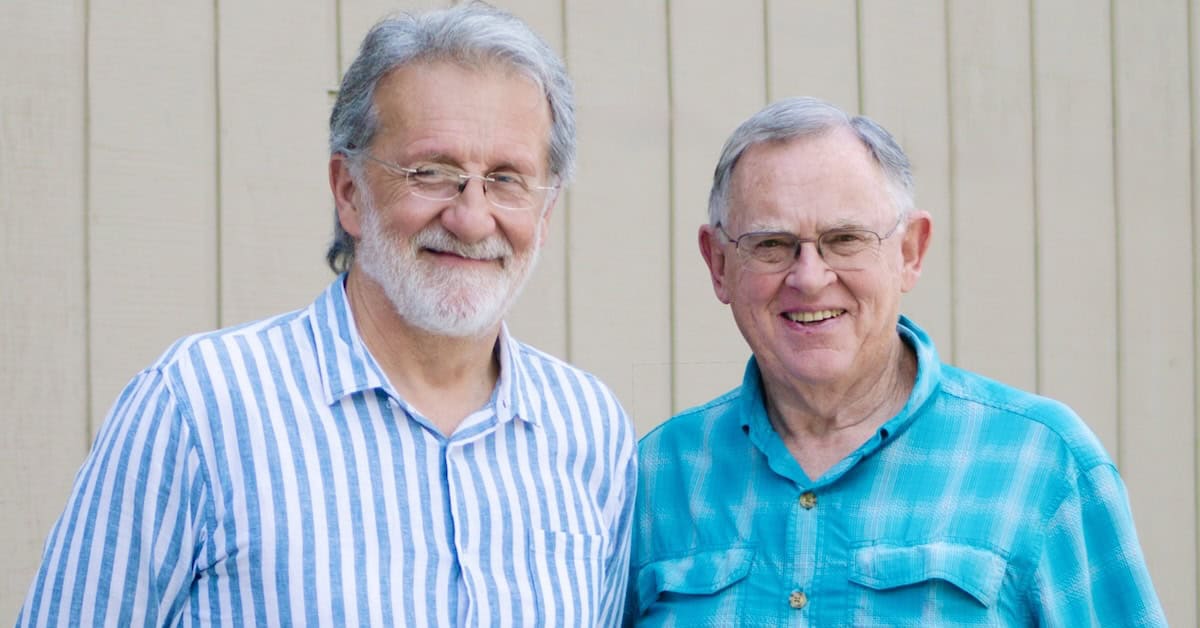
by Wayne Jacobsen and *Tobie van der Westhuizen
174 pages
Trailview Media
Available from Amazon, Tuesday, March 3
in Kindle ($10.99)
or in Paperback ($16.99)


*Tobie, Wayne’s coauthor, is a former pastor and holds a PhD in Higher Education. In addition to his work overseeing a private school in Bloemfontein, SA, he writes at JusticeofGod.com and answers questions on the Bible and spiritual matters at quora.com/profile/Tobie-28.

Hear Wayne, Tobie, and Kyle discuss their new book on the most recent edition of The God Journey.  


Sign up here if you want to subscribe to this blog.

What Others Are Saying about JUST LOVE Read More »

Just Love – Chapter 1

All my life, I have sought an authentic Gospel that does everything Jesus promised. It would rescue those perishing in the darkness of this age and invite even the simplest people into an intimate engagement with his Father that would lead them to life—here in this age and the age to come. Connecting with him would unravel the darkness that twists our world into pain and bondage and lead his people into the ever-increasing joy of knowing him and the freedom of being transformed by his love.

Seventeen months ago, I got an email from a stranger in South Africa that told me there was a significant flaw in our English translations of the Bible. Tobie van der Westhuizen had discovered that the Greek word translated as ‘righteousness’ for the past 500 years is actually the word for justice. Early translators had chosen a word in English that had no equivalent in Greek or Hebrew, and using it had led to a distortion of the Gospel Jesus would have preached, and Paul would have explained. Admittedly, I was skeptical at first, but the more I explored his research, I realized that he was on to something. That led to hours of conversations and eventually an idea for this book called Just Love: How One Mistranslated Word Distorted the Gospel.

We are excited to release this book on Tuesday for others to explore this with us. It may seem like a subtle shift at first, but he implications are profound. I haven’t been as excited about a book I’ve helped to write since The Shack. And honestly, this completes the message of He Loves Me, which I’ve often said is the most significant book I’ll ever write—until now! This is how God’s love not only flows to us, but through us to change the world we inhabit. I can’t tell you how excited I am to finally see this book in print.

In advance of that release, here is Chapter 1 of what I hope will help us see the power of a Living Gospel, which was not just meant to save us from hell, but also to transform us by the power of Christ to change the way we live and love in this age.

_____________________________

page15image65280512Chapter 1

A MISSING PIECE

Buckle up—we are about to take you on a journey that has profoundly shifted our understanding of Scripture and, even more importantly, the trajectory of our spiritual lives. It just might for you, too.

What if you discovered that a mistranslated word in Scripture distorted its meaning for us today? And what if that one word was so significant that getting it right might alter not only the course of your life, but of Christianity itself?

We want to suggest to you that while the Reformation was a crucial step forward in freeing followers of Jesus from performance-based religion, the way it’s often misunderstood today may unintentionally obscure the best part of salvation—Jesus’s desire to transform us from within so we reflect his kingdom in this present age.

We reached these conclusions by very different routes. I (Wayne) arrived here relationally. More than thirty years ago, I encountered the Father’s love in a way that rewrote my spiritual story, especially after growing up in more legalistic environments. Tobie’s path was fueled by a hunger for authentic faith, guided by linguistic and theological insights that I had never considered.

When our lives intersected in late 2024, everything clicked. What Tobie shared explained how love had already been teaching me to live. Now I had Scriptural terminology for it. By resolving a mistranslation of a single English word in Scripture, I could finally see the map of the spiritual territory I’d wandered through for decades. The rich conversations that followed launched this collaboration—and ultimately this book.

If what we propose is true, it unifies Scripture from Genesis to Revelation, weaves salvation and the kingdom of God together, and clarifies what Jesus intended for our transformation. It doesn’t replace the Gospel I learned earlier—it completes it. Others throughout history have tried to call God’s people back to this simple, transformative reality, but the noise of cultural religion has often drowned out their voices.

So, we write in hopes that you’ll consider these things. Search the Scriptures to see if they hold up. If they do, you too can step into a fuller, more vibrant experience of the Gospel today.

When Something Doesn’t Add Up

Have you ever been in a situation where nothing seemed to make sense, only to learn later that it was because you didn’t have all the information?

I recently went through something similar in my marriage. Unbeknownst to either of us, my wife, Sara, had been sexually assaulted by family members between the ages of four and eight. Un- able to process her pain at such a young age—and having no one safe to confide in—her mind buried those memories deep within her. But in her fifties and sixties, a deep pain began to push its way to the surface. Erupting like a volcano, it manifested as complex PTSD and a deep self-loathing that pushed her toward suicidal thoughts. Unable to contain or explain her anguish to anyone, she hid it behind kindness and caretaking, fawning over everyone—including me—so no one would discover what a horrible person she thought herself to be.

During that time, our conversations made little sense to me. I sometimes thought she was being evasive, but my attempts to understand her only led to frustration for both of us. Caught in the torment of a trauma she did not remember, Sara said whatever she thought I needed to hear just to survive the moment. Eventually, the debilitating pain drove her to seek counseling, and she was told she must have been traumatized. Because she had no memories of her childhood abuse, the counselor wrongly concluded that she must be married to an abusive husband. She encouraged Sara to leave me, which she did while I was away on a twelve-day trip to the East Coast.

Imagine my shock when I got home to a letter sitting on the kitchen counter, saying that our marriage had been painful for her, and that she either had to take her life or leave me. Thankfully, she chose the latter, but the shock of her leaving devastated me. This wasn’t the woman I had been married to for forty-seven years. As far as I knew, our life had been wonderful, with minimal conflict. What was I missing?

It took five weeks and a change in counselors for us to find our way back to each other. That’s when Sara discovered that I had not been the source of her pain. The real “monster” came from a deep-seated trauma inflicted by her extended family decades earlier. I’ve since walked beside her as those memories have surfaced and as Jesus heals her heart and rewires her mind.

Discovering her childhood trauma was the missing piece we both needed. Once that came to light, we understood not only the pain she endured and why she coped with life the way she did, but also how even my most innocent actions could trigger her trauma. That insight is what we needed to walk into the future with increasing healing. Today, I get to stand by Sara as her husband, encourager, and confidant as she continues her courageous journey toward wholeness.

Over the past year, I’ve had a similar revelation in my theological journey. I have come across a missing piece in my understanding of salvation and the kingdom of God. Like discovering Sara’s trauma, this new insight illuminated not only my past and the struggles I’ve had with some aspects of Christianity, but it also gave me a renewed vision for what salvation was truly meant to be.

For years, I’ve wrestled with a troubling question: How could Christianity produce so many converts and so few deeply transformed lives? Too often, salvation is seen merely as a ticket to heaven, rather than the beginning of a new kind of life here. As a young pastor, I was discouraged by how many believers seemed to seek only the minimal commitment necessary to “stay saved.”

For two thousand years, we have been more preoccupied with fighting sin—and often each other—than learning to love our neighbors. Yet, Jesus said that the world would recognize us by our love. (John 13:34–35) Sadly, that’s not the testimony most people see. Dallas Willard described our approach to discipleship as the “Gospel of Sin Management”—a message that drives people to try harder, only to feel more shame when they fail. But that’s not the Gospel Jesus brought. It’s simply another form of the old performance-based religion he came to free us from.

What I’ve come to realize is this: There’s a vast difference between practicing a religion called Christianity and actually living in the life of Jesus. Somewhere along the way, I had missed a crucial piece of the Gospel.

_____________________________


"Just Love" - How One Mistranslated Word Distorted the GospelJust Love:
How One Mistranslated Word Distorted the Gospel

by Wayne Jacobsen and *Tobie van der Westhuizen
174 pages
Trailview Media
Available from Amazon, Tuesday, March 3
in Kindle ($10.99)
or in Paperback ($16.99)


*Tobie is a former pastor and holds a PhD in Higher Education. In addition to his work overseeing a private school in Bloemfontein, SA, he writes at JusticeofGod.com and answers questions on the Bible and spiritual matters at quora.com/profile/Tobie-28.

Hear Wayne, Tobie, and Kyle discuss their new book on the most recent edition of The God Journey.  

Just Love – Chapter 1 Read More »

The Sequel to He Loves Me

Love is not a commodity you can possess; it is a river of life, flowing from the Father in which he invites you to dwell.

It’s not just a doctrine to comfort the intellect, but a way of engaging God’s presence as you go about your day. Resting in his affection makes it easier for us to entertain his presence, and living in that flow of life will change you over time. Love will not only define how he engages you, but also how you treat others—all others, not just those who think as you do.

Those who seek to contain love in themselves will find that it will wither away like day-old manna. That’s why it wasn’t good for Adam to be alone—not because he needed a wife, per se—but because the love God poured into him needed a recipient to flow out to. God’s love is easy to preach or write about since nothing is truer in all the world than that God is love and that he deeply loves those he created. What I find troubling is that so many people who teach and write about love in the vertical sense are some of the worst practitioners when it comes to sharing that love with others. They treat others, even their own staff, with anger and impatience. They constantly push past other people to be noticed or to build a following. They can even ignore others being abused around them, because they only love certain types of people.

As you live in the love of the Father, you will notice that it cannot be apportioned out to people you like best. Love is love, and you can’t truly live in it without it changing you to be as aware of others as you are yourself.  You don’t have to try to love; it becomes part of your being.

That’s why I’m so excited that this new book is finally finished. Just Love wasn’t even in my heart fifteen months ago. But through an intriguing email, I began a relationship with Tobie van der Westhuizen from South Africa, and out of that growing friendship, the idea for this book was born. His research into a mistaken translation in the Greek captured my heart because this was what love had been teaching me throughout the three previous decades. Now, I have biblical language to make sense of it and a better understanding of what Jesus accomplished to share his love with the world through people made just by their growing trust in him.

I’ve often said that He Loves Me is the most significant book I’ll ever write. If people only read one book of mine, that’s the one I would choose for them. It represents the most poignant shift in my spiritual journey—from trying to appease God so he would love me, to discovering that he already did. I didn’t have to wake up every day trying to be loved by God, but instead woke up as his beloved. That journey for me began over thirty years ago, and it continues to bear fruit in ways I couldn’t have imagined when I started. I want everyone to go on that journey.

However, in the last few years, when I would say it was the most significant book I’ll ever right, I’d feel a nudge inside saying, “So far.” I’d chuckle and dismiss it because I couldn’t think of anything on my radar screen of future writing that would come close. Now, I wonder where those words came from. Advanced readers of Just Love tell me that this is the most important book they’ve ever read, and I don’t disagree. While He Loves Me deals with our vertical connection to the Father through the Son, Just Love couldn’t be a more appropriate sequel. It is about how love flows through us to fulfill all that Jesus hoped for in demonstrating the glory of his kingdom amid the chaos of this age.

It is about God’s hope fulfilled in his justice, not by people performing better for him, but as the inevitable byproduct of people delighting in his love. How has Christendom missed this for so long?  Because of an unfortunate mistranslation of a single word in the Scriptures took our focus off of God’s justice revealed in the world, and instead preoccupied us with sin management and personal piety. I can’t wait for you to read this book, not only how it will change your reading of Scripture to be more true to what the authors intended, but also because we outline this amazing process where love works out God’s life in us. This makes the connection between the Old Covenant law, salvation, transformation, and kingdom.

It has been an absolute delight to work with Tobie to coauthor this book, and I am excited to introduce you to him in this book and in future podcasts. I wholeheartedly embrace what he wrote in our dedication:

Whoever reads this book will soon realize it could not have been written by either of us alone. It is the shared witness of two lives who followed Christ on different continents for nearly a century between them. It reminds us that true community reaches beyond the limits of one mind or one lifetime. In these pages, two worlds merge—the world of reflection and the world of lived experience—and that meeting is no accident.

The publication date is March 3. In a few days, you’ll be able to pre-order the book on Amazon.com and have it delivered as soon as it drops. I’ll be sharing some of that content here in future blog posts, as well as the comments some of our advance readers made about this book.

Just Love completes beautifully what He Loves Me started over twenty-five years ago. I’m so glad this has come about, and can’t wait to hear what you think or take on some of your questions as you process this significant shift in our understanding of the work of salvation.

As Brad said in his endorsement above, the content of this book could really change everything.

_________

And a couple of announcements before I go.

We are updating our mailing list and have found a significant number that did not check “marketing permissions” when they signed up on our list. Yes, I know it’s crazy, but it’s a MailChimp issue. Even though you are signing up for a subscription to my blog or to The God Journey, you also need to check that box as their permission to send email on my behalf. I promise it wasn’t about including you in a lot of marketing emails. So, if you are not getting the email notices you signed up for, that may be why. Please go to your MailChimp account and update your preferences.  (If you received this blog update in your email inbox, you’re all set.)

Also, I wanted to remind you that I’ll be in Bradenton, Florida, this weekend. If you’re nearby, you can join me.  Check my travel listing for details. On Saturday, I’ll be hosting a six-hour conversation focused on It’s Time: Letters to the Bride of Christ at the end of the Age. It will be broadcast via Zoom from 10:00 am to 4:00 pm. If you’d like to join in, you can use the Zoom Link here.


The Sequel to He Loves Me Read More »

The Cries of the Abused

I hear them today, deep in my spirit. It began in a time of prayer with some friends yesterday. I heard  thousands of voices, crying out to God, “How long, O Lord?” It was a cry of anguish from those who have been abused, deceived, and exploited by the powerful, the deceitful, and the abusers.

It tears at my heart. I’ve had occasion these last four years to sit with many people in such pain, who, through no fault of their own, have been taken advantage of for someone else’s gain or temporary amusement.

And I’m not just talking about the world. Have you heard the revelations in the last few weeks of the years of silence from Bethel’s leadership when the sheep were being deceived and abused? Did they learn nothing from the exposures at IHOP in Kansas City? I’m not surprised anymore at the lengths people will go to defraud or abuse the sheep, or what others will do to cover it up in the name of loyalty. Dozens of so-called prophetic and apostolic “leaders” knew of the prophetic fraud and the sexual abuse and said nothing. They apologize now, with excuses as to why they didn’t protect the sheep, but those who held it in silence are as guilty as the one doing the deeds.

If you can follow Jesus even for a dozen years and not find this behavior unthinkable, then you really have to question who you’ve been following.  John couldn’t have written it more clearly: “Dear friends, let us love one another, for love comes from God. Everyone who loves has been born of God and knows God. Whoever does not love does not know God, because God is love.” If you can stay silent when people are being exploited and abused, you have no idea who God is. Those who know God well love the broken well.

And if you’re still supporting ministries like this, you are part of the abuse as well. It seems the entire prophetic movement has covered up for those who are not God’s voices at all. The money, sense of power, and notoriety were too tempting to feel, in their own being, the damage being done to others. So while they claim great discernment on behalf of the nation and the world, they completely miss what God wants to do right around them.

Make no mistake, in these situations, God aligns his heart with the wounded. Truth be told, he always has. When Jesus went to the cross, it was not in anger at those who did evil, but in love for those being crushed by it. I am convinced that the injustice he wants me to hold is on behalf of the victims, not anger at the perpetrators. When I live in the anguish of those who have suffered at the hands of the powerful, whether they be in Ukraine, Gaza, Kenya, former 2x2s, or Bethel, I am closer to Father’s heart than all my rantings about false ministries.

And while most can only see the problem where sexual sin is involved, that is not their greater error. The greater sin of the prophetic movement has been that it has taken people’s innate desire to know God and profited from it. They wanted to tell others what God was thinking and for them to believe it, unquestioningly, as they basked in the adulation of the crowd, fighting for visibility and its related income. They made people dependent on themselves, rather than teaching them to find their fullness in Jesus and no other. The idols in God’s house today are human, who wittingly or unwittingly set themselves up as Christ substitutes. They manipulate people’s fears for political power and market share when they should have been calming their fears with the love of Jesus.

Does Jesus love those who perpetuate the false prophecies, opulent lifestyles, and sexual abuse of his children? He does, deeply, and offers them a path of redemption as well. And we will know they are responding to him when they cease their destructive ways, own their failures, and think first of protecting the sheep instead of their reputations.

Today, Jesus is standing with those who have been defrauded, deceived, and victimized by wolves pretending to be sheep. If you want to be near him, enter into the pain of those who have been hurt, not the ones doing the hurting. That’s where I want to stand, offering a caring heart and a listening ear as they sort through the damage done to them and seek connection with the God who can heal their hearts.

Will you join me? There, we will find his compassion and wisdom to bind up the broken-hearted and set the oppressed free, because that lies at the heart of his Gospel.

The Cries of the Abused Read More »

The Unforced Rhythms of Grace

I spent the weekend with people who have recently left the 2×2 congregation*. I met people of amazing courage, some who have suffered much and others who are having their eyes opened to the fact that the religious group that provided their foundation in faith wasn’t all it claimed to be.  But such moments of disillusionment open some wonderful doors into the life Jesus meant us to live inside his reality instead of following the dictates of those who pretend to be leaders.  And, that’s not just true of their group; that’s true for all of us. The life of Jesus comes from within us as we engage his presence and learn to live settled in his love.

One of the Scriptures we talked about on Sunday is the poetic descriptions of the life I want to live. In Eugene Peterson’s translation of the Bible, called The Message, there is a magnificent phrase. Matthew 11:28-30, he has Jesus saying, “Walk with me… (and) learn the unforced rhythms of grace.”  The arc of my journey over the last thirty years has increasingly led me into how restful and powerful his work is. I notice it most significantly in my prayer life. When I beg God out of anguish and desperation, my anxieties don’t diminish. I’m instead feeding them. The same is true when I beg God to take something away or to make me strong enough to overcome a challenge before me.  Why? I may appear to be giving them to God, but instead I’m focusing on my need and my own weakness, and will grow in frustration as God doesn’t answer the way I want him to.

However, when I pray out of my affection for God, and lean into my trust that he is bigger than anything I face, my heart comes to rest. I know he will have a way for me through it, even if it’s not the answer I want or think I need. In that space, my heart settles, and I find it easier to recognize what he is saying to me and how he wants to work in my circumstances. There, I find the unforced rhythms of grace. I don’t need the answer I want in the timeframe in which I think I need it. When I’m at rest in his work, trusting in his care for me, my heart opens to whatever Jesus might want to show me, and however he might want to lead me.

I now gauge so much by whether how I am responding to him leads me to greater fear or anxiety, or if it leads me to greater trust. This is where grace does its best work. It allows me to lean into him where anxieties fade, instead of focusing more on myself and what I should be able to do.  The “unforced rhythms of grace” is more than a fancy phrase; it’s a way to live restfully and fruitfully in his care.

Before I go, a lot is going on around here that I’d like to share with you:

The interview I did for Reader’s House is getting some exposure in some interesting places, like on the National Law Review and Associated Press websites, as well as others.

Sara’s ongoing recovery has opened the door for me to do a bit more travel. In two weeks, I’ll be in Bradenton, FL, for an all-day conversation on It’s Time: Letters to the Bride of Christ at the End of the Age. As excited as I am about my new book, Just Love, which should be out in a month or so, this one holds a tender place in my heart, encouraging the Bride as she prepares herself for his appearing, whenever that might be. And it isn’t about end-time stuff as much as it is how we can live in him now in whatever challenges we face. Space is limited, so if you’d like to attend in person, please sign up here: If you’re not in the area but would like to watch the Zoom broadcast online, you can register here to watch it online.

I’ll also be in Minneapolis in April, and seeing where else God might lead in the future.

Finally, my son-in-law has organized a Super Bowl Squares game to help benefit Luis’s Kids through Fighting Chance. If you’d like to join in, you can select squares here and then send $40 to the Venmo Lifestream account—@lifestreamMinistries. Half of the proceeds will go to Luis’s kids, and half will pay out the winning scores at the end of each quarter. We’re trying to fill out the whole board, so come join us.  If you’d rather just give money to Luis’s kids and not play the game, you can send it to that same Venmo account. Just designate it for Luis, and it will go to help his kids.

________________

*For those of you who haven’t followed a bit of this story through my podcast, 2×2 is a designation of a religious movement that began in the 1850s in Ireland and spread worldwide. It seems to have started with some genuine hunger, but the devolved as most of these groups do into the things cultic groups have in common: They are the only group that is saved and has the truth, they live by oppressive rules and enforce them with shame and excommunication, they repress women in the way they dress and how they’re regarded, and the leadership should be obeyed without question. This group began to unravel in recent years do to an FBI investigation and the discovery of significant sexual abuse of children by the workers who traveled about to encourage the congregations. Because the leadership couldn’t handle those revelations with repentance, honesty, and concern for the victims, many began to question the group as a whole and how Jesus works in the world today.

The Unforced Rhythms of Grace Read More »

My Friend Luis

Back in February of 2021, I introduced you to My Friend Luis. Yes, that’s the name of the podcast we did, but now I’m talking about the man behind it—Luis, who is my friend.  If you’ve listened to the podcast, you already know his incredible story, growing up in an abusive environment in Mexico, and how his encounters with a stranger opened some new doors in his life. If you haven’t heard it, you’re in for a real treat. This is one of the most amazing stories of redemption I’ve ever heard, especially how he discovers the love of God the night he crosses the border. It also tells how my friendship developed with Luis and his family.

That relationship continues. He’s now a grandfather to a little girl, and he continues to be one of my closest friends, as we regularly get together to share the work God is revealing in each of us. It’s one of my favorite times of the week, and we both learn so much from each other’s journeys.

Sara and I have also been working with immigration attorneys for the past six years to legalize his status here. It is a laborious and expensive process, but last week he got word that his application for a pardon for his illegal entry has been granted. Hallelujah!  That’s step one in his attempt to secure a green card, and eventually, to apply for citizenship. I mentioned that on last week’s podcast, and many of you have already written to me to share in that joy.

Luis also continues his work with at-risk youth in this city. He was a Golden Glove boxer when he was younger, and when some young people found out, they asked if he could train them. So he spends 4-5 days a week working with over 120 kids as he teaches them to box. But more importantly, he shares his love and the life of Jesus with them as they are learning to navigate their young lives. Last week, he drove 200 miles to check on a suicidal youth who wanted his help. When he arrived, he found three young people in an abandoned mobile home, dying from an overdose of drugs. He was able to rescue them and get them to a hospital. All have recovered. I could tell you so many stories, and he does this all in his own time and at his own expense.

It’s developed into a ministry he calls Fighting Chance, giving young people the opportunity for a life outside the gangs and other dangers that prey on them. I wish you could see the work he does, and not just the training sessions. He’s involved in these kids’ lives well beyond it, encouraging them when life really turns against them. Many of his kids have gone on to college or military service with the character that Luis has helped instill in them. He also attends court hearings and funerals when things don’t work out the way we all hope. He carries their joy and pain every day.

I’m sharing this in hopes that some of you might be looking for a Christian ministry to support, especially one that works with at-risk youth. Luis’s ability to love these kids through the traumas that life throws at them is powerful and, for many, transforming. He didn’t intend to start a ministry; it’s just that the fruitfulness of his life opened a very wide door and his heart his captured by the love he has for them.  It overwhelms him sometimes, and he has a hard time asking for help from people who would love to help him.

This could easily be his full-time job, except that it doesn’t pay. Sara and I support him monthly, and if you’d like to join us, we would appreciate it. Not only does it help free Luis from cleaning houses to provide for his family, but it also has a powerful impact on this community. They currently train in a parking lot across the street from his home, with donated equipment. It’s rustic, but he loves it that way. However, it doesn’t work so well when his equipment gets damaged or stolen, or when the weather doesn’t cooperate with pouring rain or high temperatures in the summer. They would love to find a facility to lease, but that takes even more money.

He is forming a nonprofit, but until that is finalized, Lifestream provides an ongoing fund to help with their ministry. Contributions are tax-deductible. If you can help, please see our Donation Page at Lifestream. Please designate “Fighting Chance” or “Luis” in the Note section of your donation, or email us to let us know that your gift is intended for his ministry. You can also Venmo contributions to “@LifestreamMinistries” or mail a check to Lifestream Ministries •  107 N. Reino Rd, PMB# 411, Newbury Park, CA 91320-3710

And if you haven’t heard the podcast, by all means, treat yourself.  It is an immersive, storytelling podcast in fifteen episodes that you won’t be able to stop listening to. It has stirred churches all over the world to ask Luis about coming to speak there. Unfortunately, until his status is legalized here, he can’t go.

If you need further encouragement here’s what others have said about the podcast:

“I am just captivated by this story! Now I think I see why Wayne was excited about 2021… This is much more than a Podcast! I’m sending the website link to friends and family.” — Jack

“Loved this!!! Can’t wait to hear the next one!” — Harvey

“I heard two voices in my head while I was listening. The first voice said: “It’s his own fault, he tried to come here illegally and suffered the consequences”. This is the voice I used to believe was God’s (standing up for justice, consequences and all that). The second voice said: “This is my son, with whom I am well pleased and love dearly.”  This is the voice I now know is Father’s and the voice of grace and true justice. What a story!” — Isaac

“Ooh, love it!  It’s a great story … I didn’t realize it was so professionally done … Trailer is superb!”  — Jaq

“I love this story! Maybe people would have different perspectives, hearing the life of someone who comes from a country where there’s a lot of corruption and where surviving is a daily struggle! Wayne, I’m so glad you’re sharing Luis’s story with us.”  — Nellie

Find it on Apple Podcasts, Google Play, or Spotify.

My Friend Luis Read More »

Loving Those We’ve Been Taught to Judge

When I was writing IT’S TIME, a few people asked if I would include a chapter about LGBTQ people.

I held that in my heart as I worked through that book, but it never seemed to find a place there. It just wasn’t what that book was meant to be. However, I do have this conversation a lot with people, and have hesitated to post here, knowing how easily people get offended over this topic.

Then, I received this email last week:

My wife and I have an adult grandson who is having a relationship with a “trans” person. As a younger person, he grew up in a Christian home, but he has left the faith. We love him and need guidance on how to deal with a delicate relationship. We want to meet with him and his friend early in 2026. We pray for him regularly.

I’m going to post my response here, as it may answer some questions for others:

You’ve been given a great gift—someone to love whose lifestyle you question. Now, you’ll never be able to see this as just a political or religious issue again without cutting off someone you deeply care about. However you walk through this experience, it will change you—hopefully for the better.

I’m glad you love him and pray for him. That’s a great start. So, I guess your question is, how do you engage them?

My first question would be, why do you want to meet with him?  If it’s to confront the ’sin’ of their relationship, that wouldn’t be my approach. He would already anticipate that, since I’m sure he knows what you believe. What he wouldn’t expect is your love being expressed to him in kindness, and you taking an interest in his friend, and what connects them.

One of the reasons we struggle here is by considering someone’s gender identity or sexual orientation to be the sole factor of their identity.  I don’t.  At most, I see it as about 10% of who they are. Beyond that, they are people with hopes, dreams, fears, interests, and needs that merit our understanding, kindness, and compassion, just as we would offer anyone else.

Unfortunately, as evangelical Christians, we have been taught to judge people like them, and regard their life as a threat, which is horribly misplaced! “Do unto others as you would have them do unto you” is still the mission and it didn’t come with exclusions. If you were him, her, or they, how would you want to be treated?  There’s your guidance.

Or to look at it differently, what if his friend were not a trans person? What if their relationship was more “normal” from your perspective?  That’s how you want to be with them. It is not for you to decide what is wrong with them and how they must fix it. If there’s any convicting to be done, entrust that to the Holy Spirit (John 16), who is so much better at it than we could ever be.

You’re free to love them both as you would any other two people. Take an interest in their story and their relationship. Loving them where they are does not condone anything, and it offers them the best possible environment for whatever God might want to reveal to them.

Or, so I am convinced.

So, how do you engage them?  Just love, which doesn’t mean you can’t be honest about your convictions when they ask. Just remember, “To a Pharisee, truth is more important than love; to the follower of Christ, love is the most important part of truth.” If you don’t get the loving right, you’ll have no basis to express the truth.

People who don’t understand the power and presence of God’s love often mock love and grace as a weak response. I did too, once, seeing it only as an emotion of niceness. Having tasted the transforming power of God’s love over the last three decades, however, I know there is nothing more powerful. (See Chapter 10 of He Loves Me.)

That’s why Jesus loved people lost in the darkness. Nothing opens a wider door to what God wants to do in people. When you let his love replace your fear of others, you’ll see them in a different light.


Loving Those We’ve Been Taught to Judge Read More »

Presence above Principles

Sometimes when I respond to an email, I know the answer is for more people than just the one asking. So, today, I let you look over my shoulder again as I respond to a very important question.

I’ve been reading a yearly Bible plan this year, and came across a question that I thought would be interesting to ask you. I’ve noticed a couple of times where Jesus tells people not to share about the miracle he did for them, such as the two blind men in Matthew 9, and understandably, there are others whom he tells to go show themselves to the priests. I’ve always thought of the latter to mean that it would improve their standard of living in the current age, and potentially even bring wonder/curiosity to the religious leaders they showed themselves to. Those “go show yourselves to the priests” examples have always made sense to my brain why Jesus would do that. But I also think about the woman at the well and how she was told to go and tell about who he was, and what he had told her.

My curiosity lies with Jesus seemingly randomly telling different people not to share what had happened, or share what had happened! And it seems common that the people who were told not to share shared anyway, but that was typically shared at the end of the story, so I’m not sure what Jesus’ response ever was. What are your thoughts?

I was asked once in Kenya why Jesus told his disciples at one point to take a sword with them, and another time he told them not to.  “Are we supposed to take a sword or not?” the pastor asked.

I answered: “I think the point is to follow Jesus. When he wants you to take one, you do, and when he doesn’t, you don’t.”

This may not be the answer you’re looking for. I used to look for the same answers you wrote about. But over the decades, Jesus convinced me that he moves with infinite variety and for reasons we may never know. Look at how he heals people with such different modalities—sometimes praying, sometimes speaking to the person or the disease, sometimes telling them to go somewhere and do something, or sometimes spitting into the dirt and rubbing it in their eyes. These things may appear random, but they are not. He’s dealing with a person he cares about and giving them his best counsel. His ways are endless, and his creativity is so unique to each individual.

I understand the very human desire to figure out why he said or did different things with different people, but in the end, we’d only be speculating. And speculating is a very dangerous exercise. In fact, asking “why?” is probably the least productive Christian pursuit I know of, not to mention unsatisfying when it lies unanswered. I don’t use the why question much anymore. Trust doesn’t need a why; it only needs clarity. I suspect now that most of my why questions will only be clear from the other side. That reminds me of something a Bible teacher from New Zealand told me once. “Where something is important in Scripture, it will be clear. When it’s not clear, it usually isn’t important.”

The countless sermons we were raised on modeled the idea that Scripture contains all the principles we need to apply to a given situation and discern what God desires. For general living, healthy principles can be helpful. But when we need his direction for specific situations, those principles will fail us. What God was doing in Bartimaeus, Moses, Peter, or Annaias was unique to them at the moment. Seeing examples of what he might do may help us recognize him as he guides us. But copying what he did in one circumstance can be disappointing when it doesn’t yield the same results for us.

I come out of all of that convinced that what Jesus wants us to do is follow him—“every word that proceeds from the mouth of God.” Seemingly, Christianity has been on an endless search to divine principles from Scripture to follow instead of him. Remember WWJD? It removed the person of Jesus from our experience and encouraged us to resort to our own best reasoning, even if from the Scriptures.  But they were meant to unveil God, so that we can sense him in our hearts and follow him with eyes that see and ears that hear.

It was never principles he wanted to give us; it was presence, voice, and leading.

Knowing that will also help you discern healthy leadership in Jesus’s family. It is not those who dispense principles from the Bible and compel people to follow them. It is those who coach others on how to recognize his presence and follow his lead. That’s where our connection to him becomes limitless.

If you want to know more about how to read the Scriptures in a way that will enlighten your relational journey to know Jesus, please check out The Jesus Lens,  a video and audio series available for free through Lifestream.

Presence above Principles Read More »